
03.09.2023
International
Artificial intelligence designs advanced materials
Scientists of the Max-Planck-Institut für Eisenforschung pioneer new machine learning model for corrosion-resistant alloy design. Their results are now published in the journal Science Advances.
In a world where annual economic losses from corrosion surpass 2.5 trillion US Dollars, the quest for corrosion-resistant alloys and protective coatings is unbroken. Artificial intelligence (AI) is playing an increasingly pivotal role in designing new alloys. Yet, the predictive power of AI models in foreseeing corrosion behaviour and suggesting optimal alloy formulas has remained elusive.
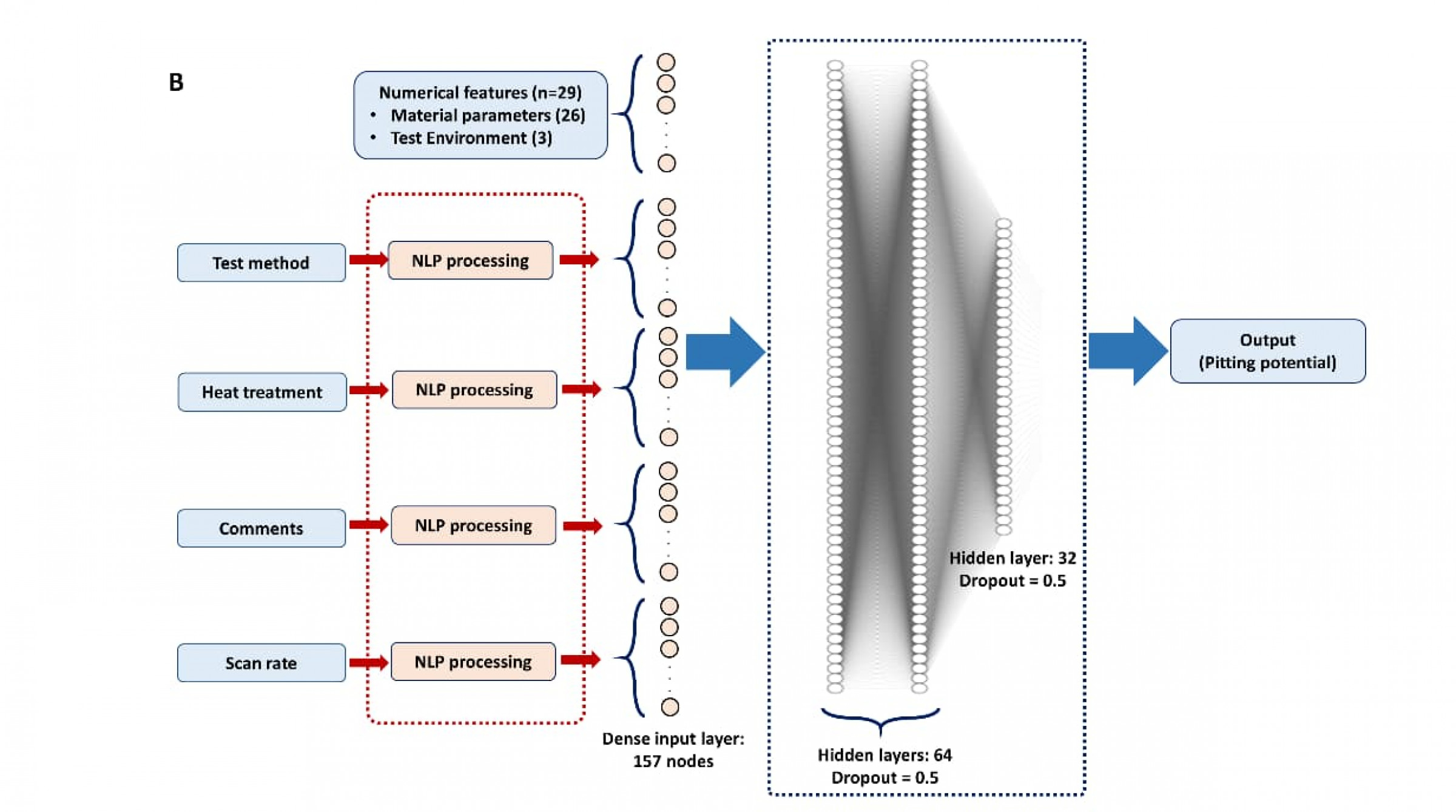
Scientists of the Max-Planck-Institut für Eisenforschung (MPIE) have now developed a machine learning model that enhances the predictive accuracy by up to 15% compared to existing frameworks. This model uncovers new, but realistic corrosion-resistant alloy compositions. Its distinct power arises from fusing both numerical and textual data. Initially developed for the critical realm of resisting pitting corrosion in high-strength alloys, this model's versatility can be extended to all alloy properties. The researchers published their latest results in the journal Science Advances.
Merging texts and numbers
“Every alloy has unique properties concerning its corrosion resistance. These properties do not only depend on the alloy composition itself, but also on the alloy’s manufacturing process. Current machine learning models are only able to benefit from numerical data. However, processing methodologies and experimental testing protocols, which are mostly documented by textual descriptors, are crucial to explain corrosion”, explains Dr. Kasturi Narasimha Sasidhar, lead author of the publication and former postdoctoral researcher at the Max-Planck-Institut für Eisenforschung.
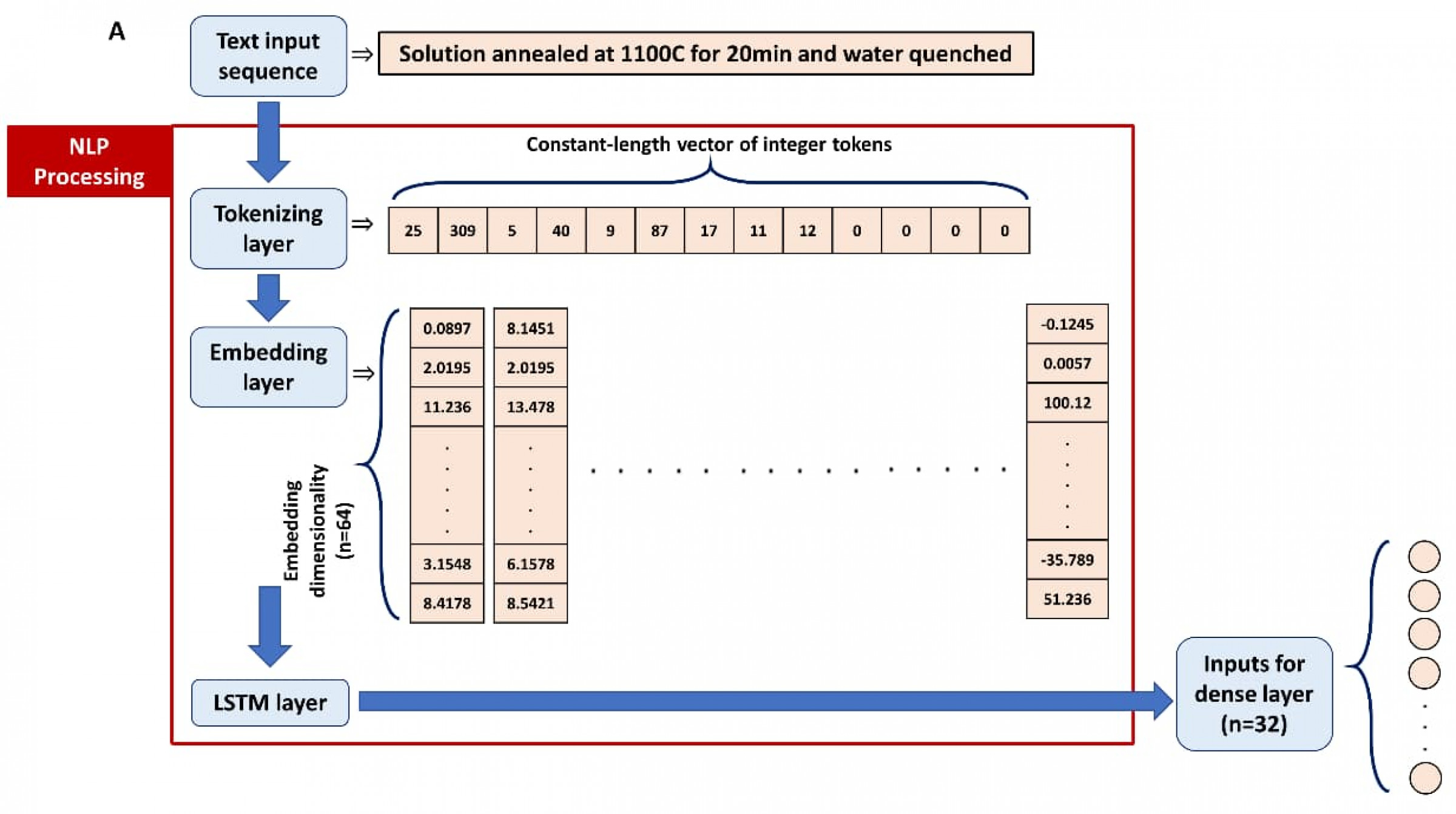
The researcher team used language processing methods, akin to ChatGPT, in combination with machine learning (ML) techniques for numerical data and developed a fully automated natural language processing framework. Moreover, involving textual data into the ML framework allows to identify enhanced alloy compositions resistant to pitting corrosion. “We trained the deep-learning model with intrinsic data that contain information about corrosion properties and composition. Now the model is capable of identifying alloy compositions that are critical for corrosion-resistance even if the individual elements were not fed initially into the model”, says Dr. Michael Rohwerder, co-author of the publication and head of the group Corrosion at the Max-Planck-Institut für Eisenforschung.
Pushing boundaries: automated data mining and image processing
In the recently devised framework, Sasidhar and his team harnessed manually gathered data as textual descriptors. Presently, their objective lies in automating the process of data mining and seamlessly integrating it into the existing framework. The incorporation of microscopy images marks another milestone, envisioning the next generation of AI frameworks that converge textual, numerical, and image-based data.
Original publication:
K.N. Sasidhar, N.H. Siboni, J.R. Mianroodi, M. Rohwerder, J. Neugebauer, D. Raabe: Enhancing corrosion resistant alloy design through natural language processing and deep learning. In: Science Advances 9 (2023) eadg7992. DOI: 10.1126/sciadv.adg7992
(Source: Press Release of Max-Planck-Institut für Eisenforschung GmbH, Author: Yasmin Ahmed Salem)
Schlagworte
AICorrosionDeep LearningMachine Learning