
18.07.2026
Whitepaper
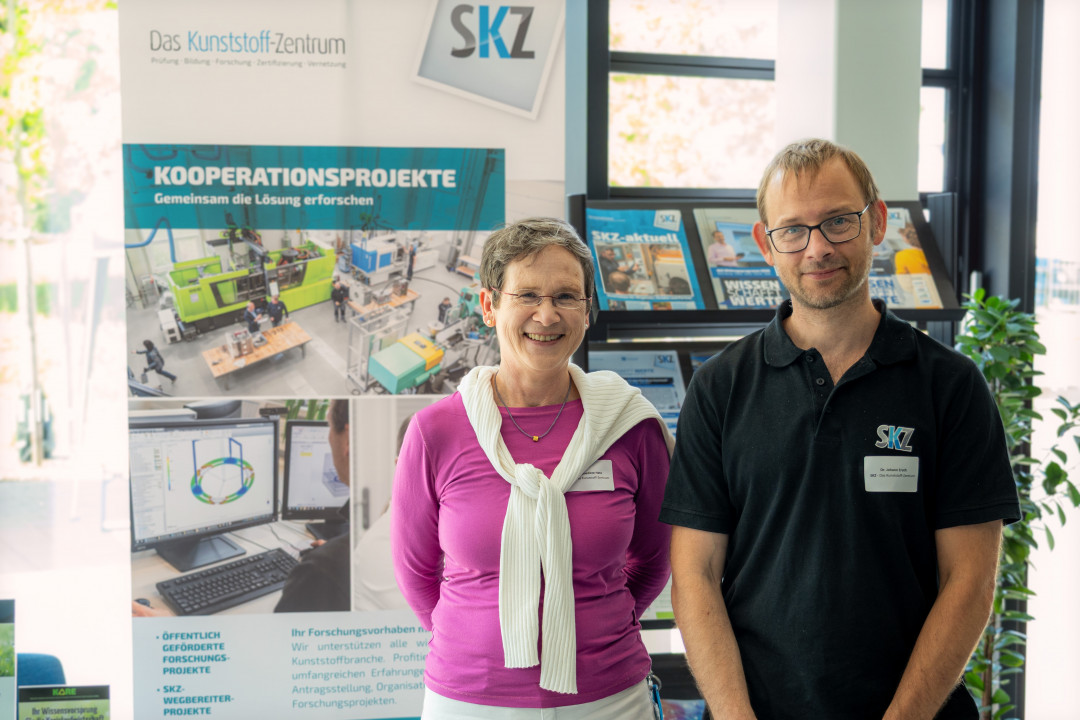
The SKZ Plastics Center has published a white paper on how to successfully apply for publicly funded research projects. Based on key success factors, the paper highlights common mistakes and provides specific recommendations for action. This provides companies a practical guide to efficiently prepare their project proposals and significantly increase their chances of securing funding.
A practical guide to persuasive argumentation, structure and quality assurance
Innovation is a key driver of sustainable market success. Companies with their own research and development (R&D) projects receive support from state, federal and EU funding programmes, but often hesitate due to the perceived burden of application and administrative work. In light of the challenges involved in successfully securing public funding, the SKZ is publishing the white paper “Funding Applications That Get Approved: Structure, Argumentation, Quality Assurance – Explained in a Practical Way.”
130 funded projects annually
With approximately 130 publicly funded projects per year, the SKZ has extensive experience in applying for and managing funding projects. This was supplemented by targeted interviews with experienced project organizers and applicants. This expertise was systematically compiled and consolidated into a compact, practical guide.
“Many good project ideas fail not because of a lack of innovation, but because the application lacks a clear and convincing presentation that is precisely tailored to the specific call for proposals,” explains Dr. Benedikte Hatz, Head of Innovation and Technology Transfer at SKZ. “The key is a clear thread running through the proposal – from the problem to the solution and on to reliable commercialisation with market potential.”
The importance of a clear line of reasoning
The white paper is aimed at companies with research and development projects and highlights practical success factors for securing funding approval. To this end, seven key success factors were identified, including alignment with the funding call, a robust level of innovation, a coherently structured consortium and realistic budget and commercialisation planning. A consistent and transparent line of reasoning is crucial – one that can quickly convince even reviewers from outside the field.
In addition, the guide provides concrete recommendations for drafting proposals: Funding applications should be structured along a clear path, progressing from the problem through the need, solution and innovation to implementation and commercialization. Furthermore, the white paper emphasizes the importance of measurable key performance indicators (KPIs), a clear distinction from the state of the art and a realistic assessment of risks and potential.
Avoiding common mistakes
Another key focus is on quality assurance. Through iterative reviews, clear responsibilities within the consortium and systematic checklists, companies can significantly improve the quality of their applications and avoid common mistakes such as unclear goal definitions or a lack of coherent reasoning. With this white paper, the SKZ provides companies with a concise and practical guide that can be directly applied in day-to-day application practice and sustainably improves the chances of success.
Additional white papers on public funding
The SKZ also offers additional white papers on research funding, including “Financing In-House Research and Development Projects with Public Funding” and “Utilizing the Research Tax Credit for In-House Research and Development.” The SKZ thus supports companies in selecting and structuring their research and development projects in compliance with funding requirements. For joint funding projects, it accompanies the entire process – from analyzing relevant calls for proposals and developing the project idea to drafting outlines and applications – thereby contributing to successful application and implementation. The whitepaper is available for free.
More Information on the Whitepaper
(Source: SKZ –The Plastics Centre)
Schlagworte
GrantsJoining PlasticsJPPlasticsPolymersPVCPVC-UR&DResearchResearch and DevelopmentResearch Paper