
24.11.2025
International
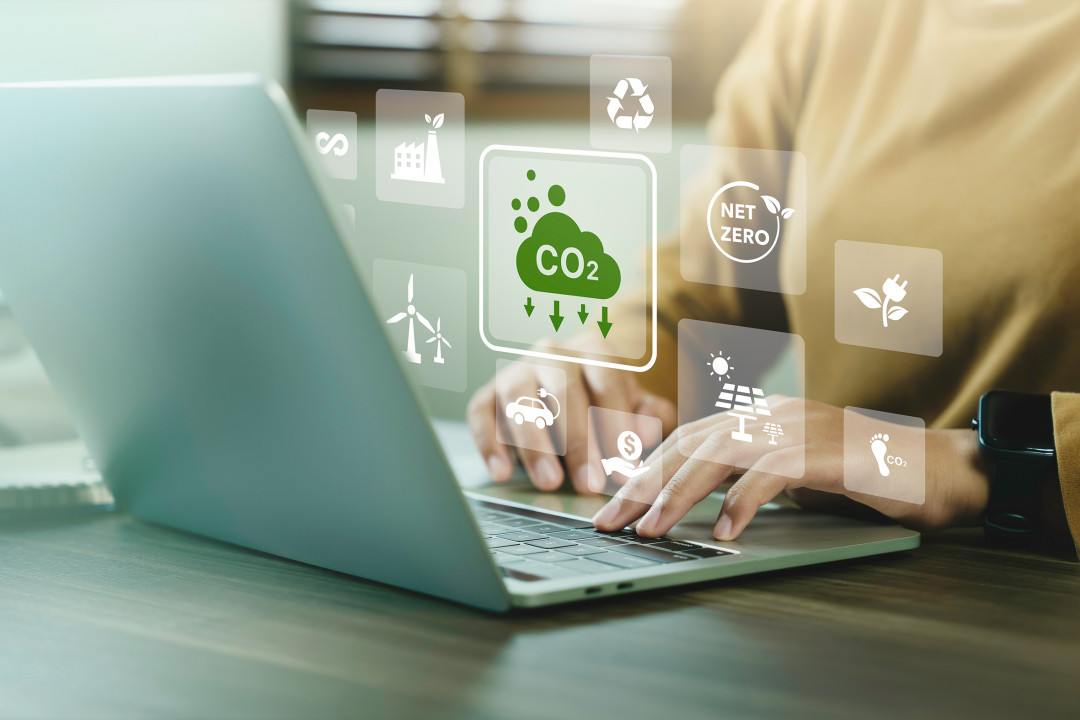
Companies are under increasing pressure to make their products and processes more sustainable. Regulatory requirements, social expectations and ecological necessities demand reliable data, transparent methods and practical solutions. The SKZ Plastics Centre supports companies in documenting sustainability as well as implementing it strategically.
Growing regulatory pressure
Political initiatives such as the European Green Deal, the National Circular Economy Strategy (NKWS) and new product standards are changing material demand and setting clear guidelines for sustainable and circular economies. Companies are required to reduce production waste, use secondary materials and bio-based raw materials, and substitute critical substances. SKZ offers sound methods for evaluating and optimising products based on relevant sustainability criteria – from CO2 balances and environmental product declarations to tailor-made software solutions.
“Sustainability is no longer a voluntary add-on – it has become a corporate obligation,” explains Jan Werner, Group Leader for Sustainable and Circular Products at SKZ – Das Kunststoff-Zentrum. “We support companies in developing and implementing concrete solutions to reduce the environmental impact of their products.”
CO2 balancing for products
Determining the product carbon footprint (PCF) in accordance with ISO 14067 and the GHG Protocol forms the basis for an effective climate strategy. SKZ calculates PCFs in accordance with international norms and industry standards such as Catena-X, PACT and TfS. The results provide specific product assessments and thus a reliable basis for strategic decisions along the value chain.
Environmental product declarations (EPDs) for construction products
EPDs (Environmental Product Declarations) in accordance with ISO 14025 and EN 15804 document the environmental properties of construction products in a uniform and verified form. Sustainably designed products and manufacturing processes in particular gain visibility and credibility through EPDs. EPDs are of central importance for manufacturers of construction products – especially in tenders, building certification and in the context of sustainability strategies for large construction projects. They provide clear and reliable information about the environmental impact of products throughout their life cycle and form the basis for holistic and ecological building design. National and international building certification systems for sustainable construction, such as the DGNB, BNB, LEED and BREEAM systems, are based on the information provided in EPDs. “The EPDs created by SKZ enable us to position our products even more successfully on the market,” emphasises Florian Dittert, Head of Marketing & Public Relations at Maincor Rohrsysteme.
SKZ creates these EPDs as part of national and international programmes – including the Institut Bauen und Umwelt (Institute for Construction and the Environment) and EPD International – and supports companies throughout the entire verification process.
Digital tools for scalable sustainability
For companies with extensive product portfolios, SKZ offers flexible software solutions for creating CO2 balances, life cycle assessments and EPDs. The online tool LCA-SKZ.de enables the automated calculation of PCFs – efficiently, transparently and scalably. The database is continuously expanded and covers a wide range of materials and processes. The EPD tool Connie Calculator is an established tool that records material and energy flows and evaluates EPD results in tabular and graphical form in accordance with EN 15804 – ideal for the requirements of the amended Construction Products Regulation. “With our tools, the required PCFs and EPDs can be calculated independently, making sustainability not only measurable but also economically feasible,” emphasises Jan Werner. “We accompany the roll-out, offer technical support and regular updates – all in a flexible licence model."
Life Cycle Assessment (LCA) and critical review
In addition, the institute prepares and reviews life cycle assessments in accordance with ISO 14040/44 across all life cycle phases. Sensitivity analyses and independent critical reviews ensure the validity of the studies and enable well-founded product comparisons. This is a decisive advantage for companies that want to base their sustainability strategy on reliable data. Companies can also have their own scalable calculation models and systems critically reviewed by the SKZ to ensure that they meet the requirements of the standard.
Design for Circularity (DfC) – sustainability begins with product design
Product design plays a decisive role in determining the circularity of a plastic product. SKZ supports companies in embedding principles such as reusability, reparability and recyclability early on in the development phase. “With our DfC model, we make circular potential visible and usable,” says Heicke Gaedecke, Senior Engineer for Sustainable and Circular Products at SKZ. The aim is to design materials and products in such a way that they are resource-efficient and traceable throughout their entire life cycle. Business models should and promote the principles of the circular economy.
(Source: SKZ - The Plastics Centre)
Schlagworte
Circular EconomyEcologialEPDEuropean Green DealJoining PlasticsPlasticsStandardSustainability