
04.10.2026
Trendthema

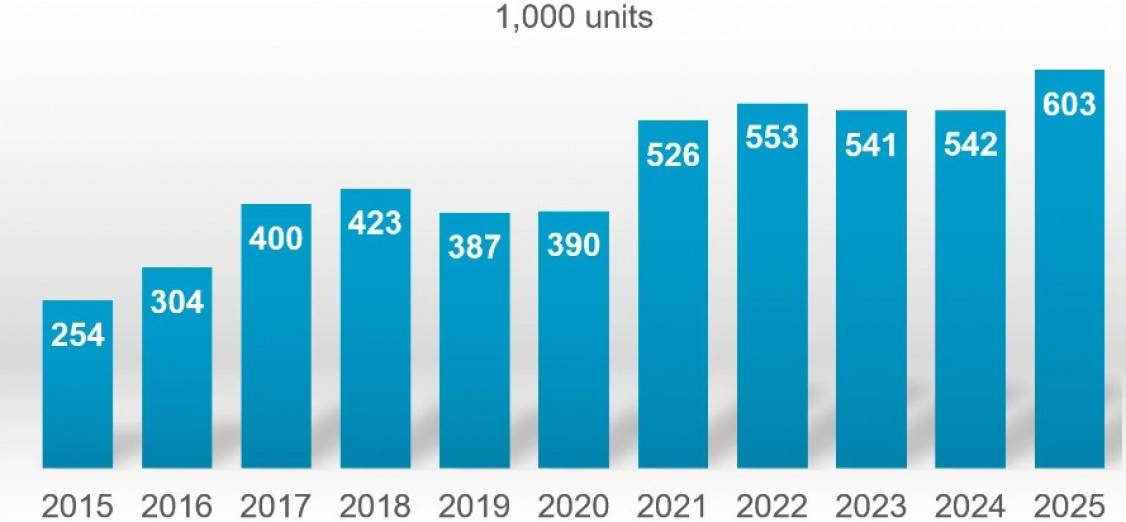
The global operational stock of industrial robots surged 9 % to a record 5 million units in 2025. This was driven by an 11 % jump in annual installations: Factories worldwide installed more than 600,000 new units over the year. “Industrial automation is progressing at high speed,” says Jane Heffner, President of the International Federation of Robotics. “The new mark of 5M robots operational in factories worldwide is more than double the number seven years ago. The strongest growth is taking place in Asia, followed by Americas. Europe is moving ahead more slowly.
Asia
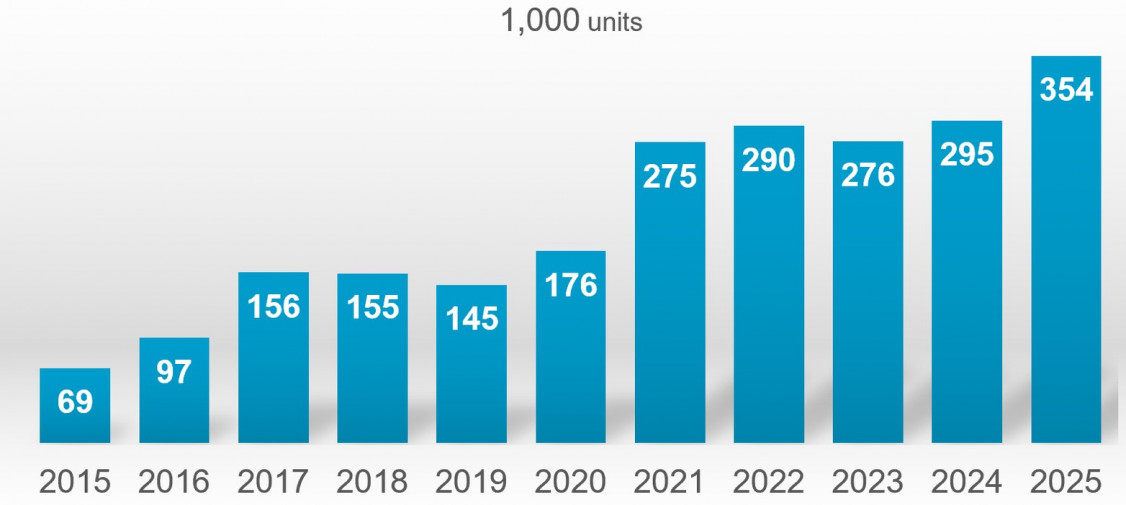
China has further strengthened its position as the world leader in robot adoption. Annual installations grew by 20 % year-on-year and now account for 59 % of global deployments. The latest figures show that 354,000 industrial robots have been installed in 2025 – exceeding last year's annual total record by almost 60,000 units. Chinese manufacturers have sold more than foreign suppliers in their home country. Their installations rose by 15 %, reaching 195,000 units – a domestic market share of 55 % in 2025 compared to 57 % in 2024.
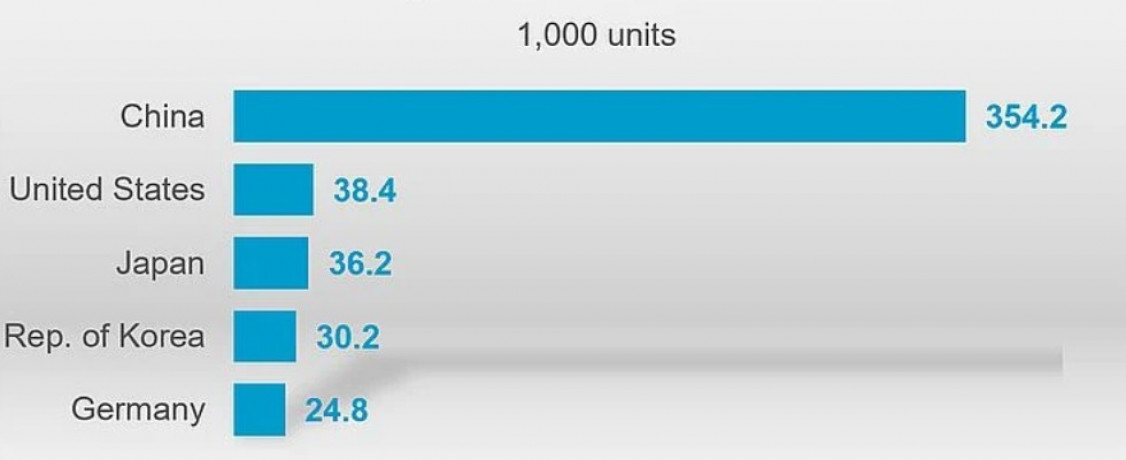
Japan is the second-largest market for industrial robots in Asia, with 36,219 units installed in 2025 – a 19 % decrease. On a global scale, Japan´s market size moved down from second to third position, behind the United States. Demand for robots is expected to grow slightly, but a major recovery is unlikely in the short to medium term.
The market in the Republic of Korea installed 30,000 units in 2025 – down 1 %. Annual installations had been trending sideways of around 31,000 units since 2019. The country remained the fourth largest market worldwide. New investments from the automotive industry will come into effect in 2027 and 2028. Demand for robots in Korea may break the established trend and grow in 2027.
India installed almost 10,500 units in 2025 – up 15 %, claiming sixth place worldwide, behind Germany. Although the volume of new installations is still relatively low compared to the top 5 established robot adopting countries, India´s growth is remarkable: from 2020 to 2025 annual installations grew by 27 % on average per year (CAGR).
Americas
The United States surpassed Japan in 2025 to become the second largest market for industrial robots, following China. Installations of industrial robots grew by 12 % to almost 38,500 units, which is the third highest number recorded in the history of these statistics.
In Mexico, robot installations declined by 7 % to fewer than 5,200 units. This marks the third year of downswing. In Canada, robot installations were up 5% to almost 4,000 units. The average annual growth rate from 2020 to 2025 was +9% (CAGR).
The Brazilian robotics market installed almost 4,300 new robots in 2025, up 38 %. This was driven by a surge in demand for robots from the automotive industry, which installed almost 2,100 units, a 212 % increase. Investments by Chinese car manufacturers in Brazil were most likely responsible for this.
Europe
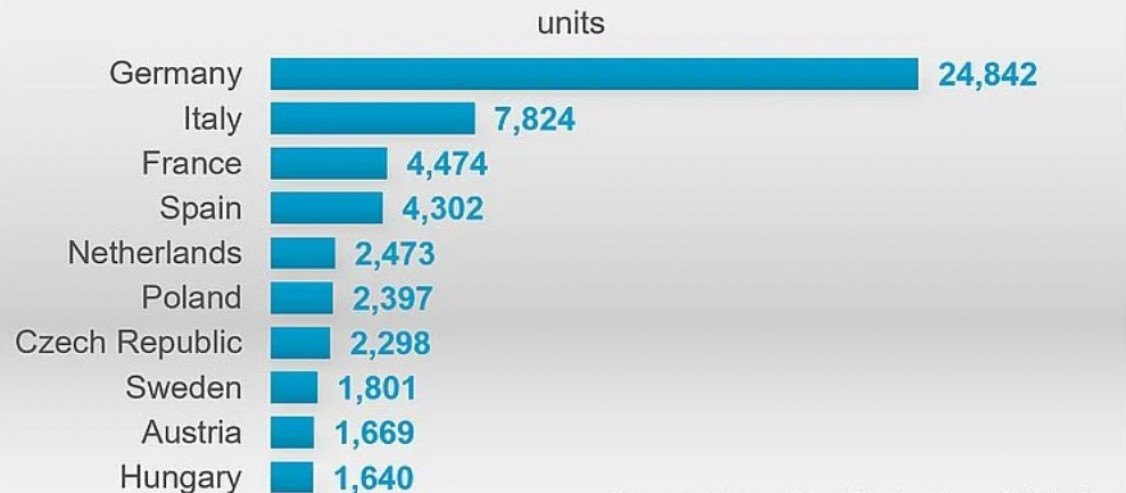
Germany is the fifth-largest robot market in the world and by far the largest in Europe. In 2025, it had a 41 % share of the total installations in the European Union. Between 2020 and 2025, annual installations across industries grew by 2 % on average per year (CAGR). However, sales fell 8 % to fewer than 25,000 units in 2025. The automotive industry is the largest user of industrial robots in Germany, but its share is in retreat.
The number of installations in Italy, the second largest European market, fell by 11 % to about 7,800 units. France is back in third place with almost 4,500 units and minus 8 %, ahead of Spain with about 4,300 units, down 15 %.
Outlook
Global robot demand is expected to continue its long-term growth trajectory. Installations are forecast to rise by 9 % to 655,000 units in 2026 and reach 806,000 units in 2029. Despite substantial regional differences, with countries such as China, the US and India as strong growth markets, the global outlook remains positive.
The need for more resilient supply chains and recent developments of trade and industrial policy in several major economies are resulting in increasing relocation activity in the manufacturing industries. Building manufacturing capacity in high-wage economies and countries facing labour shortages will drive the demand for automation technology. While this may shift the regional pattern of robot demand, there is no indication that the long-term growth trend in industrial robotics is coming to an end from a global perspective.
Structural drivers such as demographic change will continue to support demand, while technological progress is expanding the range of technologically feasible and economically viable robot applications. In particular, advances in artificial intelligence, machine vision and sensing are increasing robot capabilities, while easier programming and system integration are reducing deployment costs and opening automation to new applications and customer groups.
(Source: IFR - International Federation of Robotics)
Schlagworte
EUEuropean UnionGlobal MarketIndustrial RobotsLabour ShortageManufacturingRoboticsRobots