
06.09.2025
International
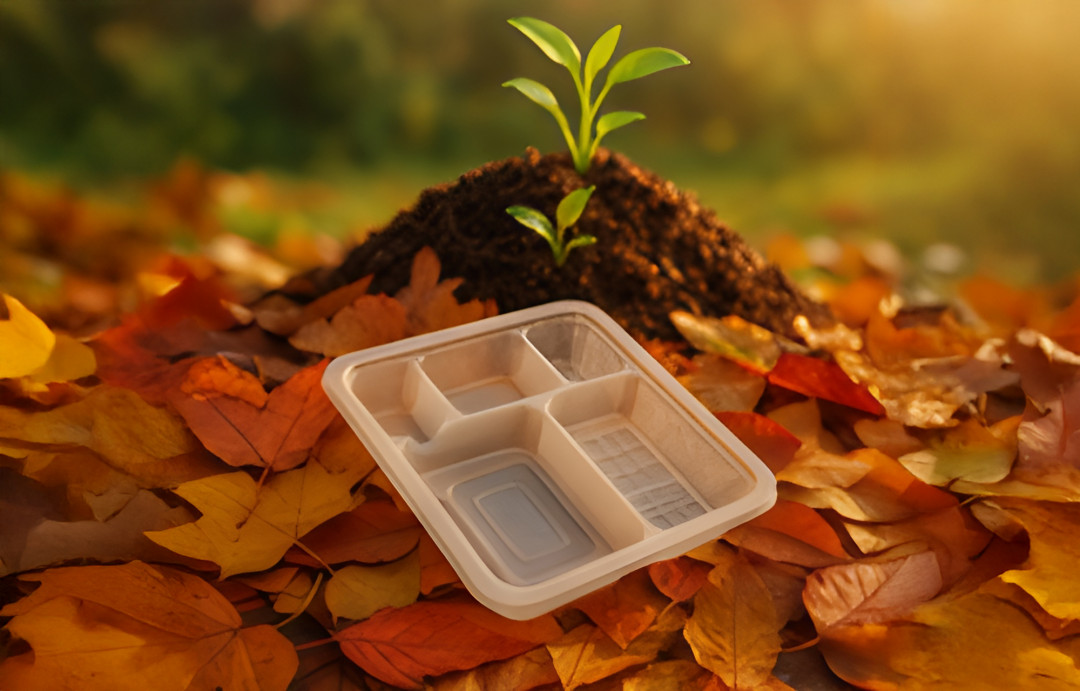
The launch of the LEAF research project marks the start of an innovative approach to the development of sustainable plastic components. The goal of the project is to develop bio-based materials that can not only be efficiently processed using injection moulding but whose composting time can also be specifically controlled.
Biodegradable plastics offer a sustainable alternative to conventional plastics such as polyethylene (PE) and polypropylene (PP), which are associated with significant environmental problems as they take hundreds to thousands of years to decompose. Their long decomposition time leads to the formation of microparticles that accumulate in water, soil and the food chain. These microparticles can bioaccumulate and have toxic effects. Biodegradable plastics such as polylactic acid (PLA), polybutylene succinate (PBS) and polyhydroxyalkanoates (PHA) are considered promising alternatives to conventional plastics.
However, in many cases, they can only be broken down under industrial conditions. This is where the LEAF project, led by the Plastics Centre in cooperation with partners Dressel and Boßler Werkzeug & Formenbau, comes in: by integrating granular leaf materials into biopolymer compounds, the goal is to create new materials that are both environmentally friendly and industrially viable.
“Our innovative approach is to use granular leaf materials that are processed in bioreactors. These materials are suitable as a reinforcing phase, for improving flowability and for precisely controlling the composting time,” explains Christian Schlör, scientist at SKZ.
The project, which started in January 2025, addresses key challenges such as thermal stability and phase separation. The goal is to develop a leaf-based biopolymer that can be processed using injection moulding and has a defined decomposition time.
(Source: FSKZ e. V.)
Schlagworte
Bio-BasedEnvironmentInjection MouldingJoining PlasticsMaterialMaterialsPlasticsProjectSustainability