
09.09.2025
International
In the plastics industry, components and semi-finished products can become contaminated on their surfaces during production – for example, by residues from mould release agents or separating agents. Such residues impair subsequent processes that directly affect the surface, such as printing, painting or bonding. The new LIBS-OF project aims to clean, analyse and activate surfaces inline in a single process step.
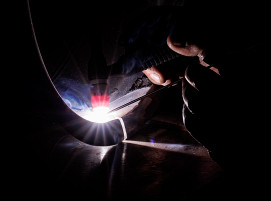
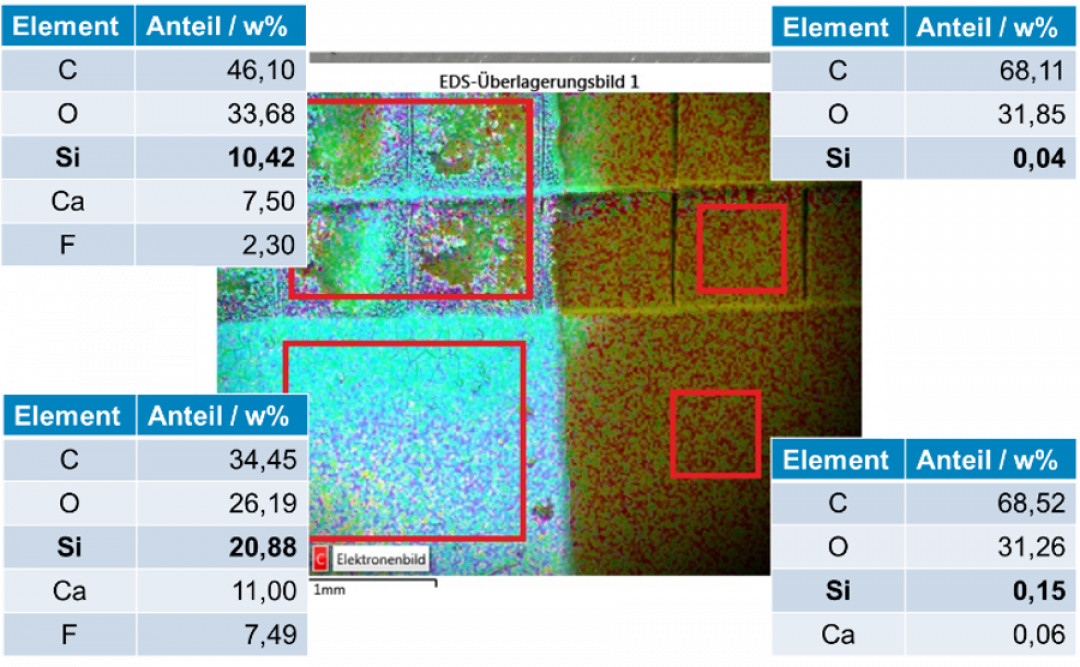
In the newly launched IGF project LIBS-OF, the SKZ plastics centre is focusing on the combination of laser-induced plasma spectroscopy (LIBS) and laser ablation for cleaning, pre-treatment and quality assurance of plastic surfaces. An ultraviolet (UV) laser with a wavelength of 193 nm is used for particularly effective cleaning. This short wavelength makes it possible to break bonds between carbon and silicon atoms. This allows even stubborn contaminants – such as silicone release agents – to be removed, where conventional cleaning methods reach their limits.
In addition, the plastic surface is chemically functionalised under the influence of atmospheric oxygen. This produces -OH or other polar groups, for example, which become firmly anchored to the surface. This activation ensures that subsequent processes such as bonding or coating can be carried out immediately after the laser LIBS treatment.
The treatment of surfaces with high-energy lasers carries the risk of over-treatment. Excessive processing can be particularly problematic in fibre composite technology: if the reinforcing fibre is exposed on the surface – for example in carbon fibre reinforced plastic (CFRP) components – there is a risk of oxidative damage. This can lead to increased scrap rates and, in the worst case, component failure during use.
To avoid both under- and over-treatment, the cleaning and activation process is monitored inline using laser-induced plasma spectroscopy. The analysis results control the process parameters in real time. This achieves high cleaning performance, avoids over-treatment and saves process time at the same time.
The LIBS-OF project will run from March 1, 2025, through February 28, 2027, and is funded by the DLR Project Management Agency (Society, Innovation, Technology) and the Federal Ministry for Economic Affairs and Energy (BMWE).
(Source: FSKZ e. V.)
Schlagworte
BondingBondsCleaningComponentsEnergyJoining PlasticsLaserPlasmaPlasticsProcessingProject