
01.09.2026
Forschung
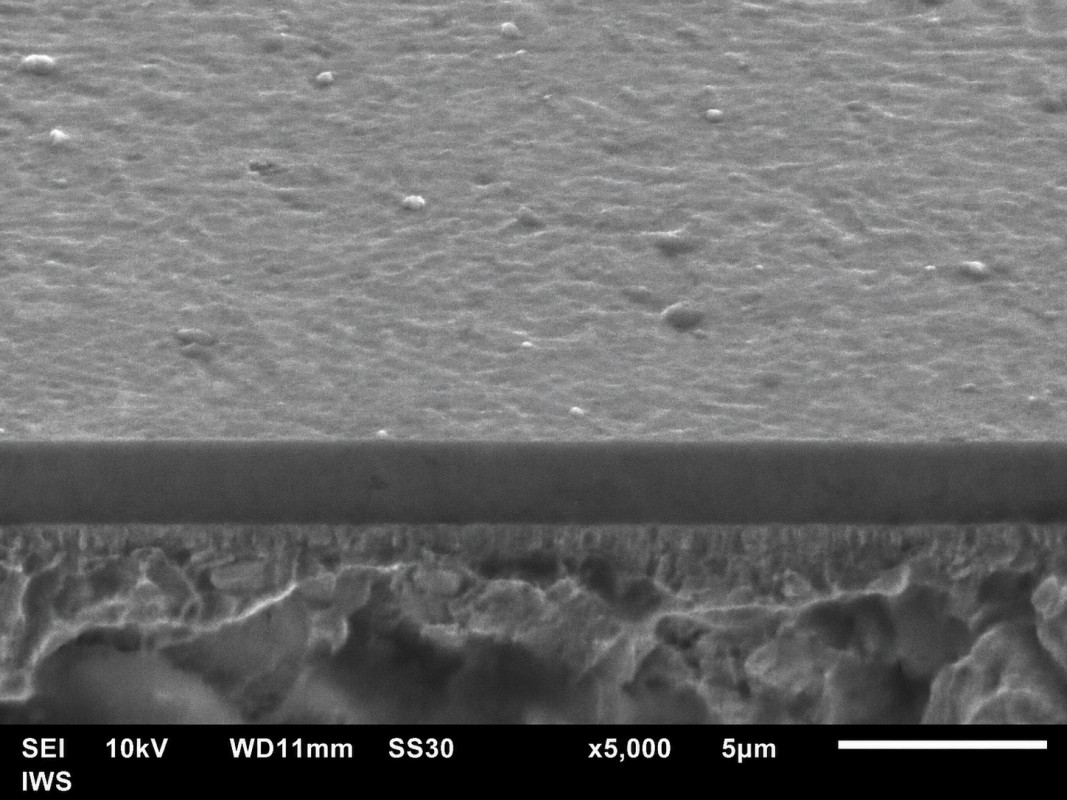
High mechanical and abrasive loads can significantly shorten the service life of tools and components. Coatings made of tetrahedral amorphous carbon (ta-C) reduce friction and effectively protect surfaces. The Fraunhofer Institute for Material and Beam Technology IWS has recently achieved two breakthroughs that could significantly expand the industrial use of ta-C coatings. Researchers in Dresden developed a plasma filter technology for the Laser-Arc process to reduce defects selectively. They have also succeeded for the first time in reliably producing ultrathick ta-C coatings of up to 100 micrometers, opening up new possibilities for protecting surfaces exposed to extremely high mechanical loads.
Tetrahedral amorphous carbon represents the hardest type of diamond-like carbon coatings. A high proportion of sp³-hybridized diamond bonds provides exceptional hardness and wear resistance. At the same time, ta-C significantly reduces friction in tribological systems. Industrial companies have used these properties for years to reduce friction losses and protect components under demanding operating conditions. Industrial production of ta-C coatings requires controlled vacuum-arc processes. These processes inevitably generate particle-like droplets. They detach from the cathode, enter the plasma beam, and become embedded in the growing coating. These defects increase surface roughness and often require extensive postprocessing smoothing. At the same time, high compressive residual stresses limit the achievable coating thickness because they increase the risk of coating failure. Broader industrial adoption of ta-C coatings therefore depends critically on overcoming these challenges.
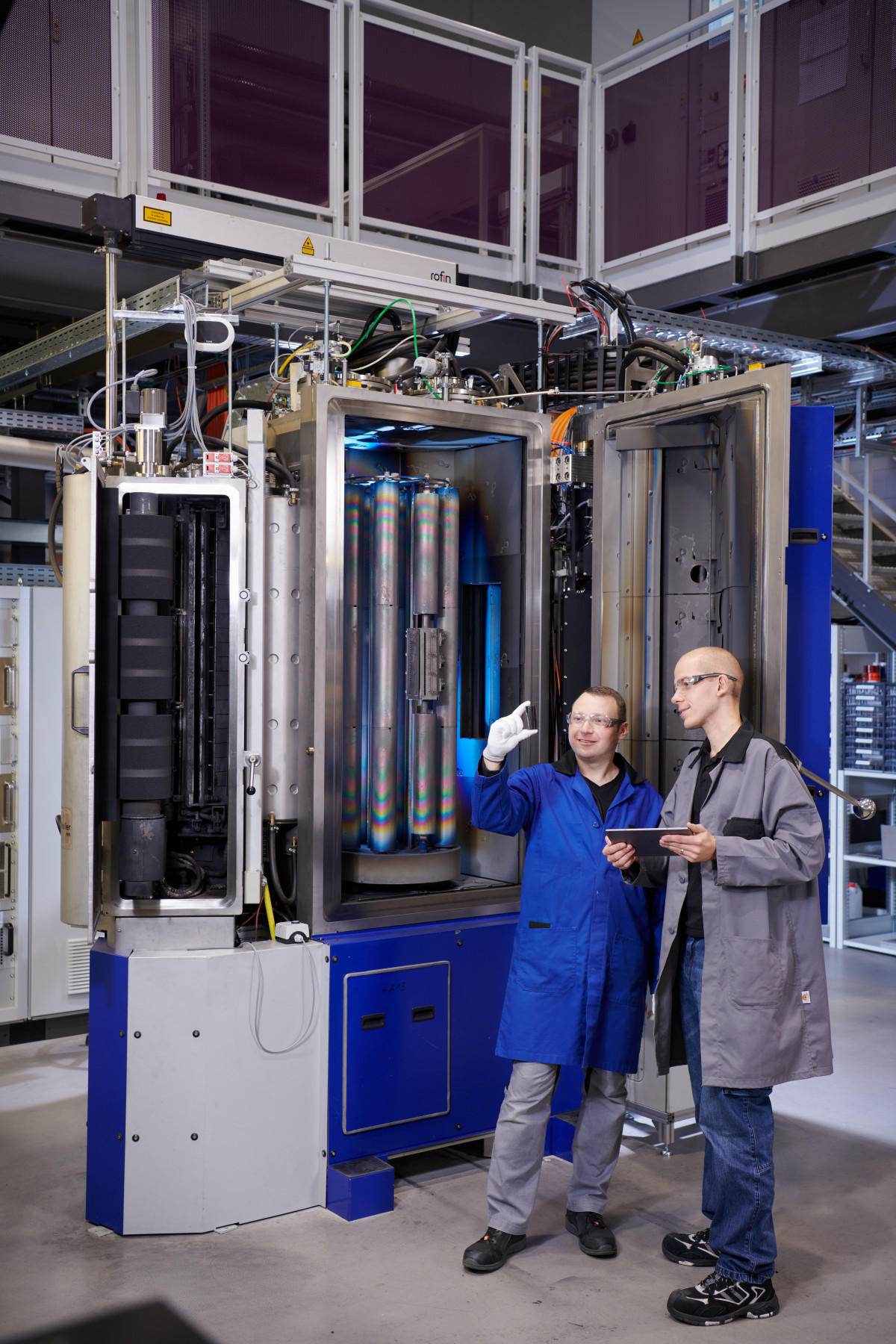
Fraunhofer IWS continues to develop the Laser-Arc process specifically for industrial applications. High deposition rates and stable processes rank among the technology’s key advantages. Together with industrial partners, the researchers have transferred the process to series applications for tribological protective coatings on engine and machine components as well as tools.
Selectively Producing Ultrathick Coatings and Smooth Surfaces
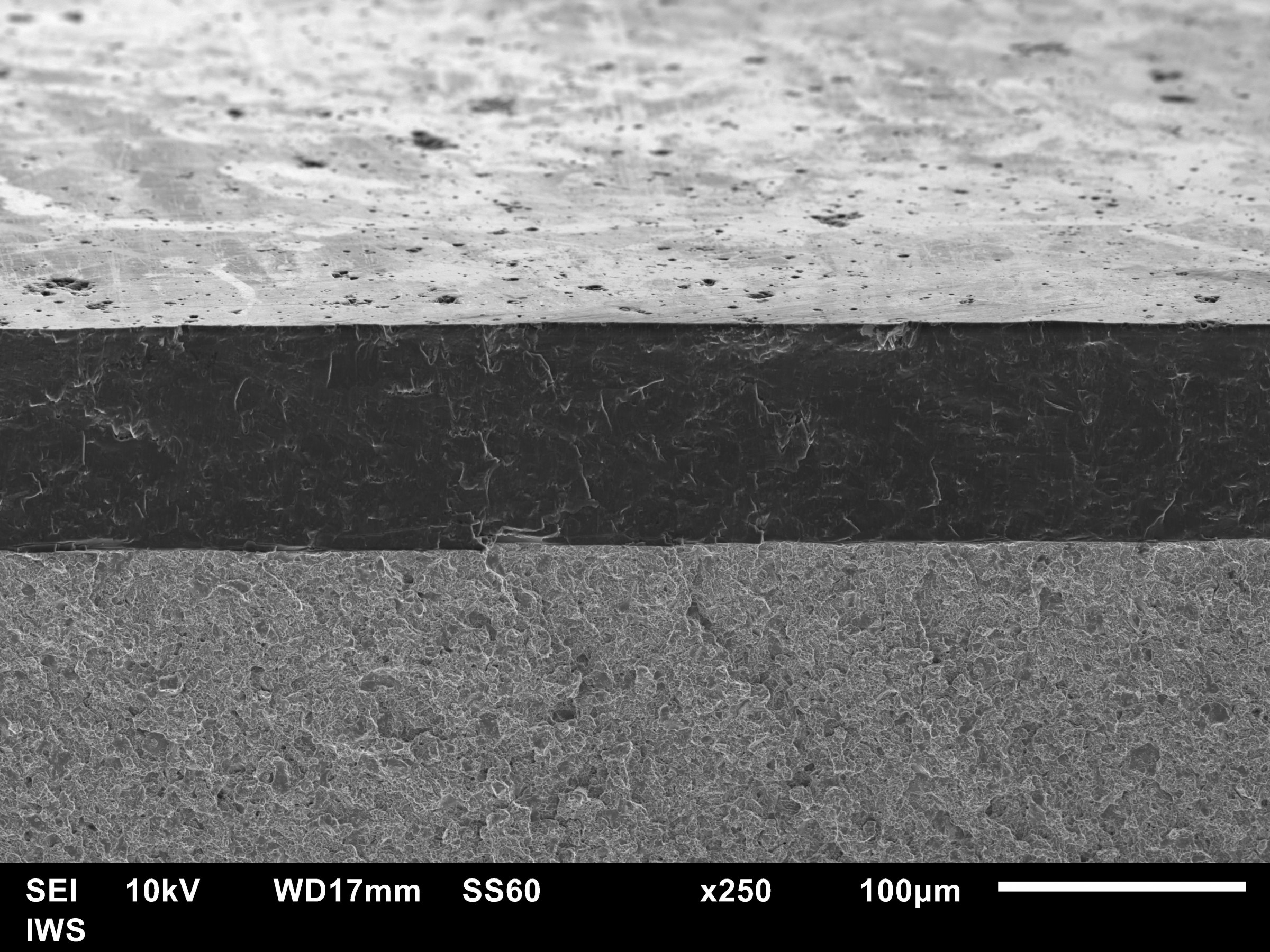
Alongside industrialising the Laser-Arc process, Fraunhofer IWS addressed two key challenges in ta-C production through targeted process development: depositing coatings more than 20 micrometers thick with low residual stress and producing smooth, low-defect ta-C coatings. To achieve this, the researchers adapted the pulsed power supply technology and coating architecture, reducing compressive residual stresses to below the critical level without compromising coating hardness. At the same time, the team optimized the long-term stability of the Laser-Arc technology at high deposition rates. Systems can now operate stably for more than 24 hours, enabling reproducible processes for thick coatings. Fraunhofer IWS also developed specific adhesion layer systems tailored to the respective material. These systems enable reliable deposition of ta-C coatings up to 100 micrometers thick on engineering substrates such as rolling bearing steel, cemented carbide, cast materials and selected polymers.
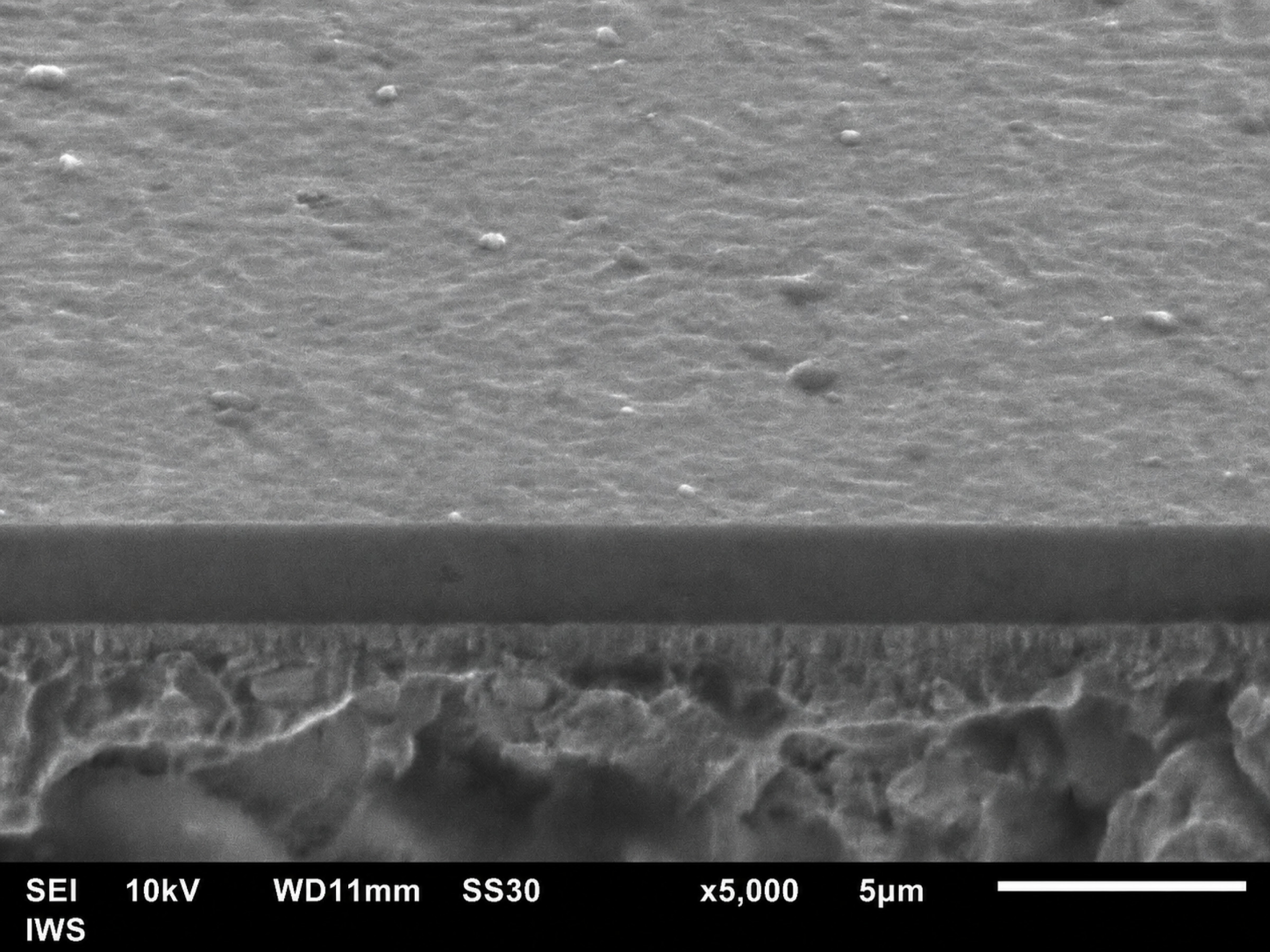
The researchers also integrated plasma filter technology into the Laser-Arc process. A 90-degree deflection filter now selectively separates the ion flow from particles. This allows the coating to grow uniformly with a particularly low defect density while maintaining a process’s high deposition rate.
Dr. Volker Weihnacht, Head of the Thin-Film Coatings department at Fraunhofer IWS, explains: “Our Laser-Arc technology combines high deposition rates with stable processes for high-quality ta-C coatings. The targeted reduction of residual stresses, high long-term stability and tailored adhesion layer concepts now enable the industrial deposition of ultrathick coatings for the first time – a genuine breakthrough compared with conventional thin-film systems, which often fail under high loads due to the ‘eggshell effect.’ Our ‘thick’ ta-C coatings themselves now provide the load-bearing capacity required for high mechanical loads.”
Industrial Benefits from Highly Load-Resistant Coating Structures
The application determines how the coating system is designed. High coating thicknesses are used wherever components face severe abrasive or erosive loads. The coating itself provides structural support and prevents the eggshell effect, in which local overloading causes premature coating failure. Coating thicknesses of up to 100 micrometers therefore provide reliable, long-term protection where extreme operating conditions demand it.
For applications involving hard substrate materials, coating thicknesses of one to five micrometers are sufficient. Plasma filter technology enables the deposition of smooth, low-defect ta-C coatings. Filtering removes droplets from the plasma beam, producing homogeneous coatings with smooth surfaces. This improves component surface quality and enhances the stability of tribological systems during operation. Typical applications include plain bearings, shafts, guides and tools for machining and forming. Tailoring the coating design makes it possible to match the system precisely to the respective loads and functional requirements.
“Expanding the Laser-Arc process to include ultrathick and smooth ta-C coatings strengthens our contribution to extending the service life of industrial systems,” says Professor Christoph Leyens, Director of Fraunhofer IWS. “This development further reduces wear, stabilizes production processes and helps industry use resources efficiently and selectively.”
Reducing Friction to Improve Energy Efficiency
In addition to wear protection, ta-C coatings offer another key property: consistently low friction under a wide range of conditions. With diverse lubricating media –from engine and machine oils to greases, waxes, water-based media, acids and bases—even friction pairs with only one coated surface maintain stable friction behavior, with coefficients of friction ranging from 0.1 to 0.2.
The tribological system remains stable even under unfavorable operating conditions. Insufficient lubrication or a temporary loss of lubrication does not immediately damage the contact surfaces. This robustness expands the range of potential applications, from food processing and drinking-water environments to medical technology and implant coatings.
Superlubricity offers further potential for ta-C coatings, with friction coefficients approaching the limits of measurement. Researchers at Fraunhofer IWS have worked with science and industry partners for years to transfer this effect to real machine components. The CHEPHREN research project, funded by the Federal Ministry for Economic Affairs and Climate Action, achieved an important advance: For the first time, smooth ta-C coatings produced using plasma filter technology reached superlubricity under application-oriented conditions.
The long-term stability of this friction-reducing effect offers considerable economic potential. It improves the energy efficiency of drive and machine elements and can reduce the energy consumption of engines, pumps and systems by up to ten percent. Dr. Volker Weihnacht summarizes: “ta-C offers considerable potential for wear protection and energy savings in numerous industrial applications. The further-developed Laser-Arc technology expands this range of applications by enabling ultrathick and exceptionally smooth ta-C coatings. This enables applications that were previously technically unfeasible.”
(Source: Fraunhofer IWS)
Schlagworte
Carbon CoatingCoatingLaser-Arc TechnologySurface TreatmentSurfacingThermals Spray BulletinTSBWear Protection