07.11.2026
Unternehmen
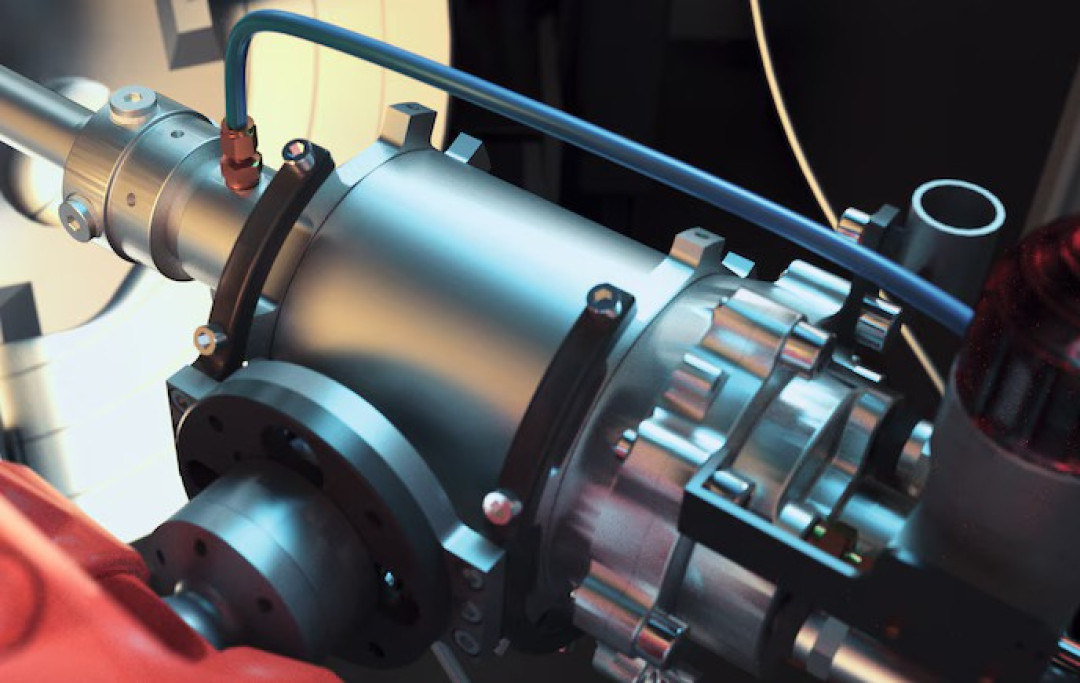
What do frying pans, brake discs and nuclear waste storage casks have in common? On the surface they might seem worlds apart. Yet in fact, it’s the surface that connects them. The common denominator is a material deposition technique known as cold spraying – where tiny metal particles of between 5 to 50 µm are propelled onto a substrate using high-pressure gases.
Like any surface treatment, the idea is to create coatings that exhibit certain material properties for certain use cases – like improving resistance to wear (as is the case for brake discs), corrosion (in the case of nuclear storage casks) and heat as well as increasing/decreasing friction or changing electrical properties (in the case of induction cooking).
“Linde has long been the backbone of high-quality gas supply for industries looking to develop products that rely on innovative coatings,” said Paolo Kirchpfening Global Commercialization Manager Manufacturing Markets, Linde. “Through our collaboration with Impact Innovations, we are excited to be able to offer Linspray Connect – a new, first-of-its-kind gas delivery system that will provide manufacturers with far greater insight and control of their cold spraying process.”
How hot gases enable cold spraying
The “cold” in cold spraying refers to the fact that the metal particles destined for the substrate surface are not melted or fused during the process. “This is the key distinguishing characteristic compared with other thermal deposition techniques,” explains Linde’s Werner Krömmer, Business Development Manufacturing Industry. Instead of heat, kinetic energy is used to propel the metal powders onto the untreated surface.
A process gas – usually nitrogen, helium, or mixtures of these gases – is fed into a spray gun at a pressure of up to 60 bar (870 psi). There, the gas is heated to a maximum temperature of 1100°C (2012°F) and accelerated through a supersonic nozzle at speeds between 500 to 1200 m per second. The metal particles which start at ambient temperatures, are placed into this gas stream. “We get huge acceleration, but when the gas exits the nozzle with the metal powder itself it's typically below 100 degrees Celsius. That means the metal always stays in a solid-state,” adds Krömmer. As a result, the metals retain their unique properties and remain oxidation resistant. The coating created via this process is ductile which also prevents any risk of embrittlement under stress - all potentially useful surface properties depending on the use case.
Schematic graphic showing the cold praying process chain using Linspray Connect gas supply system and Impact Innovations equipment.
Under control with Linspray Connect
The finish and durability of the final coating is heavily influenced by the gas supply system driving the impingement process. A stable, reliable stream of high-pressure, high-purity process gases is essential. This calls for precise control over temperature and pressure. “Any fluctuation in the gas stream can compromise coating quality, with rapid temperature changes even damaging the spray gun,” explains Krömmer. “It’s therefore critical to have very good control of these parameters.”
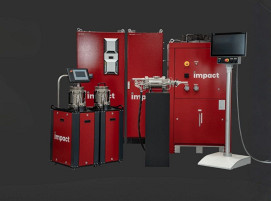
Developed in close collaboration with Impact Innovations Linspray Connect is a smart, reliable and safe gas supply solution designed specifically to meet the high-pressure specifications of Impact Innovation’s cold spray system. The sophisticated design ensures not only the delivery of a reliable, stable and high-quality gas flow with minimal variation, it enables the customer to monitor process parameters in the gas supply such as pressure, temperature and filling levels of the gas bundle or tank.
“The smart system also has the capability to automatically send error messages in real time and can switch to an emergency gas supply or activate a safe shut-down of the system in case of incidents,” explains Krömmer, “And production volumes can easily be increased or decreased as required.” These enhanced delivery capabilities and insights will result in reduced downtime as error notifications allow for proactive, preventative maintenance.
Nuclear
Nuclear storage and transport casks are large, typically steel containers that can weigh up to 120 t. Obviously, given their nuclear waste contents, long-term corrosion and wear resistance is top of the list of surface features. “The nuclear business needs a container that simply lasts for many hundreds of years, and cold spraying is one of the few ways of doing it,” Kirchpfening says. It is possible to meet all three key industry requirements: corrosion resistance, thick coatings and a good bonding to the substrate (steel container).
Automotive
With the increasing adoption of electric vehicles and the latest powertrains enabling them to be virtually emission-free, non-exhaust emissions from braking and are coming under increased scrutiny and regulation. So-called brake wear consists of metal-based particulate matter – tiny but harmful particles are emitted every time the brakes are activated. Cold spraying offers automotive manufacturers a means of improving brake corrosion resistance and reducing emissions in new cars.
(Source: Linde)
Schlagworte
CoatingCold SprayingNitrogenProcess GasSurface TreatmentSurfacingThermal Spray BulletinThermal SprayingTSB