
29.07.2025
International
Sixfold increase in productivity, production costs halved, energy consumption and material waste significantly reduced, component quality improved – the EU-funded research project InShaPe published impressive numbers. Over the past three years, the consortium has developed a new process optimisation approach that combines AI-based beam shaping with multispectral imaging (MSI) in the laser-based powder bed fusion of metals (PBF-LB/M) additive manufacturing process. The aim of the project was to significantly improve the efficiency, economic feasibility and sustainability of this manufacturing process. The project partners have successfully trialled these innovations in five complex industrial demonstrators in the aerospace industry, the energy sector and mechanical engineering. The Professorship of Laser-based Additive Manufacturing at the Technical University of Munich (TUM) coordinated the project, working with ten other partners from eight countries. Funded by the European Union, InShaPe received 7.2 million euros from the Horizon Europe framework programme.
The additive manufacturing (AM) method known as laser-based powder bed fusion of metals is now a core technology for the production of complex metal parts. However, rigid laser beam profiles and insufficient process monitoring often create problems during the melting process, potentially causing material defects and halting production. This results in waste and increased energy use, driving up production costs and slowing down the production process. The consortium behind the EU project InShaPe took on these challenges and researched a new approach that combines AI-based beam shaping and multispectral imaging.
Sixfold increase in productivity
The InShaPe project partners have brought significant productivity improvements to the PBF-LB/M process. In a range of industrial applications, they achieved productivity gains of over 600 %, including manufacturing rates of up to 93.3 cm³/h in components using Inconel 718[1]. The starting manufacturing rate was 15 cm³/h. At the same time, the consortium slashed costs by 50 %, hitting an important project target.
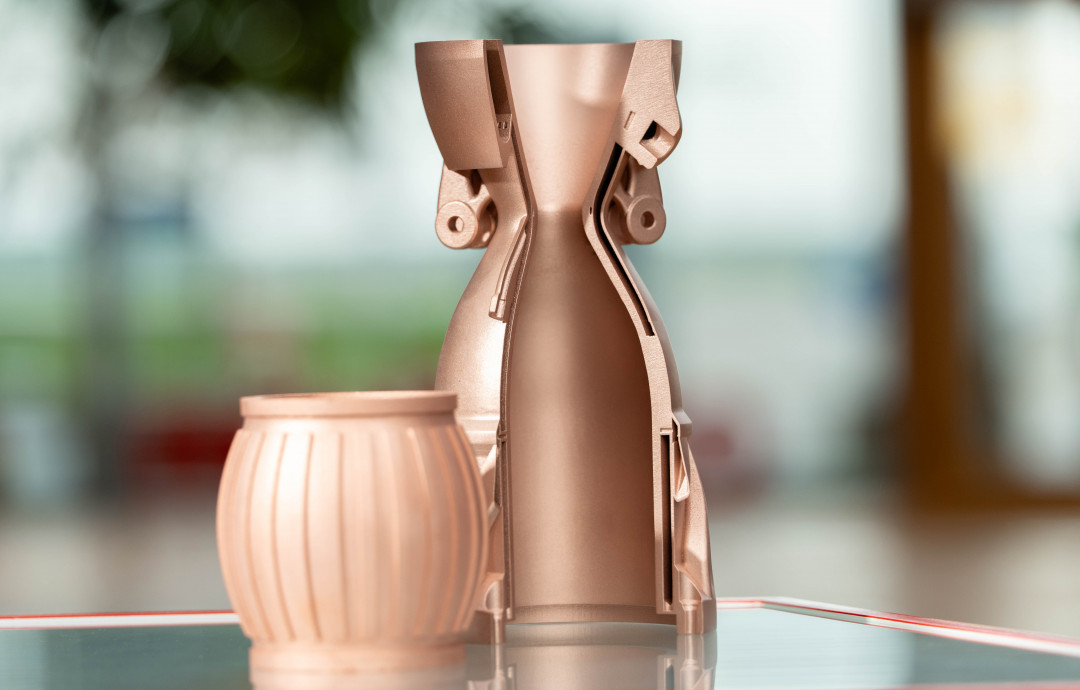
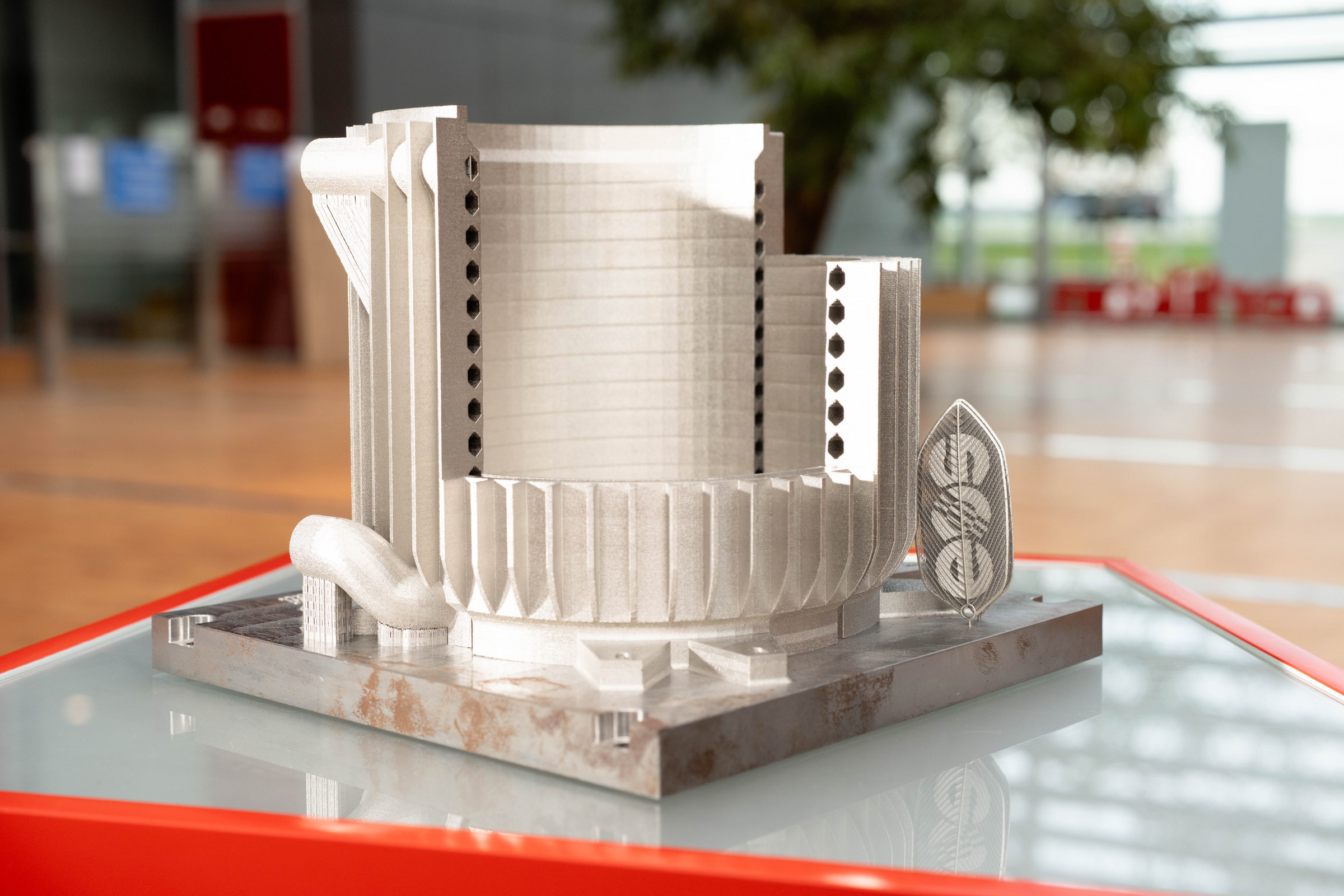
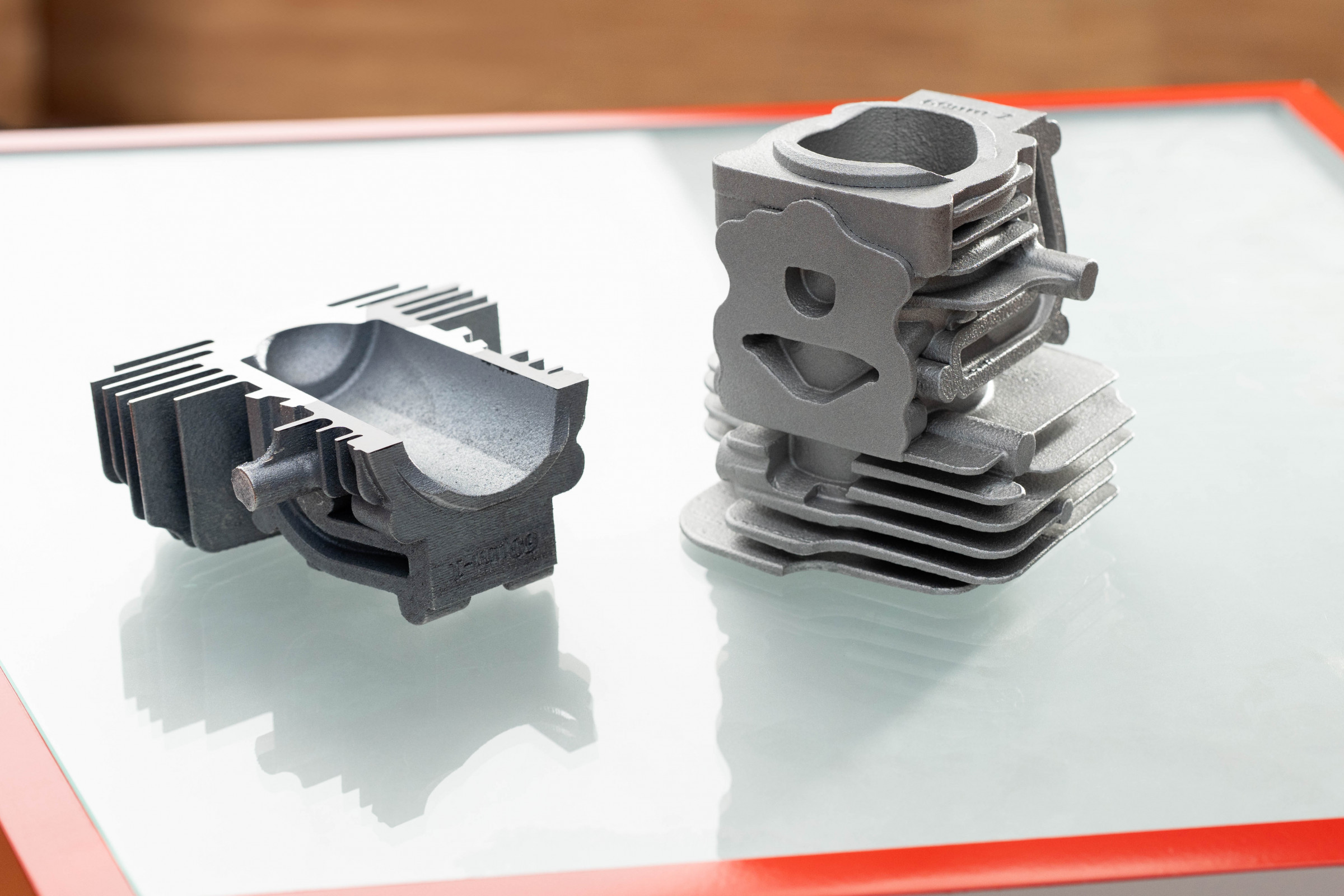
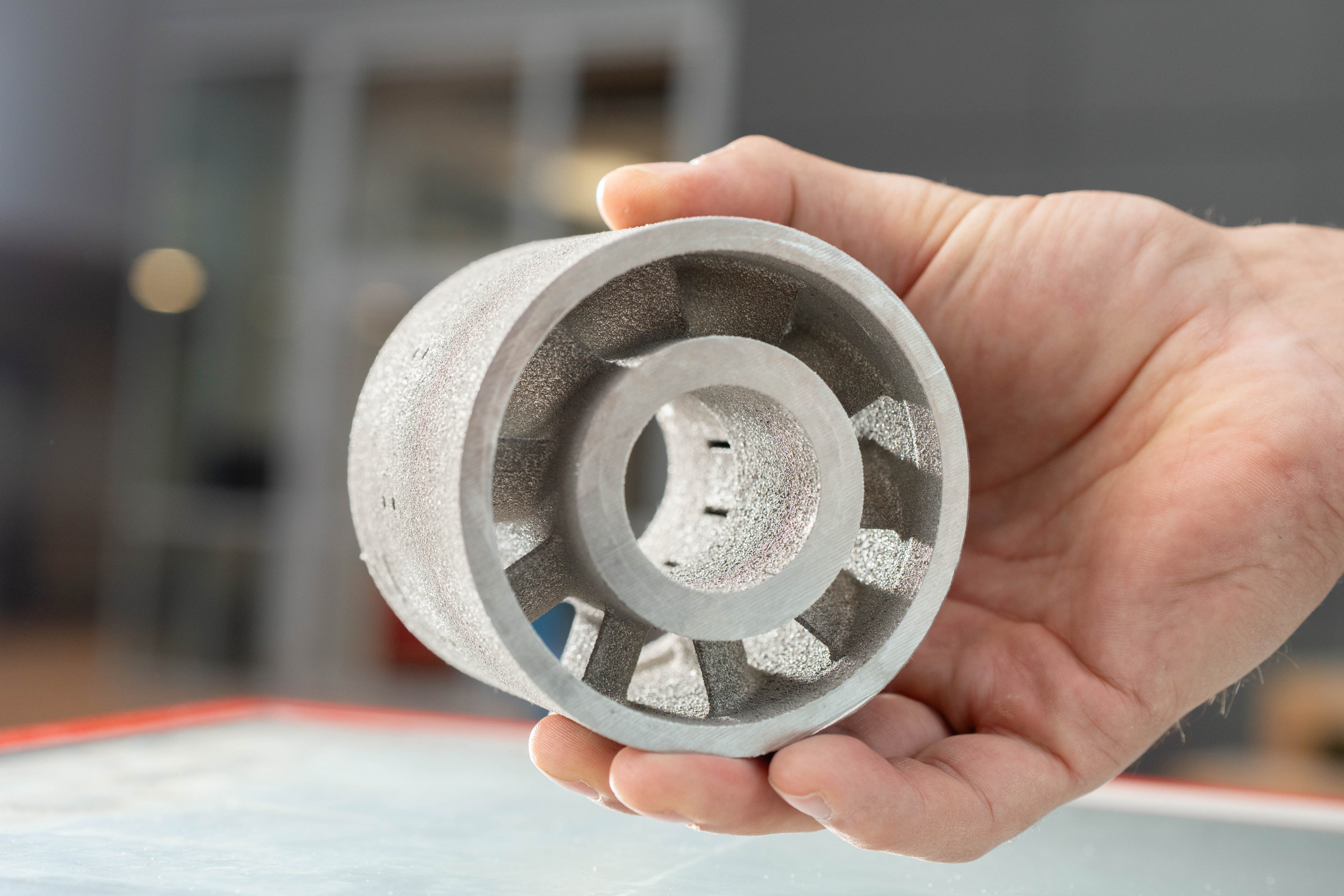
The project partners demonstrated the beam shaping and multispectral imaging (MSI) innovation in five industrial applications: an impeller for aerospace (Inconel 718), an industrial gas turbine part (Inconel 718), part of a combustion chamber used in space (CuCrNb), a chainsaw motor cylinder head (AlSi10Mg) and components for satellite antennas used in space communication.
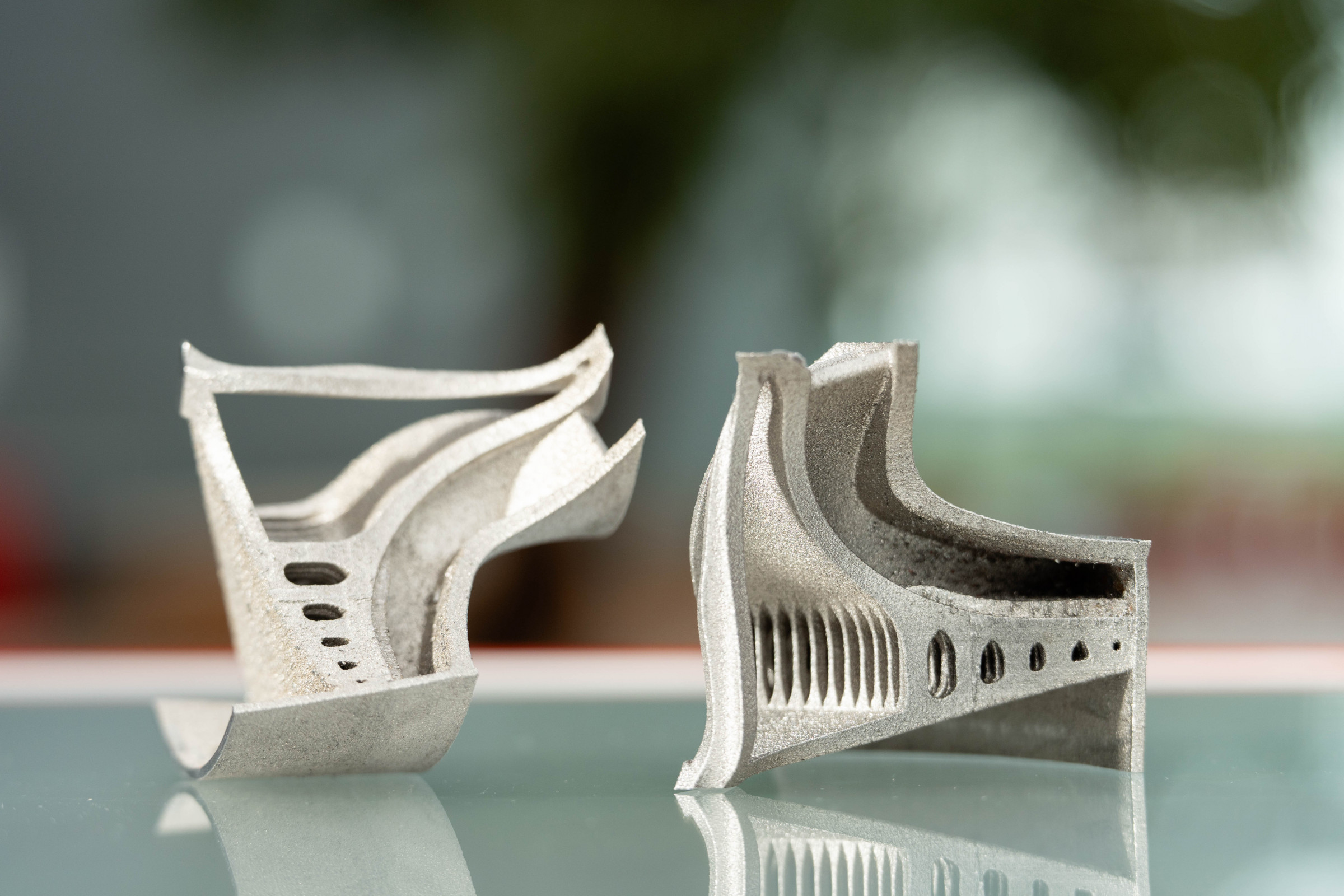

AI-based beam shaping in combination with multispectral imaging
The intelligent beam shaping and multispectral imaging technologies work in close harmony for a vastly improved AM process. The laser beam profile is adapted specifically to the component and its specific geometry and material. This improves the quality of the component and speeds up processing, avoiding issues such as cracking, spatter and condensate that would otherwise result in reworking requirements and/or create waste. The InShaPe researchers found that a ring-shaped beam profile – in combination with optimised scanning strategies – works particularly well for a diverse range of applications. Rather than using a Gaussian beam, they modulated the beam to distribute its intensity in a ring-shaped profile to generate the melt pool. This produces a more stable melt zone and more even material processing.
In parallel, the new multispectral imaging system captures signals in various wavelength ranges and monitors the PBF-LB/M process in real time. This way, thermal changes in the melt pool can be detected at an early stage. Recorded data flow directly into the process management. Defects that previously brought production to a halt or required pieces to be reworked can now be corrected, allowing the process to continue without major delays.
Pioneering industrial introduction for series production
In summary, this innovative approach is an important step forward on the path towards industrial series production with PBF-LB/M. The combination of intelligent beam shaping and MSI process control results in a more stable melt, reducing a source of defects and ensuring targeted, less resource-intensive use of energy. As a result, complex metal parts can be produced more quickly, at lower cost and more sustainably, while quality also improves and productivity ramps up significantly. InShaPe thus clears the path for faster industrial introduction of AI-based beam shaping and MSI process control, strengthening technological progress in AM, especially for the aerospace, energy and automotive sectors. “Academic and industrial interest in our work is very high. We are delighted that this technology will soon be used in industrial systems and drive advances in process control, quality assurance and application capabilities across a range of sectors”, commented the InShaPe coordinator, Prof. Katrin Wudy from the School of Engineering and Design at the Technical University of Munich.
About the EU project InShaPe
Funded by the European Union, the project InShaPe was launched in June 2022. By the end of May 2025, it had received €7.2 million in funding from Horizon Europe, the EU Framework Programme for Research and Innovation. The project’s goal was to improve the efficiency, economic feasibility and sustainability of laser-based powder bed fusion of metals and to transform it into a commercially widespread production technology. The project was carried out by the Technical University of Munich with ten other partners from Germany, France, Israel, Italy, the Netherlands, Sweden, Slovenia and Spain. The project was managed by Prof. Katrin Wudy, Head of the Professorship of Laser-based Additive Manufacturing at the Technical University of Munich.
(Source: Bavarian Research Alliance)
Schlagworte
Additive ManufacturingAerospaceAutomotiveComponentsEngineeringLaserLaser BeamManufacturingMechanical EngineeringProcessProjectResearchSustainability