
21.09.2026
Research
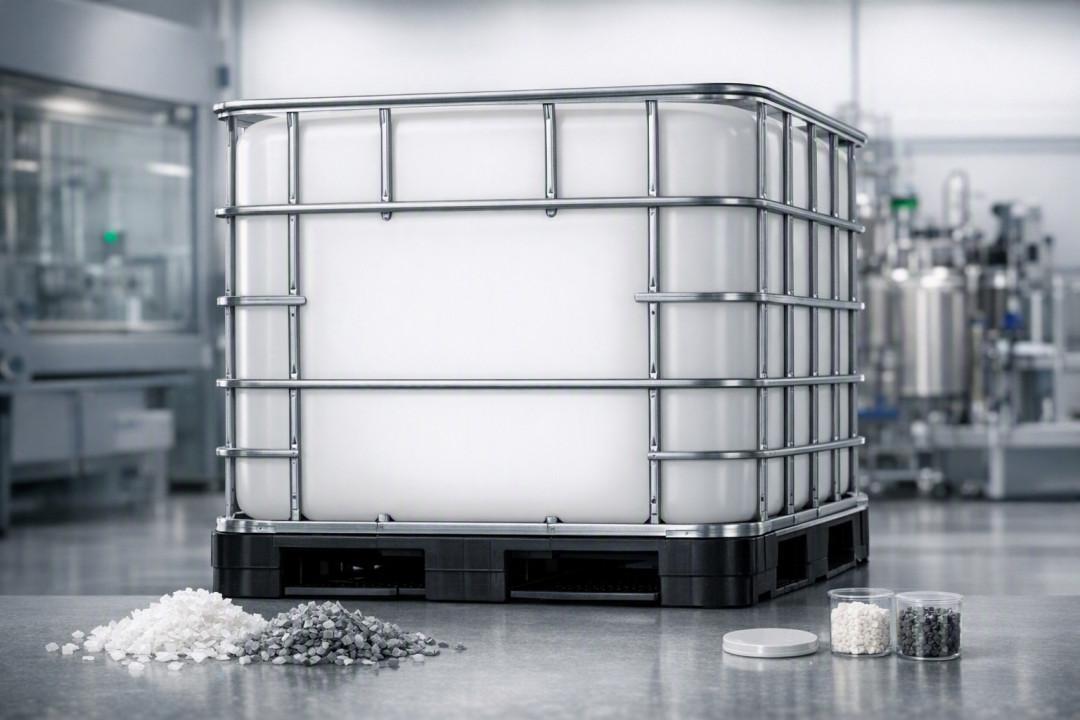
Within the MultiCycCon project, Fraunhofer LBF and the Federal Institute for Materials Research and Testing (BAM) investigate how repeated recycling affects the environmental stress cracking resistance (ESCR) of high-density polyethylene (HDPE). The project generates the scientific basis required for the reliable use of recycled HDPE in transport and hazardous goods containers.Using
Recyclates safely and economically
HDPE is widely used for industrial packaging applications, including jerrycans, drums and intermediate bulk containers (IBCs). Particularly in hazardous goods packaging, materials must maintain their performance over long service periods and under demanding environmental conditions. Environmental stress cracking and slow crack growth are among the most critical failure mechanisms.
Repeated processing, thermal exposure, UV weathering and contamination may alter the polymer structure and affect material performance. However, reliable data on the influence of multiple recycling cycles on the environmental stress cracking resistance of HDPE remain limited. This lack of knowledge makes it difficult to assess recycled materials for safety-critical applications.
The challenge is particularly relevant for manufacturers, recyclers and plastics processors seeking to increase recycled-content levels while meeting stringent safety and regulatory requirements. MultiCycCon therefore provides a scientifically sound basis for evaluating material quality and application suitability throughout the development process.
Objectives of the MultiCycCon research project
The project aims to:
- systematically determine the influence of repeated recycling, aging and processing cycles on the environmental stress cracking resistance of HDPE,
- correlate material changes with mechanical, chemical, rheological and thermoanalytical properties
- identify relationships between material structure, aging condition and crack-growth behavior and
- derive recommendations for testing procedures, technical guidelines and standardisation activities.
Experimental approach
Three selected HDPE grades are subjected to defined recycling and aging scenarios under laboratory conditions. The investigations include up to ten extrusion cycles, repeated thermo-oxidative aging, and multiple UV weathering and processing cycles. Samples are taken at defined stages and comprehensively characterized to assess material changes throughout the recycling process. In addition, recyclates with a documented processing history are incorporated into the study. The project combines controlled laboratory investigations with practical recycling experience to establish a robust basis for assessing the interaction between aging, recycling and material performance.
Testing and characterisation methods include:
- Full Notch Creep Testing (FNCT)
- Tensile testing
- Dynamic Mechanical Analysis (DMA)
- Gel Permeation Chromatography (GPC)
- FTIR spectroscopy
- Melt rheology
- Differential Scanning Calorimetry (DSC)
Fracture surface analyses using laser scanning microscopy and scanning electron microscopy provide additional insights into crack initiation and propagation mechanisms. The results are combined to identify robust correlations between material structure, aging condition and failure behavior.
Benefits for industry and circular economy
MultiCycCon provides a scientific foundation for evaluating the suitability of recycled HDPE in safety-critical applications. The project supports evidence-based decisions regarding recycled-content levels, material formulations and assessment strategies. The findings contribute to the development of reliable assessment approaches for recycled materials and support the implementation of high-quality HDPE recycling loops. In addition, the results provide input for testing methodologies, technical guidelines and standardisation activities.
By improving the understanding of the relationship between recycling history, aging and environmental stress cracking resistance, MultiCycCon helps strengthen both resource efficiency and technical reliability in plastics applications.
Funding and partners
Fraunhofer Institute for Structural Durability and System Reliability LBF and the Federal Institute for Materials Research and Testing (BAM) combine expertise in plastics engineering, aging behavior, material analytics, testing methodologies and standardisation. Together, they translate scientific insights into safe and reliable industrial applications.
An advisory committee consisting of industrial companies and associations supports material selection, practical validation, and knowledge transfer. Research findings are disseminated through scientific publications, conferences, industry dialogue and standardisation activities. MultiCycCon is funded as an Industrial Joint Research (IGF) project under grant number 01IF25124N. The project is managed by the Forschungsgesellschaft Kunststoffe e.V.. Duration: 30 months.
(Source: Fraunhofer LBF)
Schlagworte
Circular EconomyHDPEHigh-Density PolyethylenePlastic ProcessorsPolymersRecyclatesRecyclingRepeated RecyclingStress Cracking Resistance