
14.09.2026
Companies
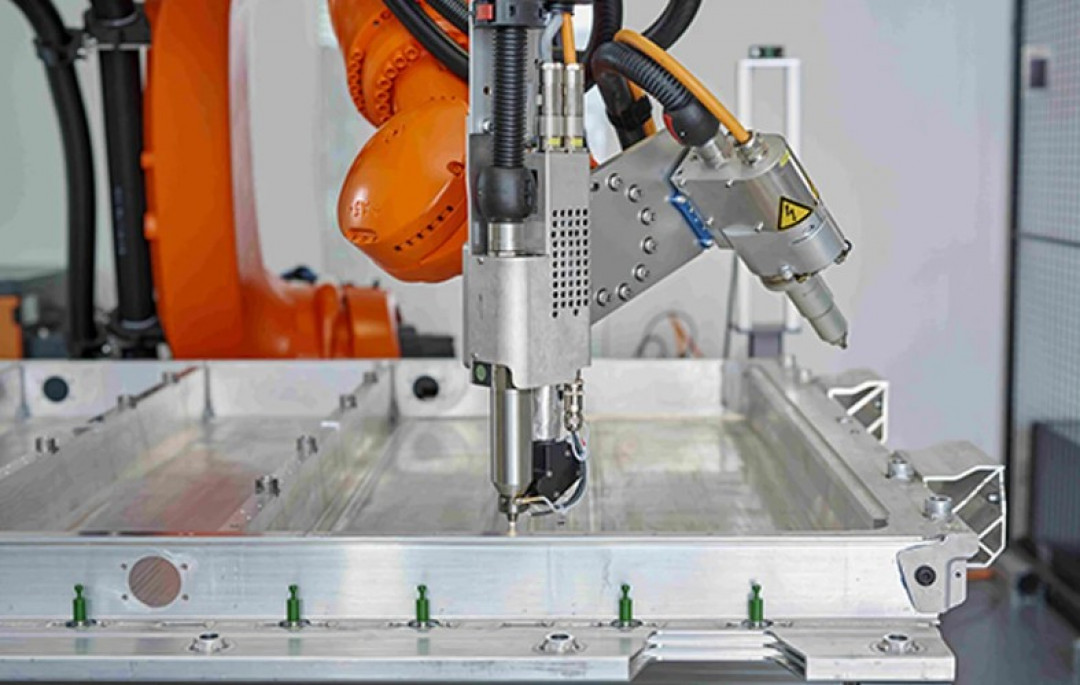
A clean surface is essential for strong adhesive bonds, reliable sealing systems and durable aluminum components. As demands for functionality and quality continue to rise, surface treatment and corrosion protection are becoming increasingly important. In fields such as automotive and mechanical engineering, electronic assemblies and battery housings for energy storage systems, cleaning and corrosion protection are essential steps in ensuring consistently high component quality.
At Aluminium 2026 in Düsseldorf, Germany, Plasmatreat will demonstrate how to achieve this in a cost-effective, resource-efficient and reliable manner. In the Surface Pavilion in Hall 3, Booth 3F70-01, Plasmatreat will present plasma technologies for cleaning, activating and functionalising aluminium components throughout the industrial process chain. The focus is on atmospheric plasma processes that can be integrated into automated production lines. These processes are an environmentally friendly alternative to wet chemical processes and prepare aluminium specifically for bonding, sealing, painting or coating.
When aluminium surfaces become a critical quality factor
Whether the aluminium is cast, extruded, used for battery housings or for precision components: The success of subsequent manufacturing steps often depends on the surface of the component. Release agents, oils, cooling lubricants, manufacturing particles and natural oxide layers can impair adhesion and functionality. These factors directly impact bonding, sealing and coating processes. Therefore, manufacturers need processes that allow aluminium to be treated consistently without additional steps, long cycle times or complex chemicals.
Selective, tested corrosion protection for long-lasting aluminium components
In many applications, aluminium must be clean, suitable for adhesion and permanently protected against corrosion. In battery housings, electronic components and industrial sealing systems, even minor vulnerabilities can later result in functional or quality issues. Plasmatreat's PlasmaPlus AntiCorr is a plasma process that automatically and precisely applies a functional nanocoating to specific areas of a component. The plasma beam applies a minimal amount of a precursor, thereby creating the desired functionality. This coating protects critical areas from crevice corrosion, supporting the long-term functionality of sealing and joining systems.
Since only the areas that require treatment are processed, material usage, chemical consumption and logistical costs are reduced. The technology is also designed for use on the production line. It has been extensively tested and meets the requirements of standard environmental and corrosion tests, including salt spray tests according to PV1209, as well as VW corrosion classes 96380 and 51500-1.
In-line surface treatment directly on the production line
A clean, well-defined surface is essential for reliable downstream processes. Plasmatreat's Openair-Plasma solution operates at atmospheric pressure and uses only compressed air and electrical energy. Aluminium components can be cleaned immediately after manufacturing or before further processing. This creates the conditions necessary for consistent bonding, sealing and coating results. A particular advantage lies in the selective application. Plasma is applied only where a specific function is required, such as on bonding surfaces, sealing areas or defined contact zones. Unlike electroplating, the treatment can be performed in the factory or directly on the production line. This reduces transportation costs and CO₂ emissions, conserves resources and shortens manufacturing processes. The Plasma Control Unit (PCU) complements the treatment by reliably monitoring and documenting relevant parameters, ensuring reproducible results.
Aluminium is used as a highly functional material in an ever-increasing number of applications. Consequently, clean, well-defined and functionally suitable surfaces are becoming increasingly important. At the same time, companies are seeking cost-effective, sustainable alternatives to traditional pretreatment methods. Plasma technologies make it possible to prepare components specifically and in line for further processing. We see great potential for the aluminium industry in this area,” explains Lukas Buske, CEO at Plasmatreat.
Targeted removal of stubborn contaminants
Not all aluminium surfaces can be cleaned using the same approach. While Openair-Plasma efficiently removes many organic residues, more complex contaminants from manufacturing and machining processes require an advanced solution. Plasmatreat developed HydroPlasma technology, which combines atmospheric-pressure plasma with water as an additional process medium. This process generates highly reactive species that can remove organic and inorganic residues from component surfaces. This process is designed for aluminium components where stubborn contaminants interfere with further processing.
Like Openair-Plasma, HydroPlasma is suitable for automated production lines and does not require additional chemical cleaning agents. This allows demanding cleaning tasks to be integrated directly into existing manufacturing processes. Manufacturers can increase process reliability for bonding, sealing, and coating applications while reducing their use of traditional wet chemistry.
(Source: Plasmatreat GmbH)
Schlagworte
AdhesivesAluminiumAutomotiveBatteriesBattery HousingBondingCoatingMechanical EngineeringNanocoatingSealingSurface TreatmentSurfacingTrade Fair