
10.01.2026
International
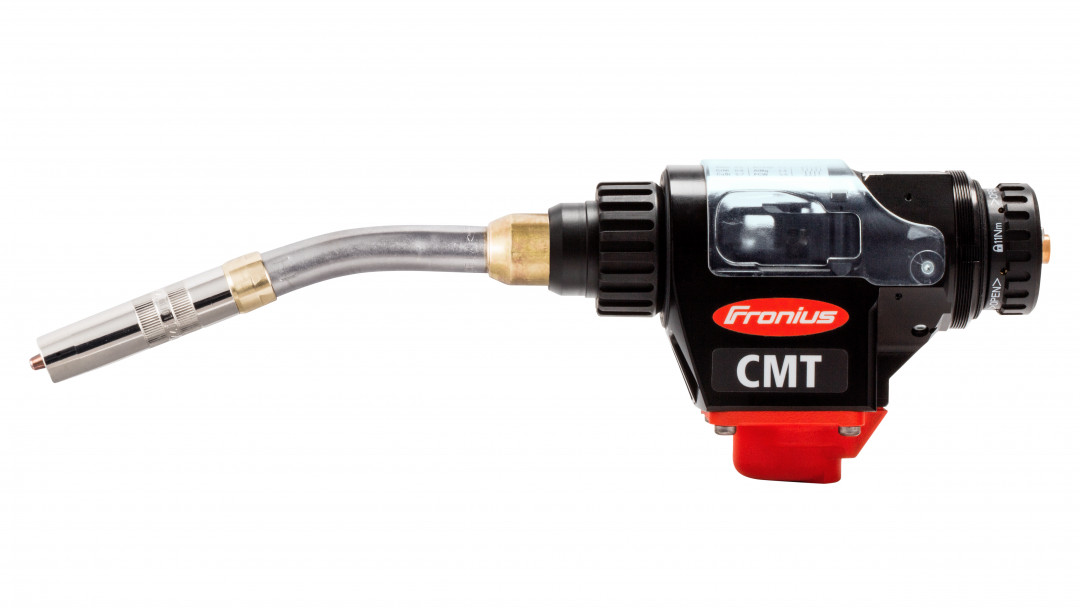
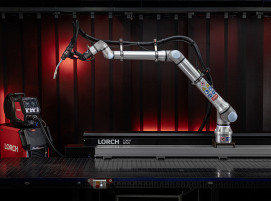
Fronius is continuing to define precision in robot-assisted welding with improvements to its patented WireSense assistance system. Having been used successfully in the automotive industry for several years, WireSense can now be used in the construction and agricultural machinery sector, commercial transportation and the metalworking industry.
More versatile than before, WireSense delivers accurate results with all common seam geometries, including in steel and container construction or on chrome-nickel components. Despite the great care taken in industrial production with robot welding systems, inaccuracies still occur due to clamping tolerances or upstream processes. A challenge for companies and robot integrators alike, Fronius has created a solution with the WireSense robot assistance system. WireSense turns the welding wire into a sensor to accurately determine the position of the component, making it possible to react precisely to positional deviations and correct weld paths accordingly. Rework and component rejects are thereby reduced to a minimum.
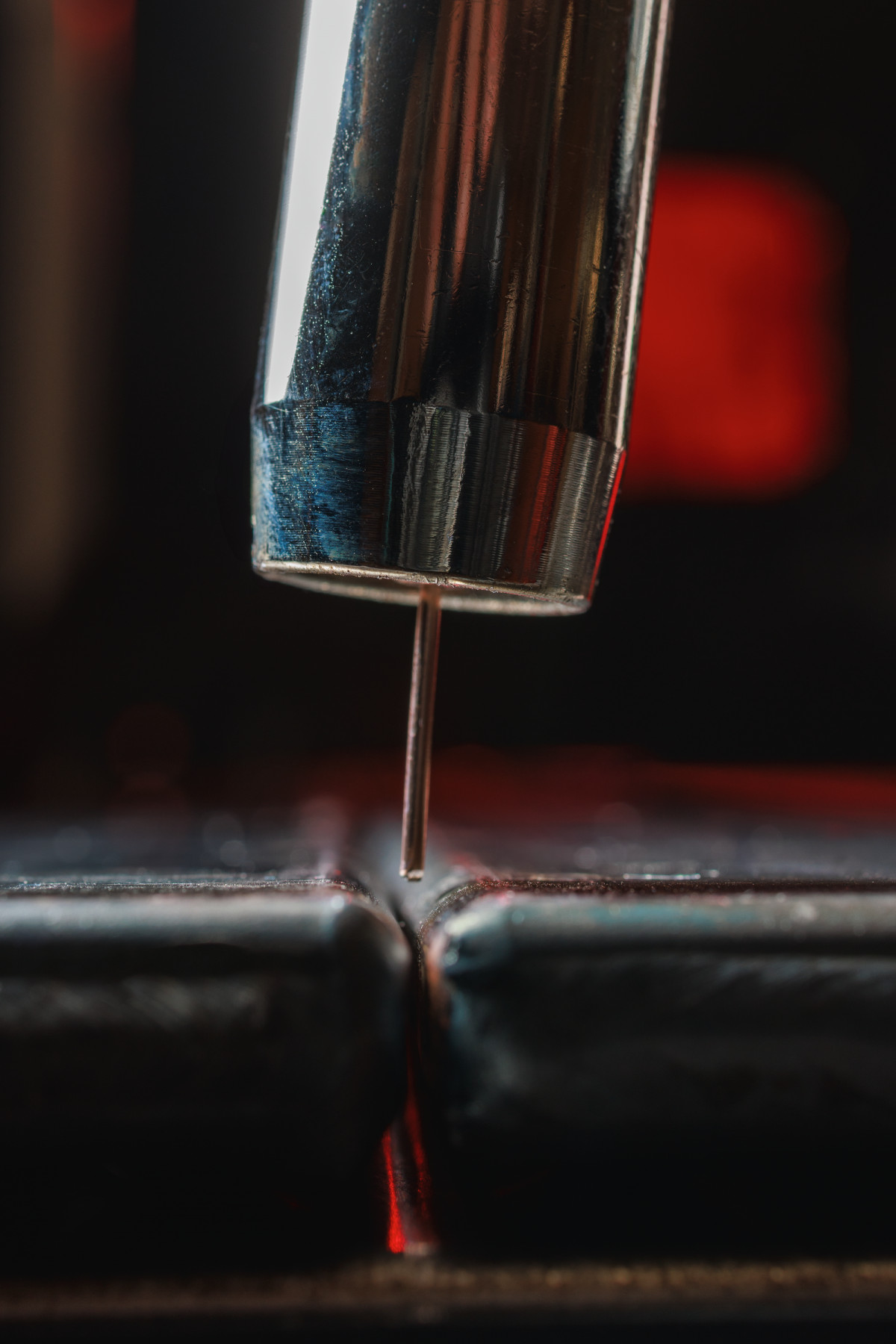
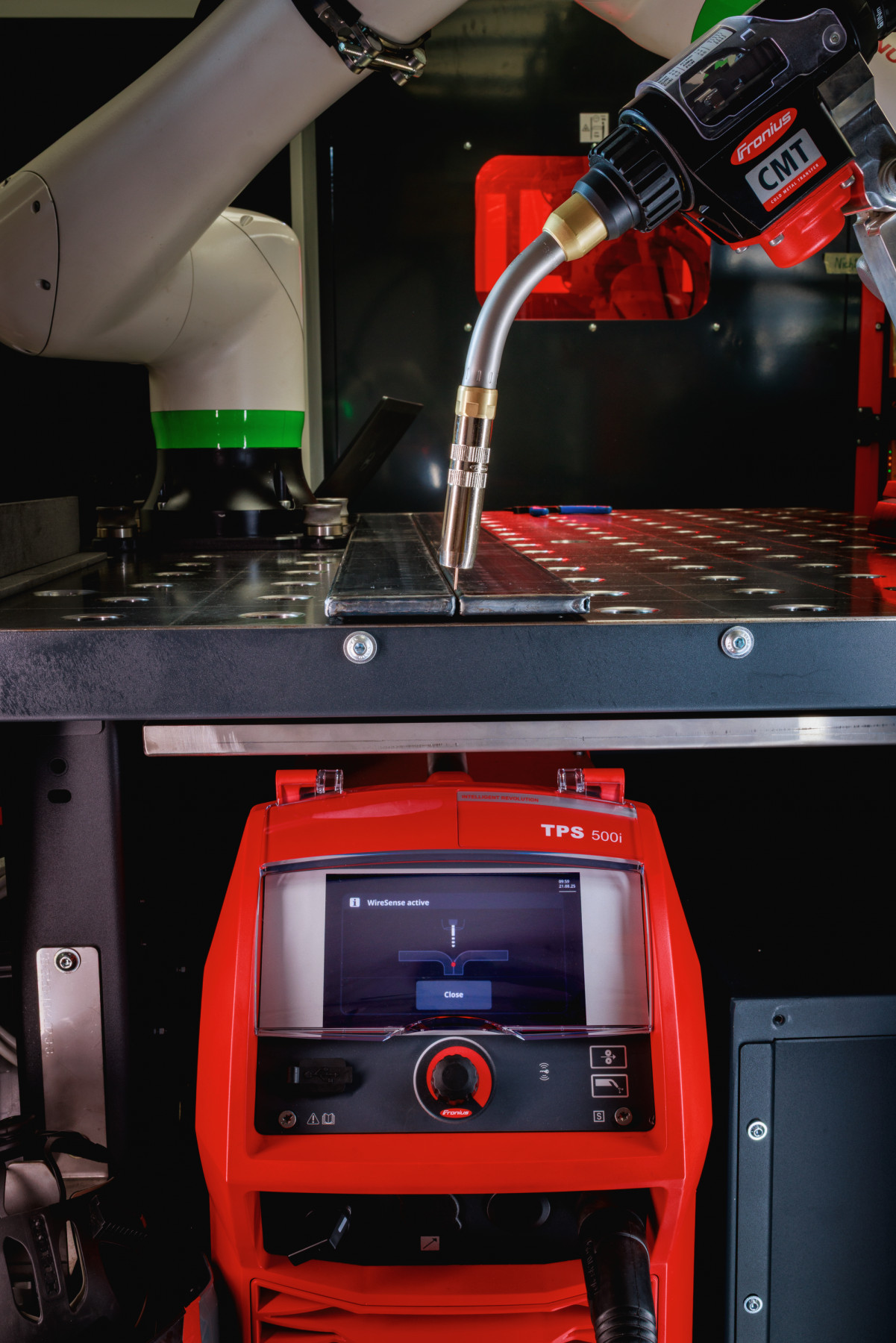
The welding wire as a sensor
WireSense uses the wire electrode not only for welding, but also for measuring component geometries. Thanks to the high-frequency, reversing wire movement, the system detects precise component and seam geometries, edges, height differences and air gaps – and all without any additional sensor hardware. The benefits of WireSense are particularly pronounced on reflective surfaces such as aluminium, where optical systems such as cameras often fail.
“The measurement is contact-based and works on the basis of a weld-free short circuit being established. What’s more, WireSense is compatible with all standard filler metals,” explains Philipp Schlor, Strategic Product Manager at Fronius International. “The Fronius welding machine – an iWave or TPS/i – detects edges or impacts and transmits this information to the robot controller. This then compares the data with the programmed path and automatically corrects the tool center point (TCP), ensuring that the seam is always welded at exactly the desired location.”
New version, new application possibilities
The new WireSense version now supports all seam geometries: fillet welds, square butt joints, flange welds and complex, rounded shapes. It can also be used flexibly and reliably with materials such as steel, stainless steel, aluminium, and CrNi alloys, making it attractive for significantly more applications – especially for companies that work with varying sheet thicknesses and complex geometries. Even thicker materials of 4 mm and more can now be reliably detected and processed.
Advantages for integrators and companies
WireSense is a prime example of the transition to intelligent manufacturing. It offers a number of advantages that benefit system integrators in particular:
- Precise position measurement even with difficult component accessibility
- Reliable weld quality, process security, and repeat accuracy
- Detection of sheet thicknesses from 0.5 mm
- Evaluation of gap sizes for automatic selection of stored welding parameters
- Reduction of rework and rejects by up to 100%
- No additional sensors: no cameras, calibration, or maintenance required
WireSense utilizes precision of CMT components
The assistance system requires a CMT-Ready setup consisting of the Robacta Drive CMT drive unit and the corresponding CMT wire buffer as well as the WireSense software package (the CMT software itself is not required). It is integrated via the Fronius welding machine, which transmits the sensor signal to the robot controller at lightning speed. Fronius works closely with robot manufacturers so that all the most common robots can process WireSense signals without issue. A free software update will be provided from mid-2026.
(Source: Fronius International GmbH)
Schlagworte
AutomotiveCMTConsumablesMetalworkingRoboticsWeldingWelding ConsumablesWelding Wire