
03.05.2024
International
Global Robotics Race: Korea, Singapore and Germany in the Lead
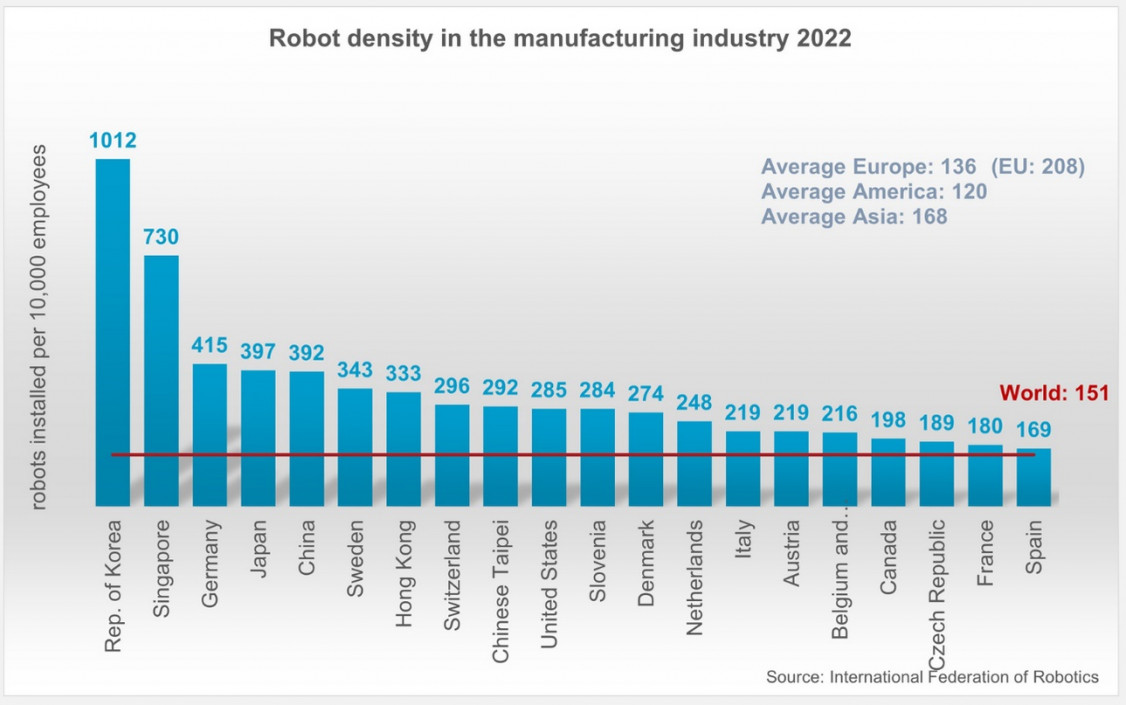
Driven by the high volume of industrial robot installations, the world hit a new record of 3.9 million operational robots in 2022. The top most automated countries measured by robot density are: The Republic of Korea (1,012 robots per 10,000 employees), Singapore (730 units) and Germany (415 units). This is according to the World Robotics 2023 report, presented by IFR.
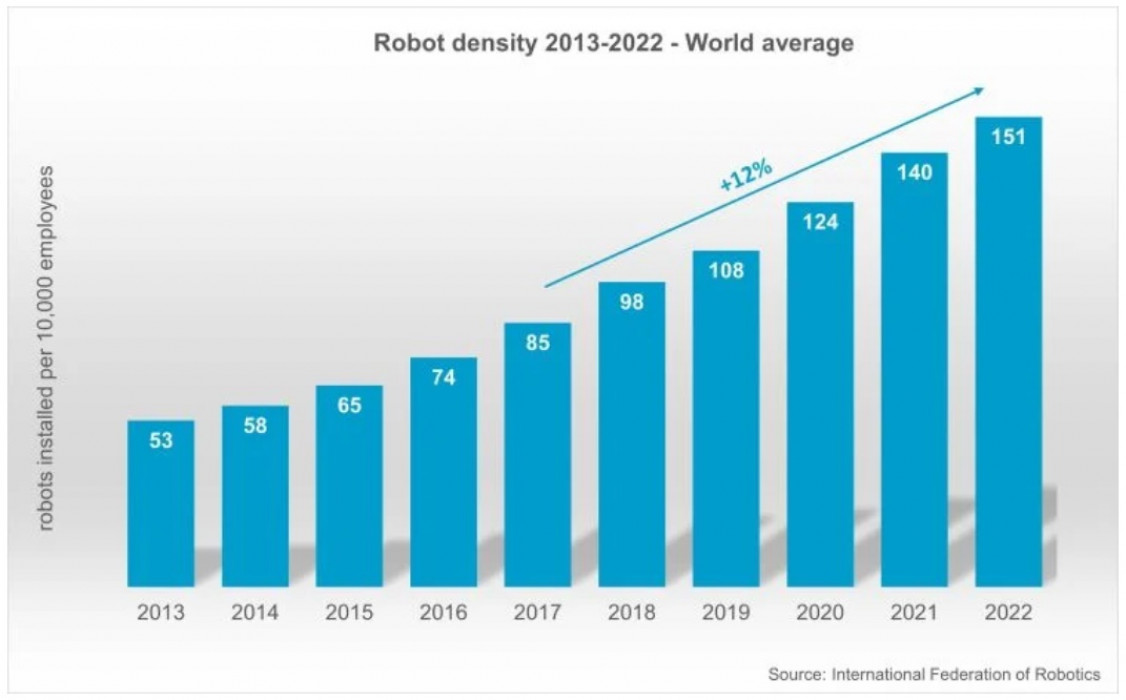
“Robot density data reveal the state of automation worldwide and allow us to compare regions and countries,” says Marina Bill, President of the International Federation of Robotics. “The speed of robotics adoption in factories around the world is impressive: the new global average robot density hit an all-time high of 151 robots per 10,000 employees – more than double the number measured only six years ago.”
Robot density by region
Asia has a robot density of 168 units per 10,000 employees in the manufacturing industry. On a global scale the economies of Korea, Singapore, Japan, Mainland China, Hong Kong and Chinese Taipei all rank within the top-ten most automated countries. The European Union has a robot density of 208 units per 10,000 employees with Germany, Sweden and Switzerland ranking in the global top-ten group. North America´s robot density is 188 units per 10,000 employees. The United States is among the top-ten most automated countries in the manufacturing industry.
Top countries
- The Republic of Korea is the world´s number one adopter of industrial robots. Robot density has increased by 6 % on average each year since 2017.
- The Korean economy benefits from two large customers – a strong electronics industry and a distinct automotive industry.
- Singapore follows with 730 robots per 10,000 employees. Singapore is a small country with a very low number of employees in the manufacturing industry.
- Germany (415 robots per 10,000 employees) ranks third. Robot density of Europe’s biggest economy has grown by 5 % CAGR since 2017.
- Japan is in fourth place (397 units). Robot density of the world’s predominant robot manufacturing country grew by 7 % on average each year (2017 to 2022).
- China made its way up to fifth place 2021 and maintained this position in 2022. The country’s massive investment in automation technology yields a high robot density of 392 robots per 10,000 employees – despite a huge workforce of roughly 38 million people in the manufacturing industry.
- Robot density in the United States rose from 274 units in 2021 to 285 in 2022. The country ranks tenth in the world.
About Robot density
Robot density is the number of operational industrial robots relative to the number of employees. It can cover the whole manufacturing industry or just specific industrial branches. The number of employees serves as a measure of economic size, so the quotient of operational stock over employees puts the operational stock on a uniform base.
(International Federation of Robotics Press Release)