
29.04.2024
International
Green Hydrogen Research: A Collaboration to Empower Tomorrow's Energy
The German Federal Ministry for Education and Research (BMBF), the Italian Ministry of Foreign Affairs and International Cooperation (MAECI) and the Italian Ministry of University and Research (MUR) aim to pursue their innovation dialogue and agreed on a joint Research and Innovation (R&I) Activity. The deadline for the submission of proposals is June 7, 2024, 5 p.m. (CEST).
Objective of the funding measure
Green Hydrogen and its economic ramp-up are crucial for a sustainable economy and the energy and climate transition. That is why the Italian Ministry of Foreign Affairs and International Cooperation (MAECI), the Italian Ministry of University and Research (MUR) and the German Federal Ministry for Education and Research (BMBF) are pushing ahead with research on green hydrogen. Research and Development play a crucial role in this process as they provide the solutions for green hydrogen along the entire value chain. Therefore, with this call for proposals, the German and Italian ministries, BMBF, MAECI and MUR, intend to strengthen the Italian-German cooperation in green hydrogen research and stimulate the related innovation processes in both countries.
Joint research collaborations enable results and innovations to be achieved more efficiently, as cross-country research is performed "hand in hand" and supported by the expertise of both countries. Furthermore, by working together, the competitiveness and the recognition of research institutes and SMEs can be increased steadily. Moreover, the joint work can strengthen the link between industry and research, as well as the research capacity and expertise. Overall, an essential element of a common European hydrogen economy can be achieved through collaborative work. This call is based on the German Federal Government’s “7th Energy Research Program” and on the Italian “Piano Nazionale per la Ricerca del MUR – PNR 2021-2027”. This joint research and innovation program serves as a national and regional research platform designed to provide the knowledge needed to boost efforts in the area of green hydrogen. Therefore, the funding measure offers higher education institutions, non-university research institutions and commercial companies (in particular SMEs) the opportunity to engage in joint research projects with partners from Italy and Germany and to take advantage of the existing cooperation potential in both countries. Funding is intended to vitalise Italian-German partnerships in innovative areas of research that will help to intensify relations between the partners.
Priority research area: green hydrogen
Establishing strong bilateral partnerships is an integral part for the ramp-up of a European hydrogen market. Thus, eligible research and development projects are those that focus on the green hydrogen value chain from Italy to Germany. Possible areas of research are:
- Systemic studies, societal research and framework conditions
- Sustainability analysis (e.g. LCA, techno-economic analysis, impacts on the environment)
- Development of green hydrogen business cases
- Materials along the value chain: durability and circular economic developments of existing technologies (e.g. degradation in electrolysers and recyclability of materials used), development of new materials
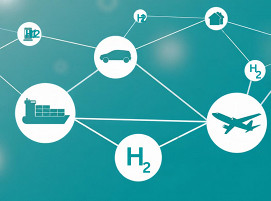
- Hydrogen infrastructure (hydrogen vectors, storage, technology, regulation and standards, common protocols, etc.)
- Scalability of technologies along the entire value chain
Funding recipients / Prerequisites for funding
The funding measures aim at the public (higher education institutions, non-university research institutions) as well as at the private sector (commercial companies, particularly SMEs). As an orientation, funding will depend on the expected scientific gain and high potential for realisation and success in line with the objectives of the funding measure. Applicants must be able to furnish evidence of previous work in the field and must demonstrate considerable willingness to cooperate. The project proposals must, as a rule, demonstrate an interdisciplinary and/or transdisciplinary approach and help to enhance research collaboration between Italy and Germany.
Funding will be provided for a collaboration consisting of at least two partners per country (at least one research institution/higher education institution and at least one commercial company). Only applicants whose home organisation is based in Germany or Italy are eligible for funding. Partners (private enterprises and/or research institutes/universities) from other countries may also participate, but no funding is allocated for their participation in the framework of this call for proposals. The German and Italian partners must regulate their respective national cooperation through corresponding written cooperation agreements in accordance with national law. On the Italian side, participating research/higher education institutions and private companies must form an officially recognised Consortium by Italian laws (ATS/ATI) and choose a coordinating institution, which will be the sole funding recipient. The coordinating institution cannot be a
private company.
Scope of funding
This funding measure covers, among others, expenditure/costs for:
- project-related personnel to execute scientific tasks specifically related to the project
- project-related resources and equipment
- travel and stays
- workshops/events
- necessary subcontracts
Funding is provided by the respective national funding providers (MAECI and MUR in Italy, BMBF in Germany) in accordance with applicable national laws and guidelines.
(Source: German Federal Ministry for Education and Research Press Release)