
08.10.2025
International
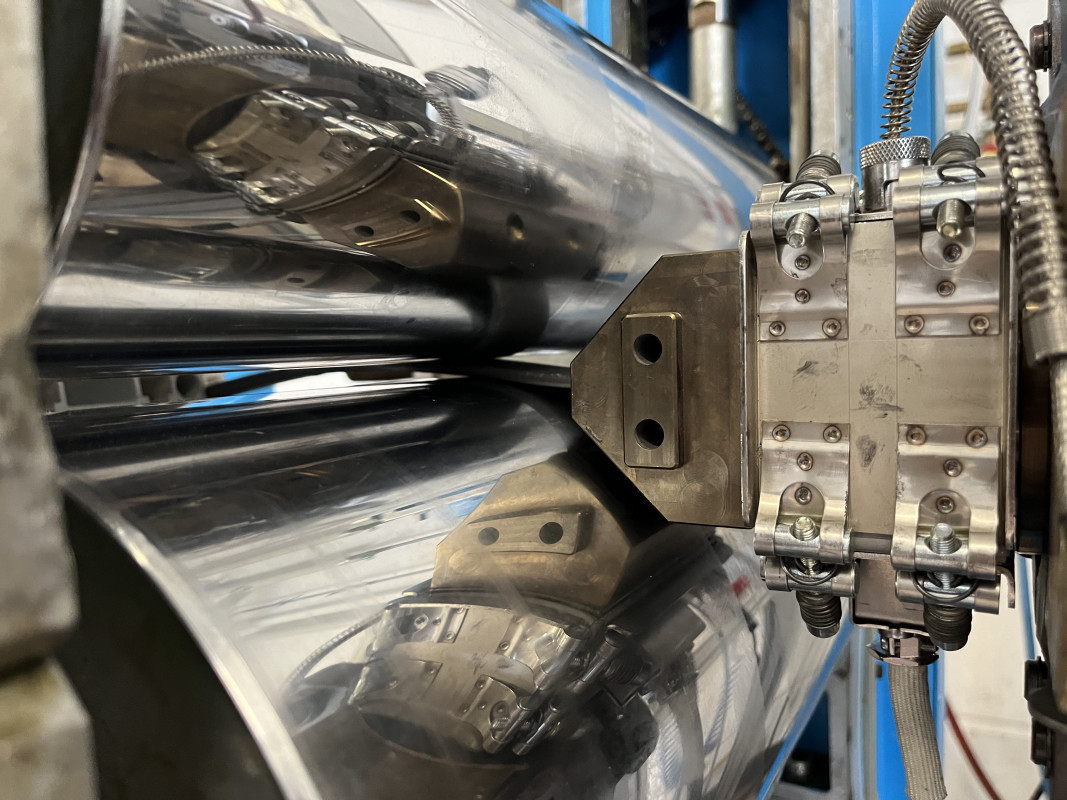
Fuel cells are considered a key technology for the energy transition. However, they place high demands on the materials used and their mass production has been a major challenge to date. Progress has recently been made in this area at the SKZ German Plastics Centre. Fuel cells are considered a key technology for a sustainable energy future. They can make a decisive contribution to decarbonisation, particularly in the field of mobile and stationary hydrogen use. In order to promote the economical production of this technology, the SKZ Plastics Centre has launched a research project to develop an innovative manufacturing process for bipolar plates.
Under the leadership of Frederik Hellert, Scientist Networked Materials at SKZ, and in cooperation with Entex Rust & Mitschke, Bochum, Germany, SKZ successfully completed a project funded by the Federal Ministry for Economic Affairs and Energy in August 2025. The aim was to develop a continuous direct extrusion process for the production of bipolar plates for high-temperature hydrogen fuel cells. These plates consist of a highly filled epoxy resin compound with graphite and carbon black and must be thermally and electrically conductive as well as gas-tight.
Efficiency through material innovation and process integration
The project demonstrated that extruded plates with a filling degree of 80 % by weight exhibit sufficiently high conductivity after pressing. The targeted addition of carbon black further increased electrical conductivity significantly. At the same time, it was possible to produce mechanically stable and dense plates even in the continuous extrusion process – an important step towards industrial series production.
Project manager Hellert emphasises the significance of the project: "The direct extrusion of highly filled materials for fuel cell components opens up completely new avenues in production – efficient, cost-effective and with impressive performance. These are exactly the kinds of developments we need to make fuel cell technology fit for the mass market."
(Source: FSKZ e. V.)
Schlagworte
Bipolar PlatesDirect ExtrusionEnergyEnergy TransitionFuel CellsHIgh-Temperature Hydrogen Fuel CellsHydrogen