
25.02.2026
International
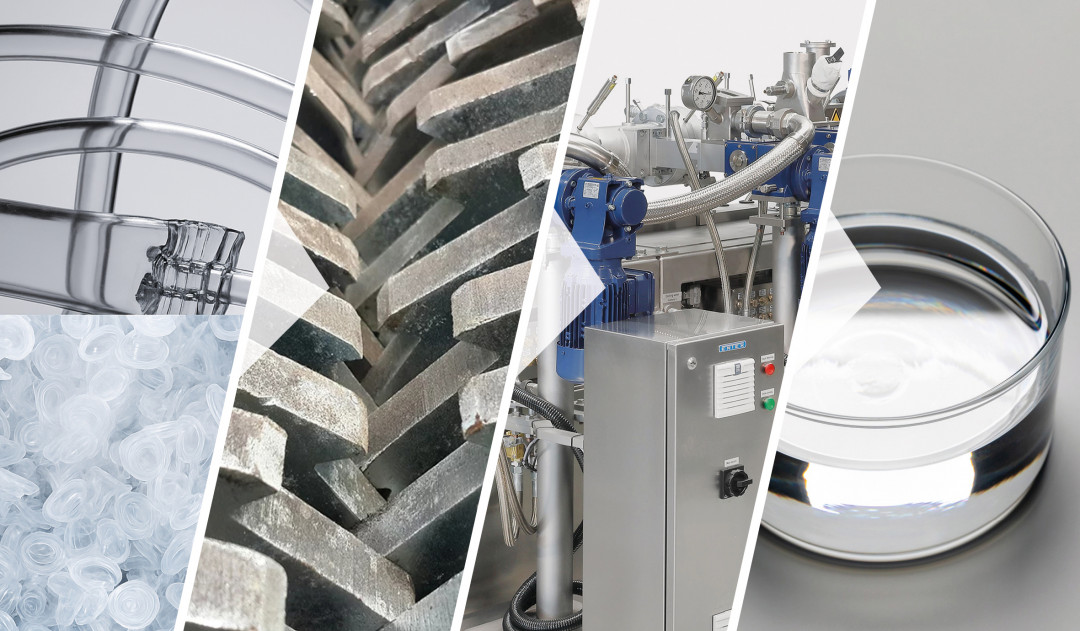
The SKZ Plastics Center is working with industry partners to develop a continuous process for recycling silicone elastomer waste. In this process, the silicones are depolymerized into monomers in a planetary roller extruder, from which new silicones can be synthesized. This avoids the energy-intensive process of producing virgin monomers and increases sustainability.
With the announcement of the European Green Deal in 2019, the European Union is pursuing the goal of becoming the first continent to achieve climate neutrality by 2050. A key area for achieving the Green Deal's environmental protection goals is the transition to a circular economy. Resource savings through recycling play an important role in this.
The production of silicones is energy-intensive. In addition, it generates CO₂ that is chemically unavoidable. The production of metallurgical silicon, which is required for the synthesis of silicone monomers, is responsible for 66 % of the greenhouse gases produced. At the same time, silicones are crucial for applications in key industries such as medicine and energy technology, as well as the automotive and electrical industries, due to their outstanding properties. Silicones are highly biocompatible, temperature-resistant, chemically resistant and weather-resistant. The SKZ Plastics Center is working with industry partners to find a solution for recycling this group of materials.
Silicones are cross-linked materials. This chemical cross-linking is the reason for their high resistance and many of their positive properties, but it also makes recycling the material particularly challenging. “Another important aspect of this project for us is to develop a continuous process that can also be implemented economically in industrial quantities,” explains Dominik Uhl, scientist in the Cross-linked Materials department at SKZ.
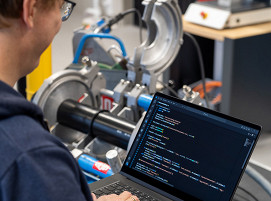
The goal of the new research project is to develop a continuous depolymerization process in a planetary roller extruder for recycling silicone waste. Such a process does not yet exist on a technical scale and is to be implemented for the first time in a laboratory setting at SKZ. In this way, directly processable monomers can be recovered and used to synthesize new silicones. This would reduce the need for new material. The development of the process represents the first step toward extensive energy savings in the production of silicones and the establishment of a circular economy for this class of materials as well.
The starting signal for the pioneering research project on silicone recycling has been given: Together with its industry partners Entex Rust & Mitschke, Mercodor Sondermaschinenbau and Wacker Chemie, SKZ is developing a continuous recycling process for silicone elastomers through depolymerization in a planetary roller extruder. This project is funded by the German government's 8th Energy Research Programme from August 1, 2025, to July 31, 2028.
(Source: SKZ - The Plastics Centre)
Schlagworte
AutomotiveCircular EconomyClimate NeutralityEnergyEUEuropean Green DealJoining PlasticsMaterialNet-ZeroPlasticsPolymersRecyclingSustainability