
11.04.2024
International
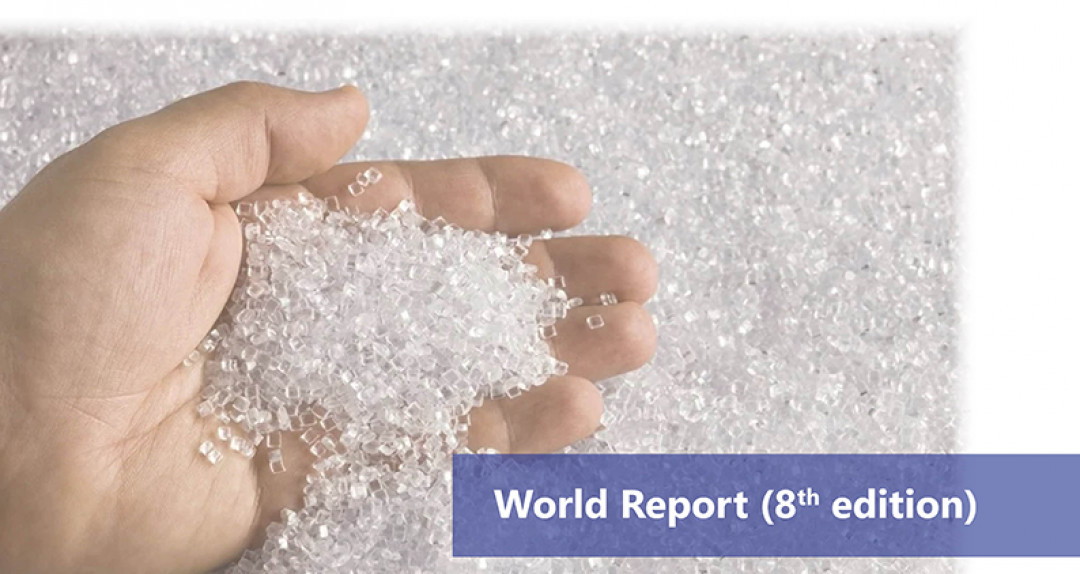
Polyvinyl Chloride – World Report (8th edition)
PVC is used to make pipes, hoses, roofing membranes and pond liners, waterstops, window profiles, and door frames, as well as truck tarpaulins and shoe soles, for example. Although PVC is no longer the most produced plastic in the world, it is still one of the best-selling thermoplastics alongside polyethylene and polypropylene.
PVC is mainly used by construction industry
Almost two thirds of the entire production is purchased by the construction industry and used for a wide variety of applications: from floor coverings to façade cladding and roof panels, as well as seals, cables, dowels and fastening elements. Pipes and pipelines alone, the most important PVC application, account for more than 36 % of PVC consumption. This is followed by profiles with 20 % and films and sheets with 18.5 %. Sewage pipes in particular are made of rigid PVC; the market for PVC pipes for potable water and industrial applications is somewhat smaller. Compared to pipes made of concrete or metal, products made of PVC are lighter, more flexible, more resistant to chemicals, and generally more durable.
Packaging made from rigid PVC & flexible PVC
After the construction sector, the second largest PVC consumer is the packaging industry, which processes around 16.7 % of the PVC produced worldwide. PVC is used to produce rigid packaging, i.e. containers such as butter or yogurt pots, bottles, boxes, and lids, but also flexible packaging such as packaging films, bags and sacks, shrink and stretch films. Other everyday products made of PVC include credit cards, artificial leather, toilet seats, and brushes. PVC is used as a good electrical insulator for insulating tapes and protective coatings for pliers or other tools. Medical technology requires PVC, which is resistant to chemicals and disinfectants, e.g. for infusion bags, tubes, catheters, and gloves. Rigid PVC foams are used as a core material for fiber composites and lightweight sandwich constructions.
8th edition of the market study PVC
Chapter 1 provides a description and analysis of the global market – including forecasts up to 2032: For each region of the world, demand in tonnes and revenues in US dollars and Euros are indicated. Furthermore, regional demand per product and application area is analyzed. The following various PVC products are discussed in detail:
- Sewage pipes
- Potable water pipes
- Other pipes
- Profiles
- Films & sheets
- Cables & cable sheathing
- Flooring
- Containers
- Other PVC products
The study also examines application areas and sectors of use for PVC:
- Flexible packaging
- Rigid packaging
- Construction industry
- Transportation
- Electrical engineering & electronics
- Industry
- Other applications
Chapter 2 looks at 46 countries individually, which constitute the largest national markets for PVC. The following are shown in each case:
- country-specific demand, revenues, production, and trade
- demand per PVC product
- demand per application
- revenues per application
- demand per PVC type (rigid & flexible)
Chapter 3 provides useful profiles of the largest manufacturers, clearly arranged according to contact details, revenues, net income, product range, production sites, capacities, and profile summary. In-depth profiles of 70 manufacturers are given, such as ChemChina, Formosa Plastics, Ineos, Occidental, Orbia, Shin-Etsu, Westlake, and Xinjiang Tianye.
(Source: Ceresana Press Release)