
16.09.2025
International
Joining, cutting and coating technology is an important cross-sectional technology that is closely interlinked with the entire manufacturing sector and industrial development. With a value of just under € 30 billion in 2023, it made a significant contribution to value added in the context of production in Germany. This corresponds to a total of 4 % of value added in the manufacturing sector. The approximately 417,000 people employed in the production of FTB technology and complementary goods, the provision of intermediate services and the application of joining technology represent around 5.6 % of all employees in these sectors. This is according to the study “Value creation from the production and application of joining, cutting and coating technology,” published by the DVS – German Welding Society at the world's leading trade fair SCHWEISSEN & SCHNEIDEN 2025.
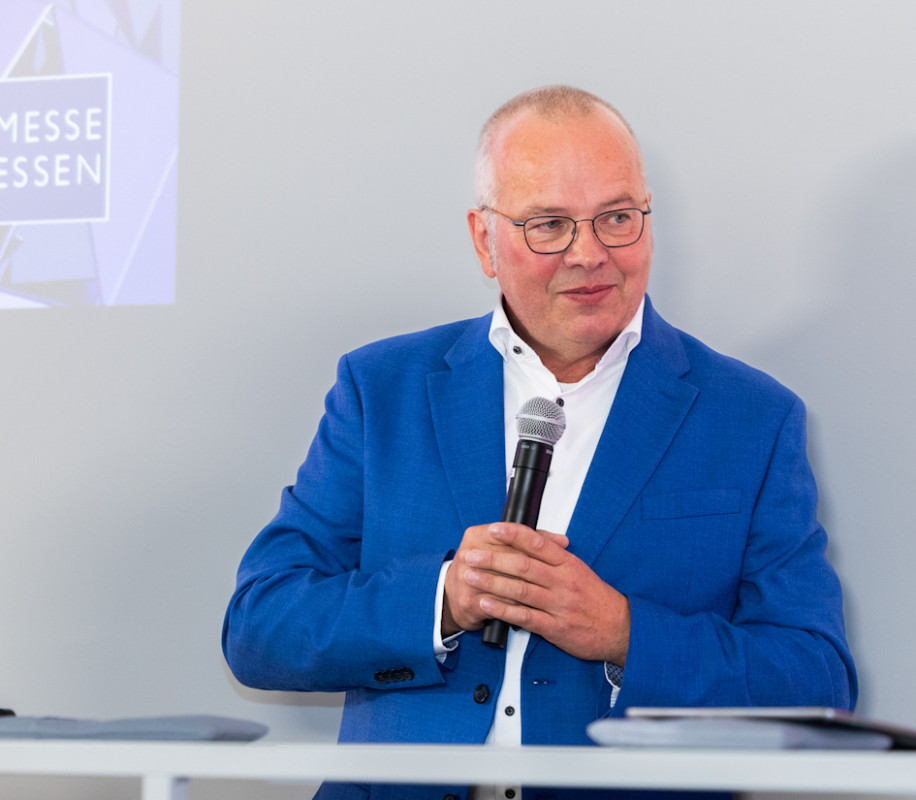
“Joining technology is at the heart of the manufacturing industry and is a key technology for the manufacturing industry and skilled trades in Germany. Whether in mechanical engineering, the automotive industry or the energy sector – without joining, cutting and coating technologies, there would be no mobility and no energy supply,” says Dr. Roland Boecking, Executive Director of DVS.
Strong export performance in joining technology despite challenging conditions
Although the production value of German joining, cutting and coating technology fell by 9.8 % in 2024, the industry continues to perform very strongly in terms of exports. Despite the difficult economic and geopolitical conditions, companies exported welding and cutting goods worth € 2.5 billion last year. Just under half of the exported goods, worth € 1.1 billion, went to countries in the European Union (EU 27). In terms of individual customer countries, Germany's most important trading partners in 2024 were the USA, followed by China and Poland.
Even though the overall situation remains challenging, KfW Research forecasts growth of 0.2 % for Germany's gross domestic product in 2025 and 1.5 % in 2026. The OECD forecasts global economic growth of 2.9 % this year and 3.1 % in 2026, which should have a positive impact on exports of welding technology.
(Source: Messe Essen GmbH)
Schlagworte
Added ValueCoatingCuttingDVSEuropeGermanyIndustryJoiningManufacturingMesse EssenResearchSCHWEISSEN & SCHNEIDENStudySurfacingWeldingWelding Technology