
30.06.2026
Forschung
Technologien
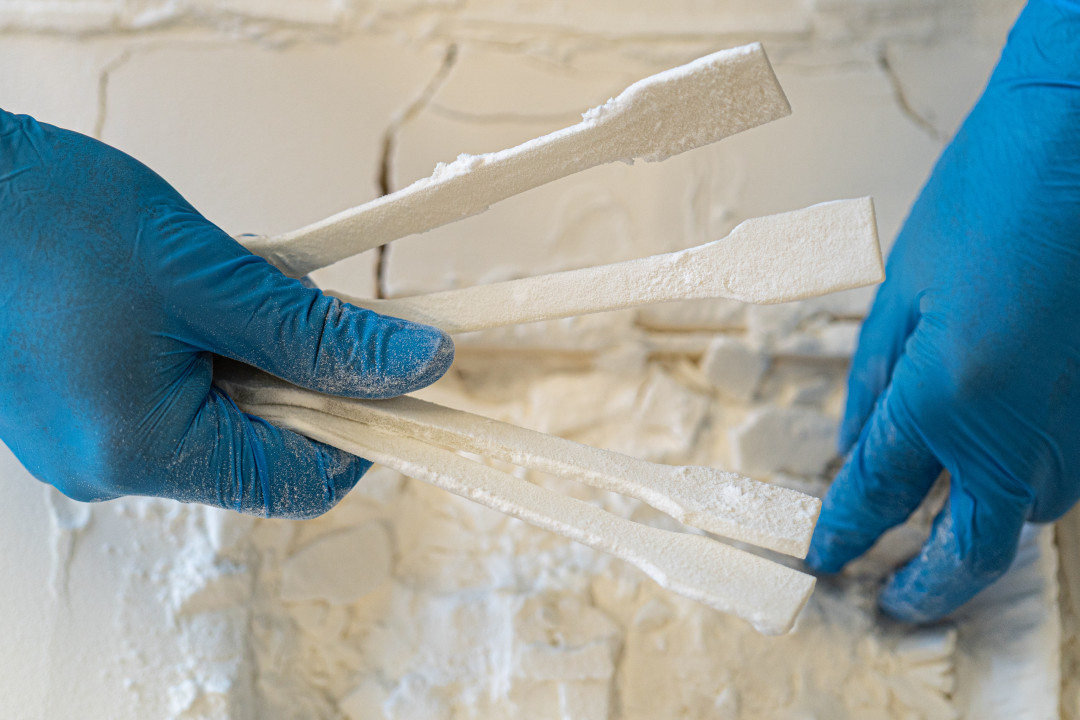
The SKZ Plastics Center and the Fraunhofer IPA are breaking new ground in the Polymer Powder Bed Fusion (PBF-LB/P) process as part of the “PimP” research project. By specifically lowering the powder bed temperature, they aim to significantly reduce the material aging that has been unavoidable until now and make the process more cost-effective and resource-efficient.
Currently, the process requires preheating the plastic powder to temperatures close to its melting point (a quasi-isothermal process). This process leads to significant thermal stress on the powder: unfused material ages rapidly and, in some cases, can only be reused at a rate of about 50 %. The resulting high material scrap rate is both costly and environmentally harmful.
Approach in the “PimP” Project: lower temperatures, higher efficiency
The project partners are developing a non-isothermal process with a reduced powder bed temperature to significantly reduce powder aging – and they are doing so on existing equipment, such as that used in particular by small and medium-sized enterprises. This could significantly reduce material costs and resource consumption. “Our goal is to significantly increase the reusability of the powders while maintaining component quality at today’s industrial standards,” explains Christian Schlör, a scientist in the Materials Development and Testing division at SKZ. “In doing so, we are laying the foundation for a significantly more economical and sustainable PBF process.”
Material and process: focus on raw materials and exposure strategies
A key focus of the project is identifying suitable powder raw materials and relevant material properties for the low-temperature process. At the same time, the researchers are developing new exposure strategies to compensate for the additional energy requirements resulting from the lower build chamber temperature. Multiple exposure steps and adaptive laser parameters are intended to ensure that the components exhibit high mechanical strength and high-quality surface properties despite the changed thermal boundary conditions.
The challenge of component warpage: focus on the process window
A particular challenge is component warpage caused by strong temperature gradients. Targeted process optimizations are intended to minimize these effects and create stable process windows for industrial use. At the end of the project, the developed low-temperature process strategies will be compared with the current state of the art, both technically and economically. This will provide users with a sound basis for decision-making regarding potential application scenarios.
The “PimP” project is being funded as part of the Joint Industrial Research (IGF) program under grant number 01IF24822N from March 1, 2026, through February 28, 2028, by the project management agency German Aerospace Center (DLR) (DLR) and the Federal Ministry for Economic Affairs and Climate Action (BMWK).
(Source: SKZ – German Plastics Centre)
Schlagworte
IGFJoining PlasticsJPNon-Insothermal ProcessPBFPlastic PowderPolymersPowder Bed FusionResearchThermal Stress