21.11.2026
Trendthema
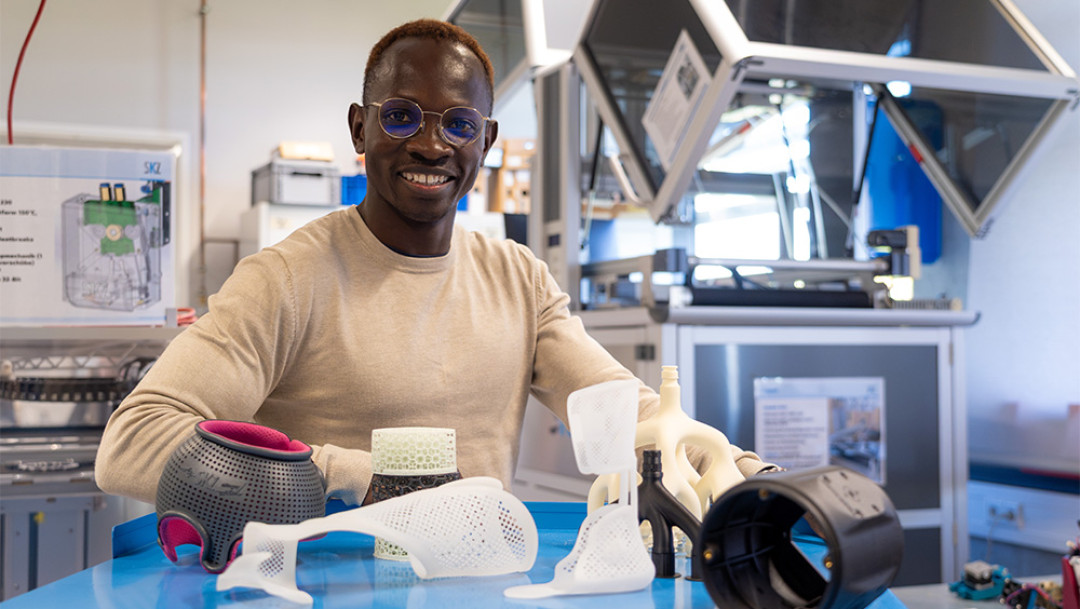
Today, additive manufacturing offers companies far more possibilities than just the production of prototypes. Custom components, optimised designs and cost-effective small-batch production can be efficiently achieved using additive manufacturing processes. Nevertheless, many companies find it difficult to get started with this technology. Which applications are suitable? Which materials are viable? And when is its use actually cost-effective? The SKZ Plastics Center supports companies in answering these questions and guides projects from the initial idea through to successful implementation.
Practical support in identifying applications, component design and implementing industrial manufacturing projects
Inquiries from industry often revolve around three key topics: the feasibility of specific components, the selection of suitable materials, and the cost-effectiveness of additive manufacturing processes. “Companies often want to know whether a component can be manufactured using additive manufacturing, which material is suitable and whether its use is economically viable,” explains David Fetter, Technical Sales and Applications Engineer at SKZ. Together with the companies, the experts analyse requirements and use cases, assess technical and economic feasibility, and identify potential applications for additive manufacturing.
A structured approach is key
Companies without prior experience in particular benefit from a structured approach. The starting point is always the specific challenge faced by the company. Based on this, existing components, requirements and objectives are analysed, and suitable solutions are developed. If digital design data is missing, existing components can be digitised and optimised for additive manufacturing.
SKZ’s range of services covers the entire process chain. From feasibility assessments and component optimisation to the production of prototypes or small batches, companies receive all services from a single source. The offering is complemented by material and component testing in SKZ’s laboratories.
Finding a technically and economically viable solution
“The process always begins with the question of which problem needs to be solved,” says Fetter. “Together, we assess whether additive manufacturing offers the greatest benefit or whether other manufacturing processes are better suited. Our goal is to find a technically and economically viable solution for the specific application.” In addition, the SKZ supports companies in the qualification of processes as well as in the introduction of additive manufacturing technologies into their own production. Training and continuing education programmes help build the necessary expertise within the company and ensure the successful long-term use of the technology.
With its combination of application consulting, manufacturing expertise, materials knowledge and testing technology, the SKZ guides companies through the entire development process and supports them in leveraging the potential of additive manufacturing specifically for their products and processes. As the technical contact, David Fetter is on hand to assist from the initial idea through to the successful implementation of additive manufacturing projects.
(Source: SKZ – The Plastics Center)
Schlagworte
Additive ManufacturingEducationFeasibility StudyJoining PlasticsJPPlasticsPolymersTestingTraining