
26.01.2024
International
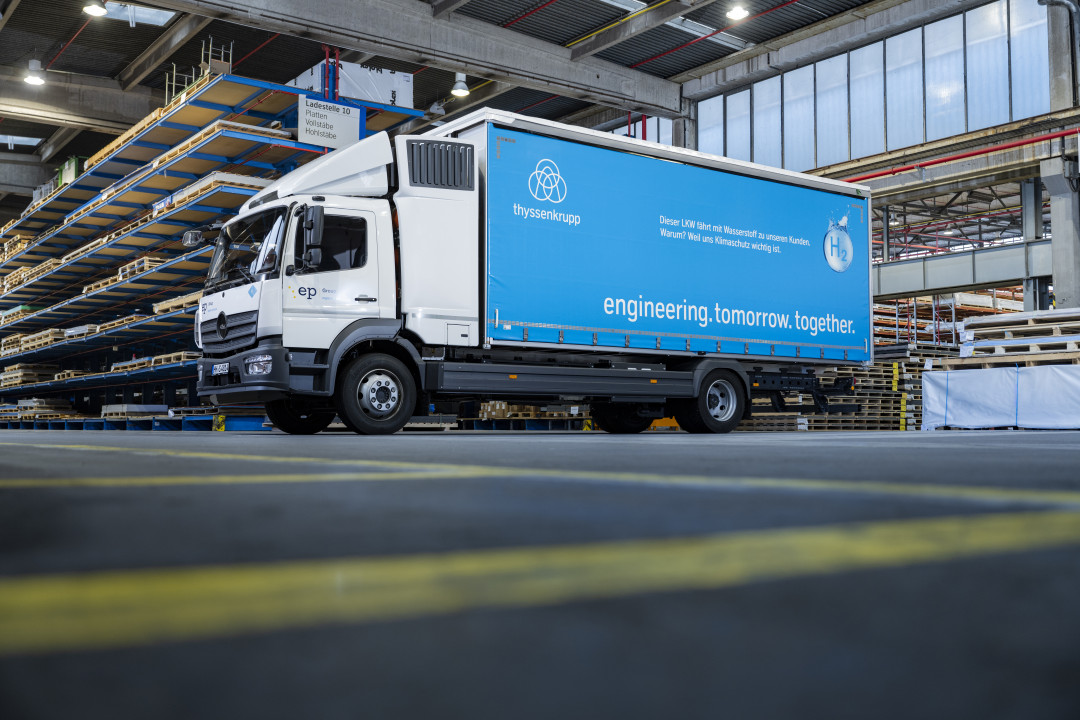
Sustainable drive: thyssenkrupp Materials Services uses hydrogen to supply materials
In January 2024, thyssenkrupp Materials Services started using the first hydrogen-powered trucks for deliveries to its customers. Since the beginning of the year, two new vehicles with the environmentally friendly drive system from the logistics partner ep-Group have been in use for the subsidiary thyssenkrupp Plastics.
"With the first hydrogen-powered trucks, we are using the latest mobility options for our transport routes together with the ep-Group – climate-friendly and modern. This not only reduces our own carbon footprint but also the one of our customers. We take sustainability into account along the entire supply chain, and transportation plays a key role in this," says Martin Stillger, CEO of thyssenkrupp Materials Services.
Steam instead of fumes
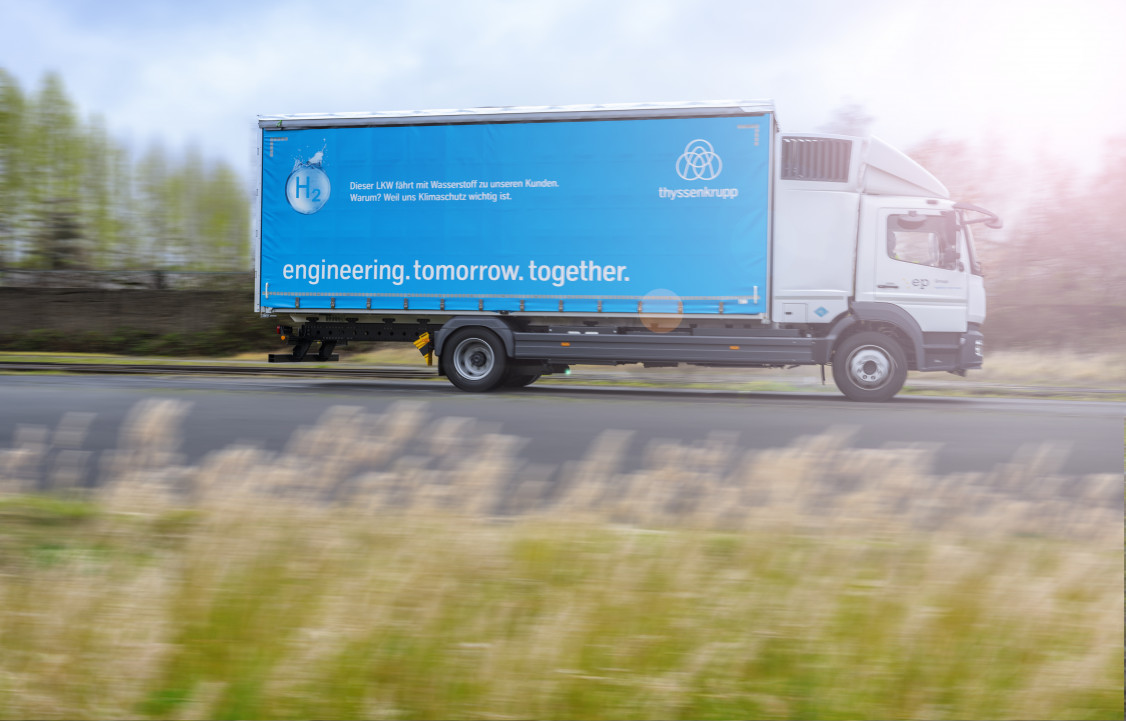
At first glance, the 15-ton truck looks like a diesel vehicle. But a view from above makes it clear: instead of fumes, steam rises into the air. The steam is produced in a fuel cell that generates electricity from hydrogen (H2) for the electric drive, offering a real alternative to the conventional combustion engine. The two trucks can be recognized by their appealingly designed tarpaulins, which refer to the use of hydrogen. With a distance of around 47,000 miles per year, the CO₂ savings of a single truck is up to 40 tons of CO₂ per year. The switch to hydrogen-powered trucks is therefore a consistent contribution to the climate protection goals set by the materials distribution and service provider. The company has set itself the goal of becoming carbon neutral by 2030.
With a range of around 280 miles and a top speed of 53 miles per hour the trucks will first be seen on the roads of the German federal state North Rhine-Westphalia. Nicolas Neuwirth, CEO of thyssenkrupp Plastics: "Düsseldorf and the surrounding area is the ideal location for the new vehicles, as the nearby H2 filling stations are easily accessible and must be taken into account in any route planning. I am pleased that we have a competent and efficient partner at our side in the form of our long-standing logistics partner ep-Group, who makes sustainable transportation possible".
Evaluation of further alternative drive systems
In addition to thyssenkrupp Plastics, further subsidiaries are to follow suit this year with the use of hydrogen-powered trucks. Furthermore, thyssenkrupp Materials Services is testing various drive options for heavy truck transportation worldwide. For example, a pilot project is currently running in North America for the use of renewable natural gas, which is an attractive alternative due to its availability and infrastructure.
thyssenkrupp Plastics GmbH, based in Essen, Germany, is part of thyssenkrupp Materials Services and a Germany-wide service provider for product and application consulting, processing, procurement and delivery. The portfolio of over 40,000 plastic products of renowned brands comes exclusively from well-known, internationally active producers who are among the technology and market leaders in their respective product areas. The sales program is geared towards the specific requirements of customers in the construction market and specialist building trade, building construction, industrial piping systems, technical plastics and visual communication sectors.
(Source: thyssenkrupp press release)