
14.02.2026
International
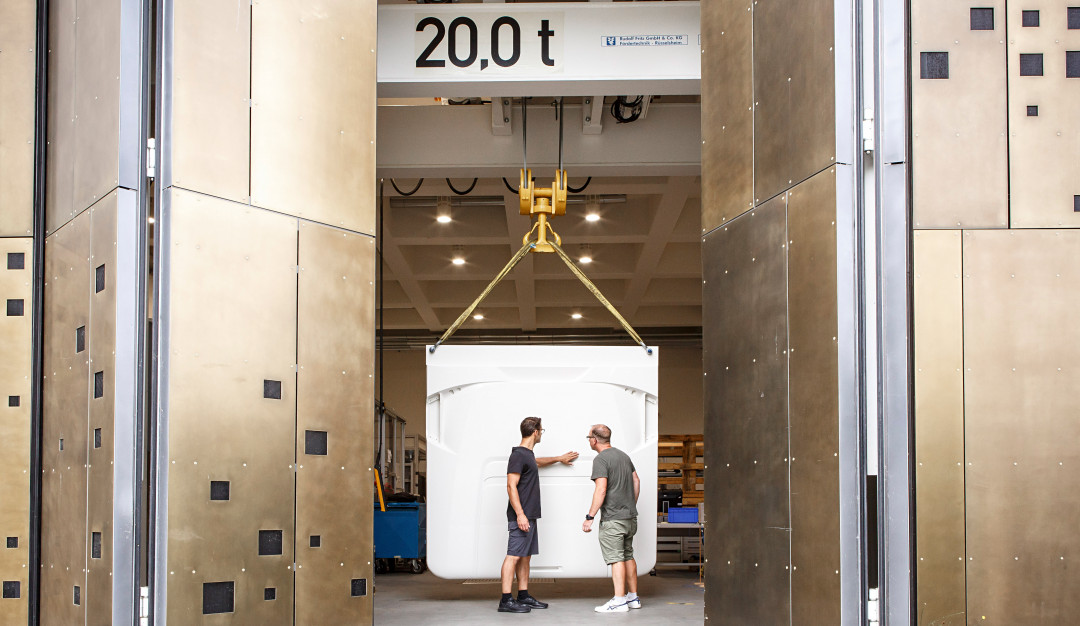
The strategic realignment of Fraunhofer LBF is a response to the growing demand from industry for recyclable, reliable high-tech products that must be developed and validated economically despite high functional and safety requirements.
Future viability for industry and research
Starting in 2026, Fraunhofer LBF will bundle its expertise in the areas of structural durability, smart structures and plastics into a unified, interdisciplinary structure. The goal is to support customers along the entire value chain – from material development and component evaluation to system integration, even more efficiently and flexibly.
The focus is on the Research and Development (R&D) division with six research departments, which systematically develops the institute's key scientific expertise and translates it into transfer- and application-oriented services. Fraunhofer LBF strengthens its interface with the market and society with its Innovation, Transfer and Cooperation (ITC) division: ITC observes needs and trends, identifies opportunities, initiates and coordinates cross-competence projects and supports rapid transfer into industrial applications. The Test Bench Design, Implementation and Operation (TIO) department bundles the institute's test infrastructure and ensures the efficient, professional execution of experimental tests and validations.
Holistic solutions for diverse requirements
Organizational development goes hand in hand with a clear focus on content: Fraunhofer LBF aligns its services and research offerings along six fields – Digital Twins & Simulation, Dynamics & Vibration Engineering, Reliability Assessment & Lifetime Prediction, Validation & Prototyping, Sustainability & Circularity, and Consulting & Training. The aim is to interlink scientific methods, research capacities and transfer paths in such a way that companies can make reliable decisions at an early stage of product development and bring reliable, recyclable solutions into application more quickly.
By consistently combining material, structural and system expertise with digital methods, AI and circular strategies, Fraunhofer experts support the reliability, safety and sustainability of products throughout their entire life cycle – from material selection and product development and validation to operational monitoring and product recycling. In addition, the institute promotes knowledge transfer through consulting and training services.
Overall, the new orientation creates a dynamic system with future viability that promotes innovation and strengthens the competitiveness of its partners in the long term. Large companies and SMEs alike benefit from a comprehensive range of services that combines classic engineering disciplines with state-of-the-art digital methods – regardless of the industry.
"Thanks to decades of experience and practical collaboration, we deliver solutions that enable our customers to increase efficiency and quality in product development, implement intelligent product functions and promote sustainability and recyclability in the design and use of their products," explains Institute Director Prof. Dr. Tobias Melz.
(Source: Fraunhofer LBF)
Schlagworte
AICircular EconomyDigital TwinJoining PlasticsPlasticsR&DRecyclingResearchSMESustainability