
13.05.2026
International
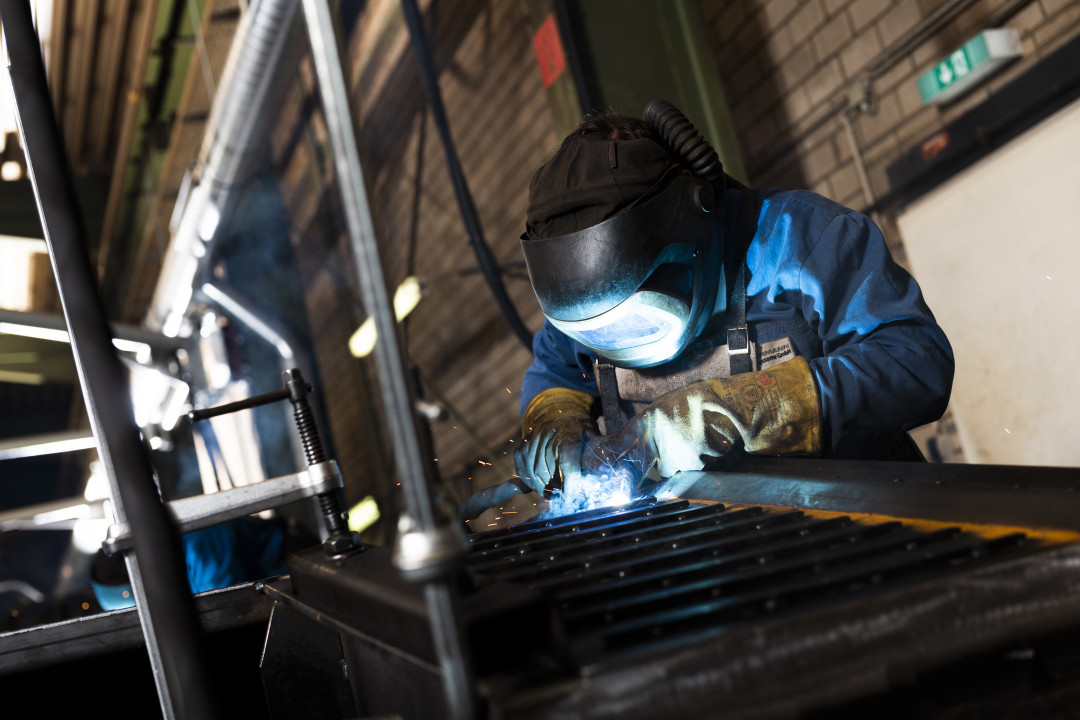
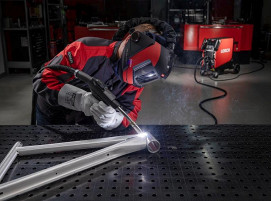
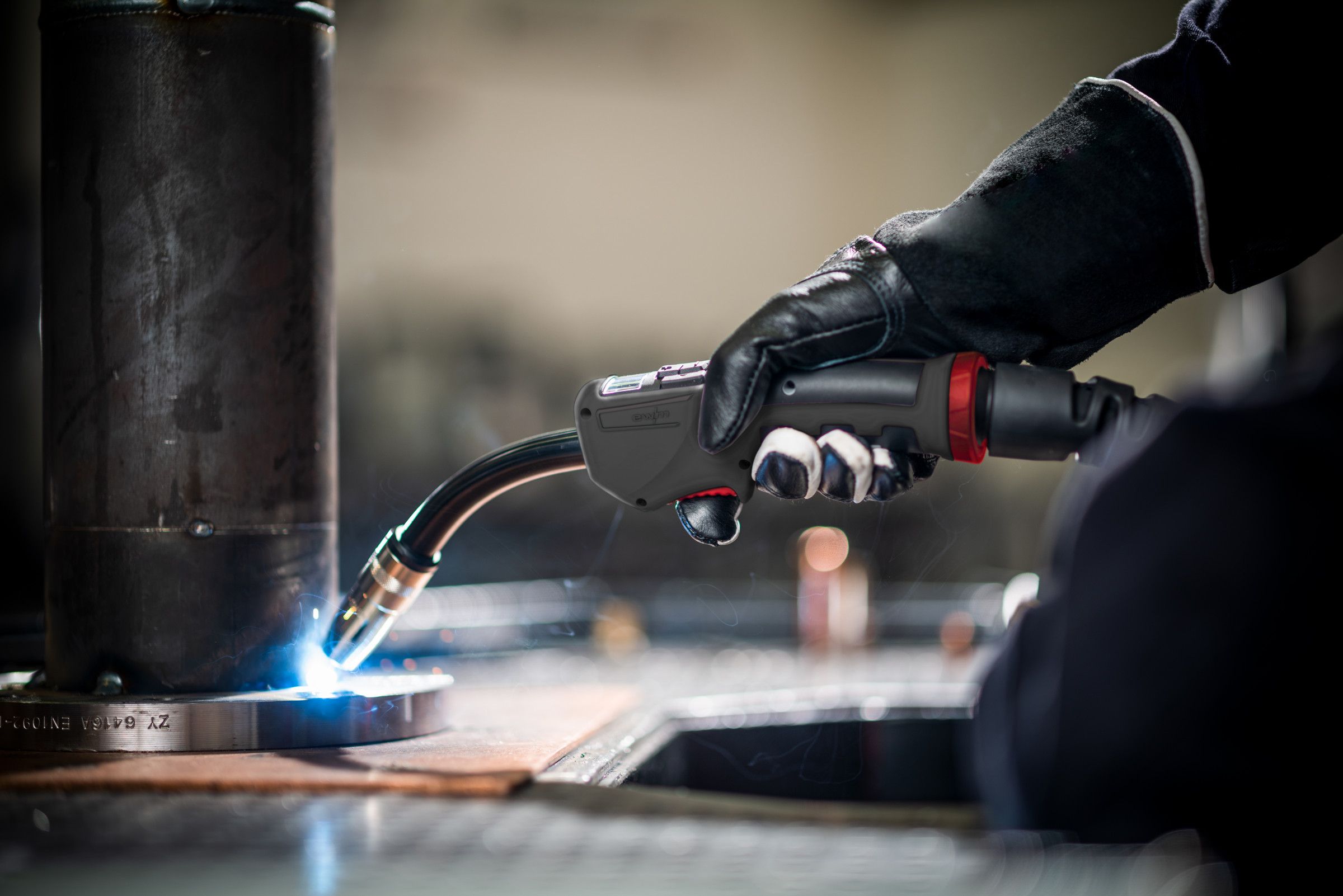
The welding torch is an essential tool that determines the efficiency and quality of the welding process. High-quality welding torches ensure optimal weld results and enable comfortable working. However, when purchasing, more attention is often paid to price than to quality. Rapid wear of components and other negative effects are the immediate consequence.
To achieve optimal welding results and maximum productivity, the welding torch should ensure reliable welding operation and enable a stable arc. Splatter-free, clean and inspection-ready welds are a desirable outcome, as they require virtually no rework. Further characteristics of a high-quality torch include a long service life and low wear on consumable parts. Components such as the electrode holder, gas nozzle, gas distributor and nozzle holder are subjected to heavy wear during the welding process. They should therefore be checked regularly and replaced if necessary.
Consequences of an unstable welding process
If wear parts are rarely replaced and inferior welding torches are used, this often leads to unstable welding processes. Maintenance carried out too infrequently can also cause similar problems. What can happen? If the arc is not stable, increased spatter occurs during welding. These metal droplets, which are ejected from the weld pool, land on the workpiece, the weld seam or on torch wear parts. Spatter degrades the quality of the weld seam and can cause corrosion damage as well as lead to production downtime. It must be laboriously removed afterwards. It is therefore advantageous if this unwanted welding spatter can be reduced. To achieve this, a steady current flow and adequate gas shielding must be ensured, whilst constant wire feed must also be possible. If the arc is unstable, further problems arise. For example, increased turbulence in the shielding gas occurs, leading to porosity in the weld seam. If the shielding gas coverage is not optimal, oxygen and hydrogen from the ambient air can reach the weld site. Furthermore, if the base material is not sufficiently melted due to an unstable welding process, bonding defects may occur. The materials come into contact but do not form a solid-state bond. This results in a weakening or even a break in the weld seam.

Continuously checking wear parts
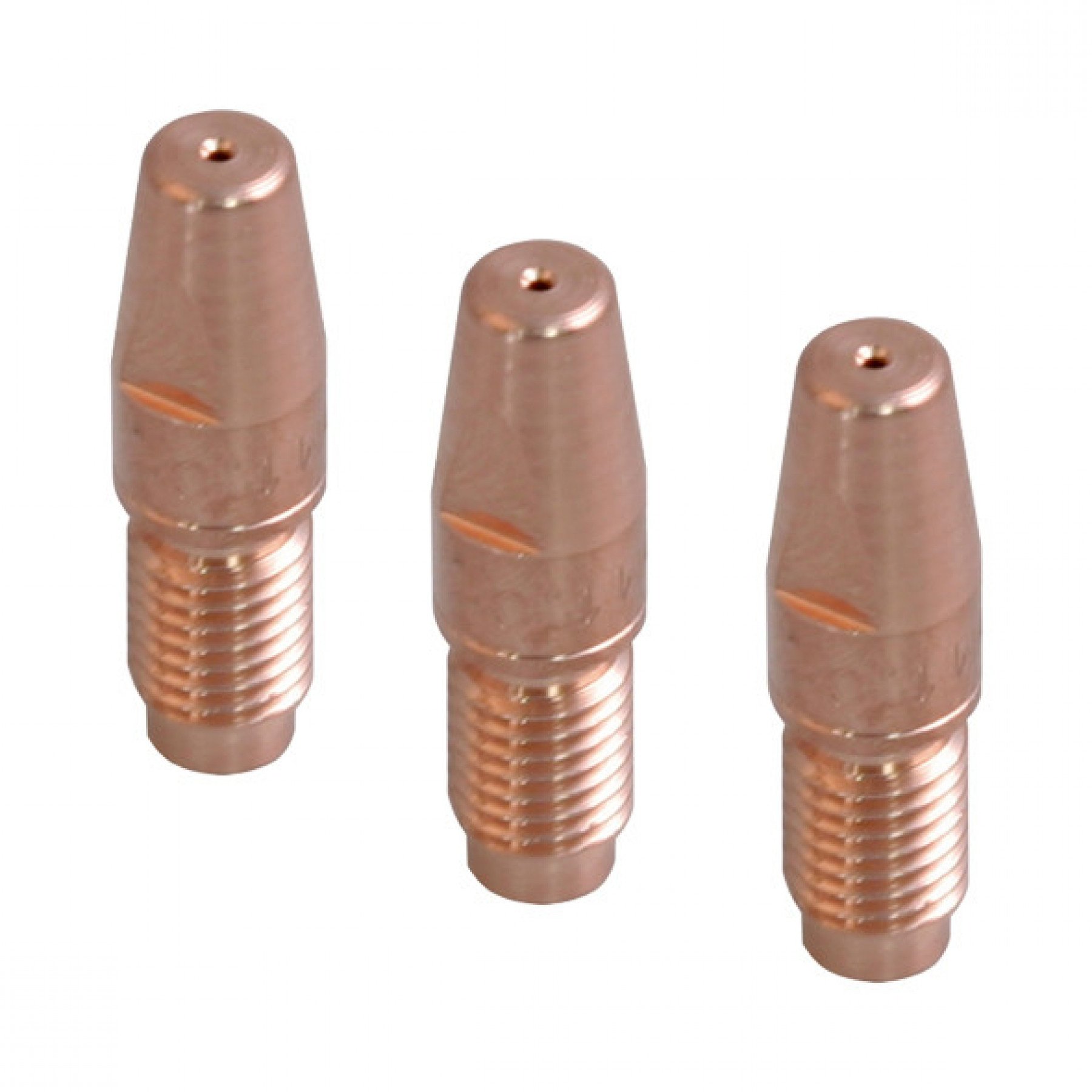
If spatter, porosity or fusion defects occur, it is important to identify the cause of the unstable welding process. Particular attention should be paid to wear parts. The current nozzles play a key role, as they transfer the welding current to the wire electrode and thus have a significant influence on the quality of the arc. If wear occurs on one side, the opening of the current nozzle can change and, in the worst case, lead to so-called wire nests. This causes the nozzle to become increasingly clogged. Furthermore, a worn current nozzle can lead to micro-arcs and short circuits. If the current nozzle overheats, wear is accelerated even further. It is therefore important to check them regularly for wear and to replace them if necessary, or to upgrade to higher-quality current nozzles.
The use of quality products with a long service life increases process efficiency, as frequent work interruptions due to maintenance are avoided. Because the thread of the nozzle holder also wears with every change of the current nozzle, this should also be checked continuously. The same applies to the guide spirals or wire cores: they feed the welding wire from the power source through the torch neck to the electrode tip. This inevitably causes friction and can lead to irregular wire feeding. Fine particles can clog the feed spiral, so regular cleaning is essential here too. Wire feed rollers also wear out over time. They feed the welding wire through the hose assembly and should be selected to suit the welding wire. To ensure the welding wire is fed smoothly, the correct contact pressure must also be maintained.
In daily operation, the gas nozzles in particular wear out quickly. If a lot of welding spatter adheres to the gas nozzle, it prevents the welding process from being reliably shielded from the ambient air. Inadequate shielding gas coverage has a negative effect on weld quality; therefore, gas nozzles should be checked and cleaned regularly. Last but not least, water cooling is also essential for an efficient and safe welding process. If the torch becomes too hot, hoses and connections must be checked for leaks or other faults.
Safety, usability and comfort as quality criteria
The material and condition of wear parts have a significant impact on the welding process. Only high-quality welding torches can prevent process disruptions, thereby saving time and money. Furthermore, they ensure a safe working environment and offer greater ease of use. Take the wire feed as an example: the wire can be easily inserted into the wire feed rollers without having to open them. At the touch of a button, the wire is fed all the way to the current nozzle. An ergonomically shaped handle also contributes to comfortable and safe handling during the welding process. Reliable shielding gas coverage with reduced gas consumption, combined with optimal current and heat transfer, ensures high arc stability. High-quality welding torches score highly with their high thermal resilience and consequently extended service life. For example, torches designed for the high-power range feature a dual-circuit system that ensures optimised cooling in the torch neck. Carefully selected materials provide high corrosion resistance and guarantee maximum robustness, stability and consequently a long service life.
Welding torches for every application
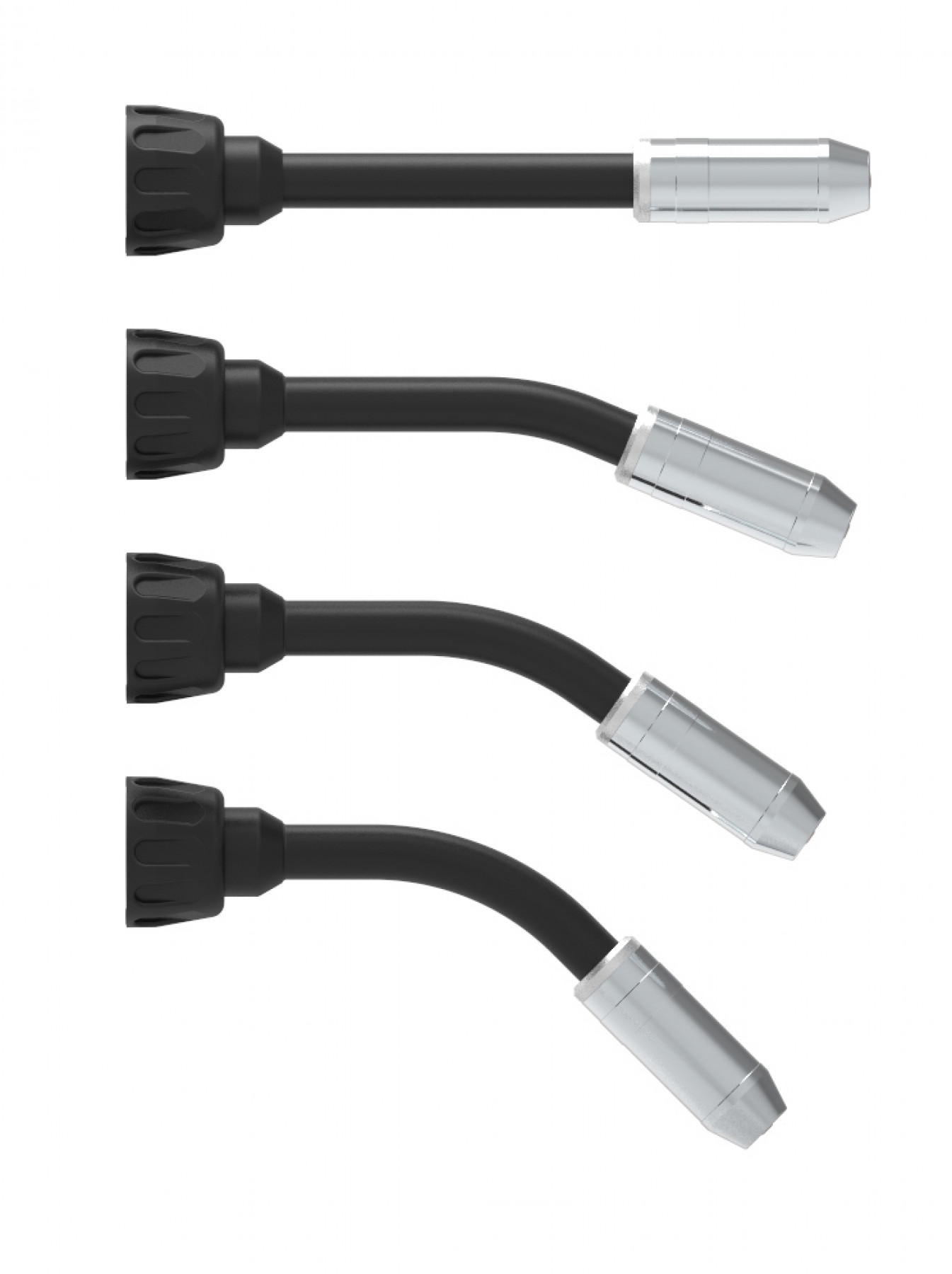
EWM’s standard range includes a wide variety of welding torches for different applications. For specific applications, the specialist offers custom-configured welding torches with special dimensions and specially shaped torch necks. Thanks to in-house production, EWM can respond flexibly to a wide variety of requirements and customer requests. The fact that high-quality torches not only deliver the best weld seam quality but also offer economic advantages is demonstrated by the high process stability and low wear on components. This can be easily verified using EWM’s free payback calculator. After entering just a few details, the software calculates within seconds when the purchase will have paid for itself.
In its new eBook “Cost-effective and reliable welding: The importance of the welding torch for the entire process”, the specialist in arc welding technology demonstrates how optimal welding results can be achieved in conjunction with maximum productivity. Readers receive valuable tips for a stable welding process. This is because unwanted spatter, porosity and lack of fusion occur during an unstable process, which must be avoided. By using high-quality, robust and low-wear components and regularly inspecting common wear parts, service life can be significantly increased.
(Source: EWM GmbH)
Schlagworte
Arc WeldingElectrodeElectrodesGaz NozzleNozzle HolderWeld ResultsWeldingWelding ConsumablesWelding PerformanceWelding SplatterWelding Torch