25.08.2026
Wissenswertes

How can a faulty solder joint be identified when it cannot even be seen in an X-ray image? In the new episode of the jDGM podcast Ralf-Samuel Kühne of ALTER | HTV talks with Timo Roth about industrial failure analyses, his path into materials science and the importance of practical experience when choosing a degree programme and career.
From computer acience to materials science
During his school years, Kühne was initially interested primarily in computer science. However, a career information day brought him into contact with materials science. He was particularly fascinated by a small piezo motor that converted a vibrational motion into a rotational motion. He was also convinced by the breadth of subjects covered in the degree program. In addition to physics and chemistry, it includes technical mechanics, computer science, and electrical engineering, among other fields. The combination of different disciplines and the concrete application focus ultimately tipped the scales in favor of studying at the Technical University of Darmstadt.
Materials analysis as technical detective work
Today, Kühne works in the analysis laboratory at ALTER | HTV. There, electronic components and assemblies are examined on behalf of customers. The focus is on quality testing and the systematic search for the causes of failures. The starting point is usually a specific question: Why did a component fail? Is a solder joint intact? Can anomalies inside a printed circuit board be detected? The team plans suitable investigations, oversees the analysis steps, and then summarizes the results in a technical report.
Methods used include metallographic cross sections, light and scanning electron microscopy, EDX analyses, X-ray techniques and FTIR spectroscopy. Kühne was already familiar with many of these methods from his studies. In industry, however, the concrete function of the component under investigation is always the main focus. The range extends from bond wires with a diameter of around 50 μm to heavy electronic assemblies. The investigation often begins with non-destructive methods. If these are not sufficient, targeted destructive analyses follow.
In the podcast, Kühne describes a case in which no cause of failure could initially be found. Only an individually planned destructive examination revealed a hidden, faulty solder joint. The customer was then able to resolve the problem. Cases like these make failure analysis a form of technical detective work.
Exchange between knowledge and application
In addition to his laboratory work, Kühne is also active as a trainer. In training courses, he teaches knowledge about testing methods and electronic interconnection technology. For him, exchange with experts from industrial practice is particularly important. Their questions and experiences show which technologies are actually being used and where requirements are changing. This also allows training and certification content to be reviewed regularly. Some processes are still present in the specialist literature but now play only a minor role in today’s production. Dialogue between laboratories, companies, and the professional community therefore helps align theoretical knowledge with industrial reality.
Practical experience as guidance
Kühne recommends that school students and prospective university students gain practical experience in various professional fields as early as possible. Career information days provide an initial overview. In his view, internships at companies are even more informative. Even just a few weeks can help them understand typical activities and talk with employees about their study and career paths. Kühne himself completed an internship at HTV while still a school student. Later came a working student position, an industrial internship and his diploma thesis. This early contact ultimately developed into the start of his career.
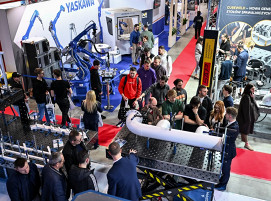
Trade fairs can also help with orientation. They make it possible to experience current technologies firsthand and establish contacts with companies. The podcast episode thus combines insights into industrial materials analysis with specific recommendations for young people seeking their own path into materials science and engineering.
(Source: DGM Deutsche Gesellschaft für Materialkunde e. V. – German Society for Materials Science)
Schlagworte
BrazingMaterialsMaterials ScienceNDTNon-Destructive TestingQuality AssessmentQuality AssuranceSolderingWeld Seam