
11.10.2026
Trending Topic
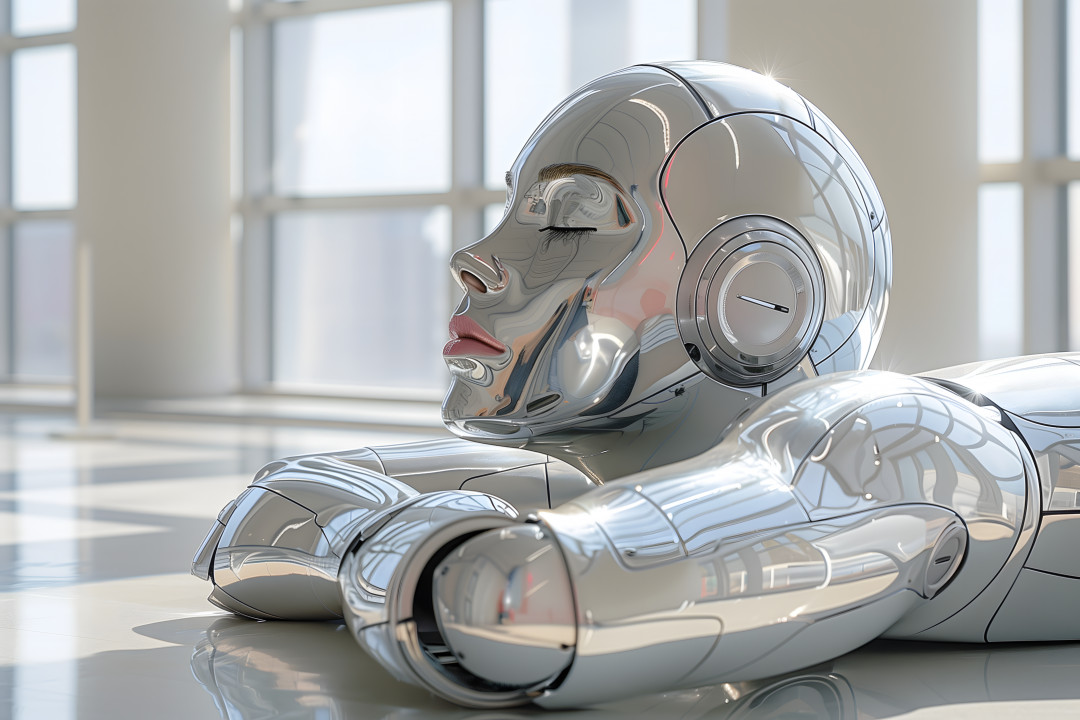
Robotics, humanoid robots in particular, are gaining a lot of attention over the last few years. They are being explored for both industrial and non-industrial applications. While future non-industrial applications may include consumer-care, hospitality, disaster response and others, many humanoid OEMs have opted for industrial applications as the go-to-market strategy in the short to medium term. In fact, IDTechEx's analysis shows that 80 % of humanoid robots and prototypes to date have been designed for industrial settings. With IDTechEx's forecasts suggesting the overall humanoid market to approach a million units around 2030, questions remain over how materials choices will differ between the different applications of humanoids.
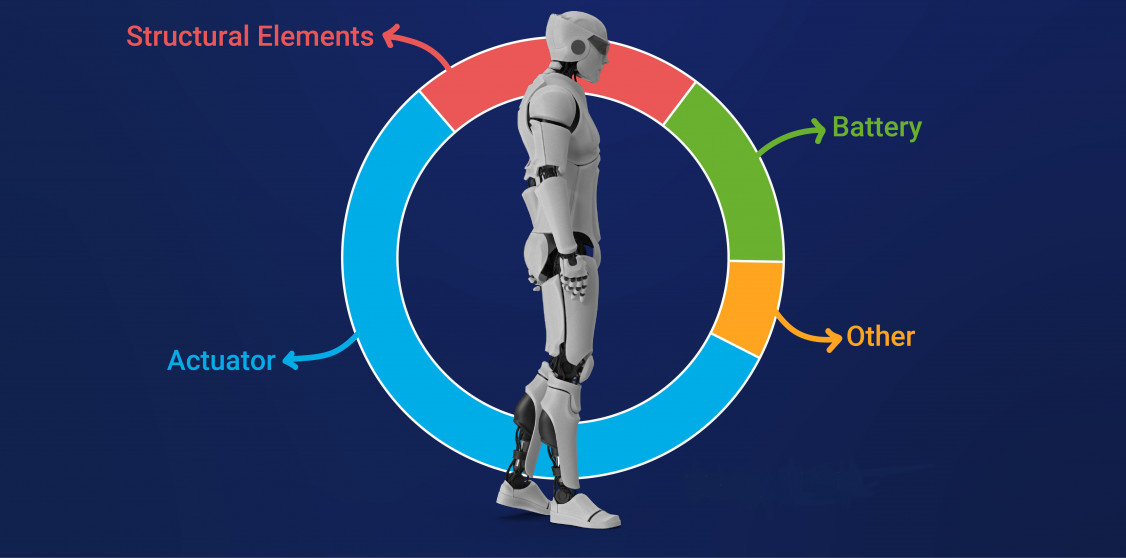
What are they key material considerations for humanoid robots?
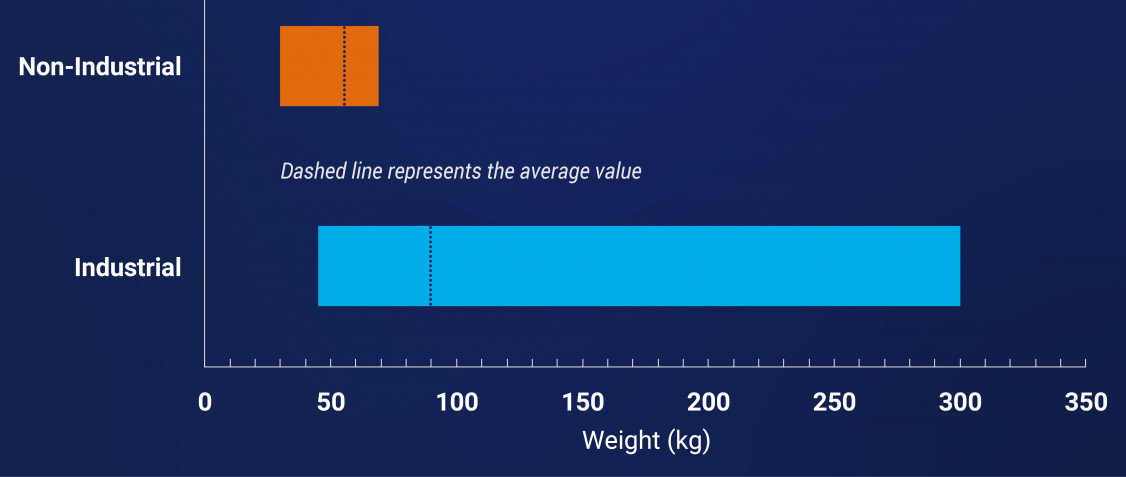
As a general trend, research from IDTechEx shows that humanoids designed for industrial settings tend to have higher weight compared to non-industrial humanoid robots, with an average weight of 78 kg, while some wheeled humanoids weighing in excess of 100 kg. Excess weight negatively impacts load bearing joints like hips and knees, which makes balancing lightweight with battery capacity to increase operating time a major challenge. Thus, wheeled humanoids being opted by some OEMs offer larger battery capacity without adversely affecting critical load-bearing actuators and alleviate balancing issues that come with walking motion in bipedals, especially when handling loads.
The high weight of industrial humanoids mainly boils down to the use of high-strength materials, with large contributions to the overall weight from metals (e.g. steel and aluminium alloys). This is specifically true for the actuators, which contribute over 50 % of the overall weight. Owing to the loads actuators bear and the repetitive motion they undertake, actuators require strong materials that are highly robust, durable, wear resistance, high-strength and hardness, for components like gears, screws, etc. However, there are challenges around manufacturing materials and parts like planetary roller screws or gears with high precision and consistency. Managing mechanical wear and fatigue is another challenge.
On the other hand, for non-industrial humanoids, while structural integrity is important, these robots also need to consider human-friendly aesthetics with softer exteriors and compliant designs for human-robot interactions. Thus, materials players will need to consider sequencing of materials accordingly as part of their strategy to enter the market. IDTechEx's report "Materials for Humanoid Robots: Technologies, Players, Forecasts" delves into materials requirements and challenges, with insights into emerging materials to address the gaps.
Outlook
As the humanoid robot market expands and transitions from prototype demonstrations and demonstrations toward pilot deployments and early commercial adoption, there are still questions around where humanoid robots can add clear value in industrial settings. It is a dynamic market with various factors at play that can impact how the market evolves. For example, the volumes of actual deployment to date have been below ambitious targets set by various players, and there are still challenges around training, regulations, safety & certifications that need to be addressed. Additionally, the feasibility of transitioning materials, component designs, and assembly processes used during prototyping for large-scale manufacturing is another major challenge that is unfolding. More information on safety, regulatory and commercial challenges are also covered in IDTechEx's report.
(Source: Dr. Shababa Selim, Senior Technology Analyst, IDTechEx)
Schlagworte
AluminiumAluminumHumanoid RobotsManufacturingMarket AnalysisMarket ReportMaterialsRoboticsRobotsSteel