
28.01.2025
International
TRUMPF supports research at the MPA University of Stuttgart
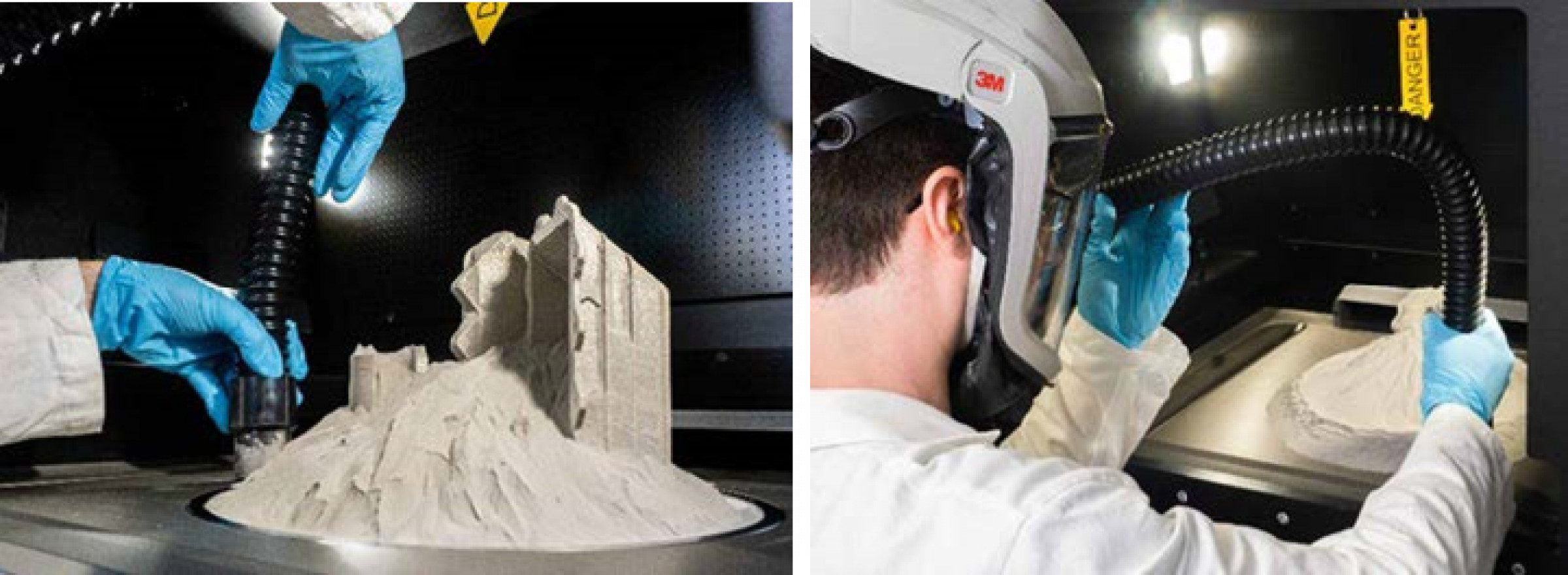
On January 22, 2025, the TruPrint 3000, a 3D-metal-printing-system, was officially inaugurated at the Materials Testing Institute (MPA) of the University of Stuttgart. This innovative technology, donated by high-tech company Trumpf, strengthens cutting-edge research in additive manufacturing and opens up new fields of application in lightweight construction, energy technology and space exploration.
The ceremonial event, led by Prof. Dr. Stefan Weihe, Director of the MPA, and Dr. Martin Werz, Head of the Joining Technology and Additive Manufacturing Department at the MPA, marks a milestone in scientific development. Anna Steiger, Chancellor of the University of Stuttgart, opened the event. Together with Dr. Anna Christmann, the German Federal Government’s Coordinator for Aerospace, she emphasizes the significance of the facility. Dr. Christmann commends the research efforts of the MPA and engages in discussions with students about forward-looking technologies, such as "green" space exploration.
In her welcome address, Dr. Anna Christmann, Member of the Bundestag and Coordinator for German Aerospace, highlighted: "Close cooperation and partnerships between industry and research, as we see here, are exemplary for our economic location. The 3D printing technology not only meets the strict requirements of the aerospace and lightweight construction industries but does so in a cost-efficient and innovative way. This strengthens Germany as an innovation hub."
TruPrint 3000 for Research and Industry
“The TruPrint 3000 symbolizes the success of a long and fruitful collaboration between the MPA and Trumpf. Research, teaching and our dedicated student groups equally benefit from this forward-looking technology. This successful partnership demonstrates what is possible when we boldly and creatively use the scope available to us,” said Prof. Dr. Stefan Weihe in his opening remarks.
Dr. Martin Werz emphasized: “With the 3D-metal-printing-system, we enhance our ability to manufacture complex components in a resource-efficient and precise manner. This is a crucial step towards sustainable production in lightweight construction.” He added, “The new system not only enriches the technical capabilities of the MPA but also highlights the importance of close partnerships between science and industry.”
“The University of Stuttgart provides an environment where research and industry continuously inspire each other to innovate,” stressed Anna Steiger, Chancellor of the University. She also pointed out the importance of an attractive curriculum: “By creating another opportunity to teach students and young professionals using modern, cutting-edge technology to solve real-world challenges, we are making a significant contribution to ensuring exceptional innovation in the Stuttgart region in the future.”
Education and innovation as keys to success
Matthias Himmelsbach, Head of Additive Manufacturing at Trumpf, underscored the importance of engineering education and the promotion of STEM fields. “The University of Stuttgart excels in educating students in STEM subjects. These well-trained professionals are crucial for companies like Trumpf to maintain their position as global leaders in high-tech innovation,” Himmelsbach explained.
Additionally, engineering education and the promotion of STEM fields play a pivotal role for Stuttgart as a hub of science and industry, a region recognized globally as a technological center. To remain competitive on the international stage, it is essential to further strengthen these areas. The University of Stuttgart offers a wide range of technical degree programs –spanning mechanical engineering, computer science, electrical engineering, mathematics and physics – laying an excellent foundation for nurturing future talent.
The close collaboration between academia and industry is a critical factor in this success. The new system strengthens research, teaching, and innovative training approaches.
The Future of Additive Manufacturing
The groundbreaking pioneering work of the MPA in the 1980s still forms the foundation for excellence in additive manufacturing today. While arc technologies were the focus back then, the processes have evolved through digital control and laser technologies into highly precise processes. The TruPrint 3000 sets new standards in additive manufacturing and opens up new perspectives, particularly for safety-critical applications in lightweight construction, energy technology, and space exploration.
With the transfer of the 3D printer to the MPA, the entire University of Stuttgart now benefits from the high quality of the equipment. This enables a comprehensive focus on core topics of materials, parameter, and qualification development.
Using a specially developed build processor, the MPA optimizes the preparation for 3D-printing and makes a significant contribution to the advancement of additive manufacturing. This build processor facilitates the production of lightweight components specifically designed for the sustainable requirements of "green space exploration."
Research for the Future
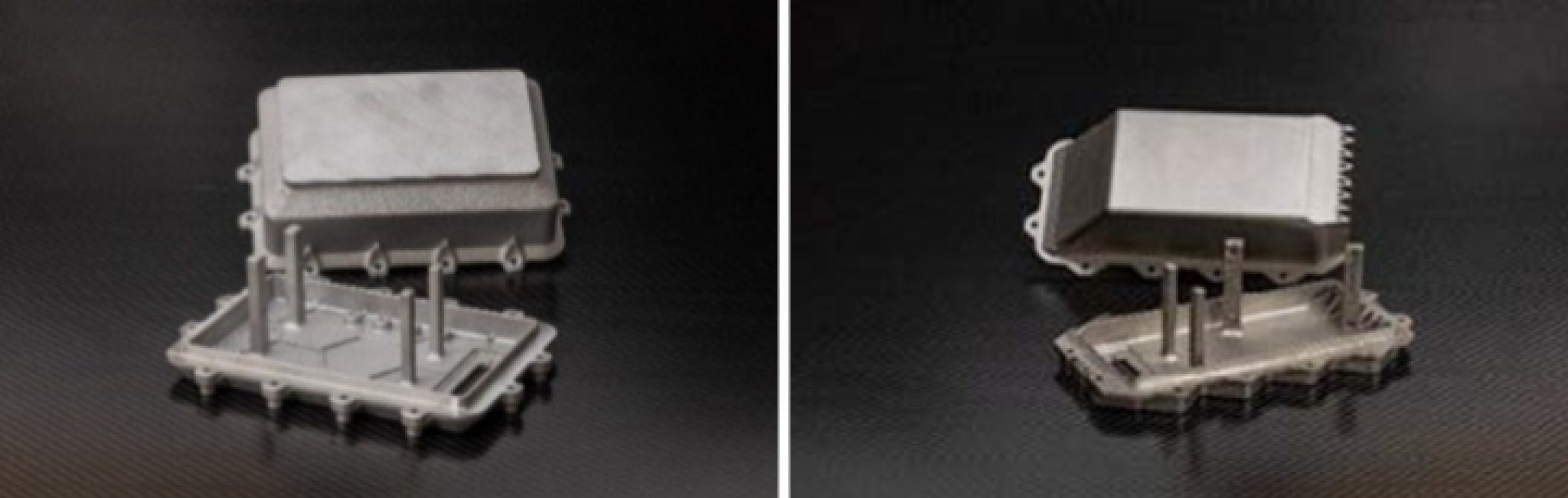
In various research projects, such as Opti-Add and AdProSAM, the MPA is working on minimizing pore formation, reducing internal stresses, and increasing process reliability – all essential steps to make additive manufacturing future-proof. Additionally, the MPA is investigating innovative solutions for high-performance heat exchangers and heat pipes for energy technology.
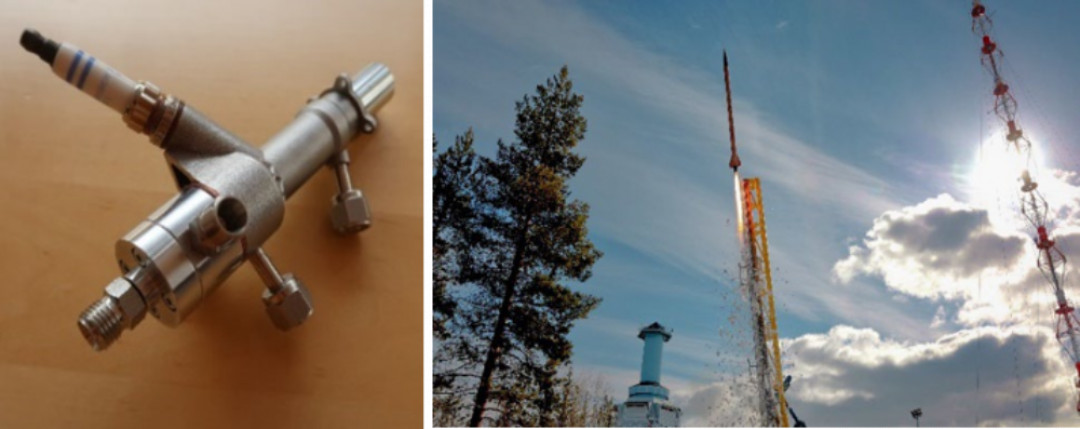
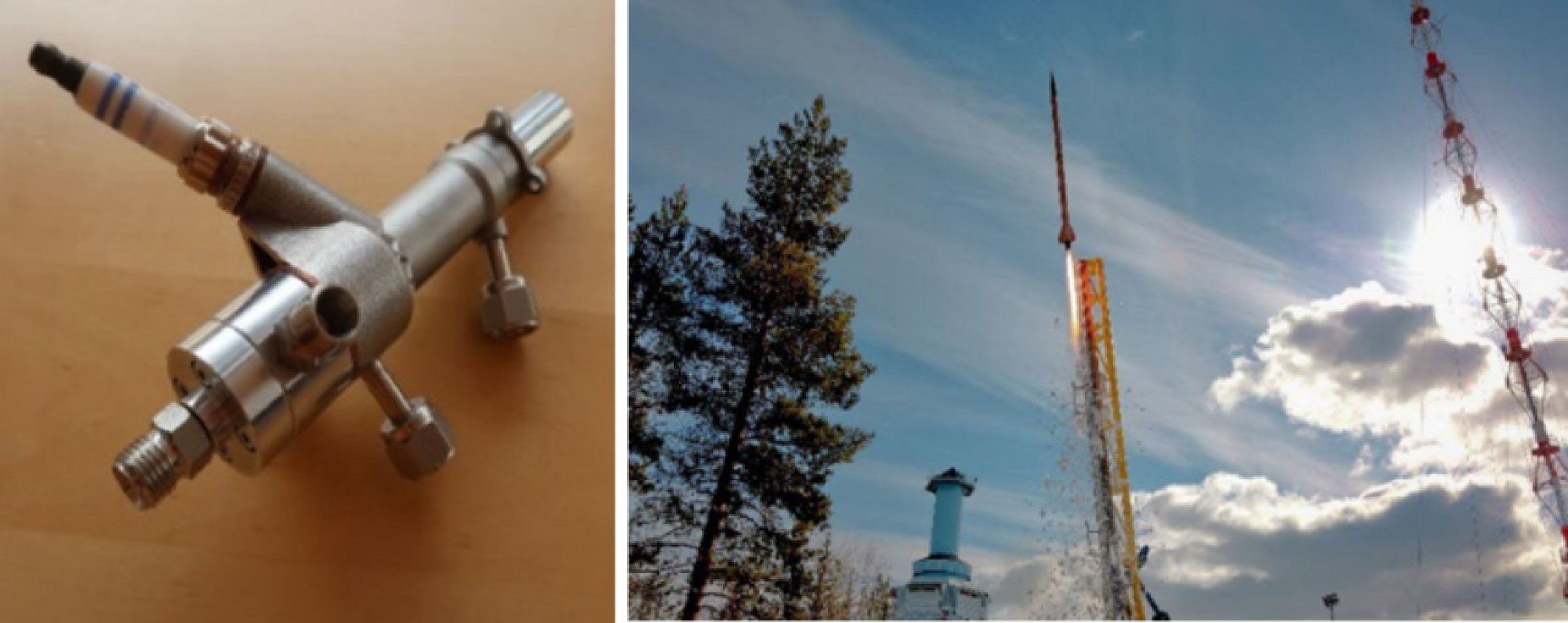
The MPA makes its equipment and expertise available to scientific and student workgroups, actively promoting hands-on training for students. The two associations, HyEnD e. V. and KSat e. V., with their forward-looking projects, are exemplary for innovations in space exploration.
(Source: Stuttgart University)
Schlagworte
3D-PrintingAdditive ManufacturingAM