
13.07.2025
International
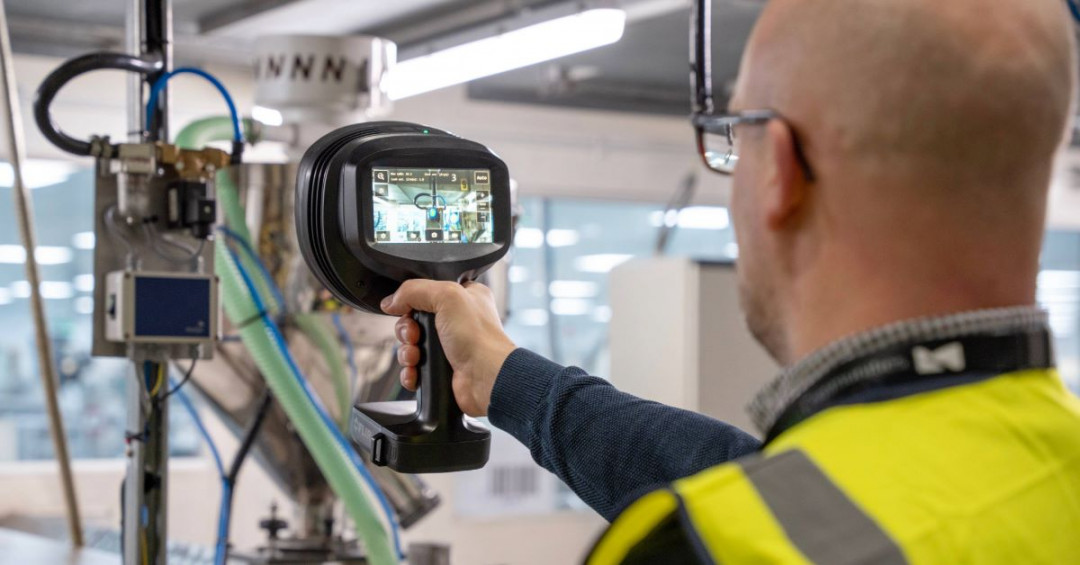
Facing rising energy costs and increasing pressure to meet CO₂ regulations, an automotive parts manufacturer explored the FLIR Si124 acoustic imaging camera for compressed air leak detection. This case study demonstrates how the tool streamlined inspections, uncovered hidden leaks and enhanced maintenance efficiency within a noisy industrial environment.
Used to power production machinery like pneumatic tools, vacuum generators and actuators, compressed air is a critical commodity in the automotive parts manufacturing industry. With complex piping systems spread across large facilities, compressed air leaks are both common and costly. At one US automotive parts factory, the maintenance team was increasingly concerned about rising energy consumption, pressure drops and frequent disruptions caused by undiagnosed leaks. Traditional detection methods had proved to be time-consuming, inconsistent and difficult to use effectively in vast production areas filled with noise, making a more efficient inspection method necessary to keep operations running smoothly and reduce unnecessary energy loss and CO₂ emissions.
Testing the FLIR Si-series acoustic imaging camera
To address these issues, the factory's manufacturing engineer initiated a test of a FLIR Si-Series acoustic imaging camera. The goal was to evaluate whether the device could offer a faster, more reliable way to detect compressed air leaks during regular inspections without interrupting production.
The testing was carried out over a four-week period and focused on critical areas such as assembly lines powered by pneumatic tools, overhead compressed air lines and maintenance zones known for frequent small leaks. Although the constant air exhaust from actuators during production creates significant turbulence and noise – making it challenging to detect leaks inside the machines – the inspections were successfully carried out also during normal operating hours to reflect real-world conditions.
The results
The acoustic camera instantly identified compressed air leaks and produced clear, real-time acoustic images. This made it easy to pinpoint leaks, even those hidden in overhead pipes or amidst dense machinery. The array of sensitive MEMS microphones and advanced sound processing capabilities effectively isolated even minute leak sounds from background noise. The intuitive, easy to use design required minimal training, allowing for immediate use and efficient inspections.
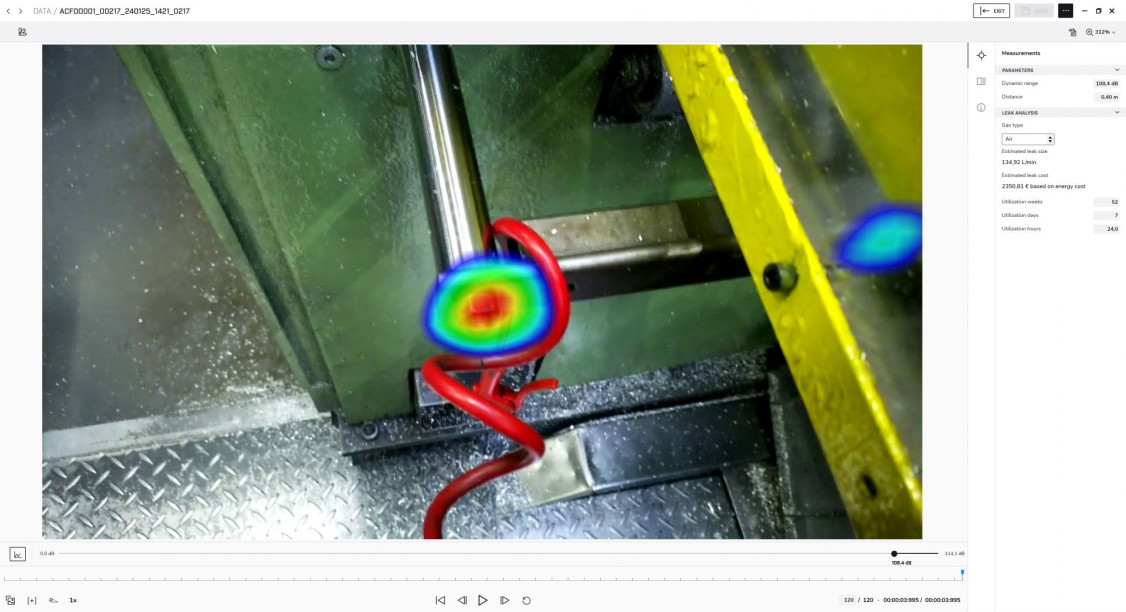
The captured acoustic images simplified the process of sharing findings by providing clear, visual data for the maintenance team. The ability to immediately quantify and label the leaks helped prioritize repairs and justify work orders, improving communication across departments. According to the manufacturing engineer, the device was also light, ergonomic and designed with great attention to detail; for instance, the save button was placed conveniently to allow for continuous one-handed operation.
The results of the test inspections speak for themselves: after fixing just 15 of the 68 (22 %) leaks discovered during the last inspection round, the company experienced a 54.6m3 per hour – 15 % – decrease in air usage, and a 230.4 kg per day reduction in CO2 emissions. Fixing just a fraction of the detected leaks resulted in annual electrical savings of over $4,000.
Overall, the FLIR Si-Series acoustic imaging camera allowed the manufacturing engineer to detect, document and report leaks quickly, reducing time spent on inspections and helping the maintenance team take immediate corrective action.
Benefits of using a FLIR Si-series acoustic imaging camera:
- Accelerated leak detection: Identifies compressed air leaks up to ten times faster than traditional methods, even in noisy industrial environments.
- Real-time visualization and quantification: Provides immediate high-resolution acoustic images and leak severity assessment, enabling in-the-field decision support.
- Cost and energy savings: By promptly identifying and repairing leaks.
- Safe and user-friendly operation: Lightweight and designed for one-handed use, requiring minimal training and facilitating safe inspections in challenging environments.
- Seamless data management: Integrates with FLIR Thermal Studio Suite and Acoustic Camera Viewer Cloud Service for efficient data analysis, reporting and storage.
- Improved maintenance planning: Provides clear visual data to prioritize repairs and justify maintenance decisions.
- CO₂ emissions reduction and regulatory compliance: Helps facilities decrease CO₂ emissions and meet environmental regulations and sustainability goals.
(Source: © Teledyne FLIR LLC)
Schlagworte
AutomotiveBrazingCO2EmissionsEnergyImagingJoiningManufacturingOEMPartsProductionQuality ControlSolderingWeldingWorkplace Safety