
International
© TEL GmbH
05.07.2025

Electric Shortwave Infrared Heaters

“Exhibitors announce”: The company mentioned in this article is an exhibitor at SCHWEISSEN & SCHNEIDEN 2025.

You will find the company at the fair in Hall GA, Stand GA62.
SCHWEISSEN & SCHNEIDEN 2025 [EN]
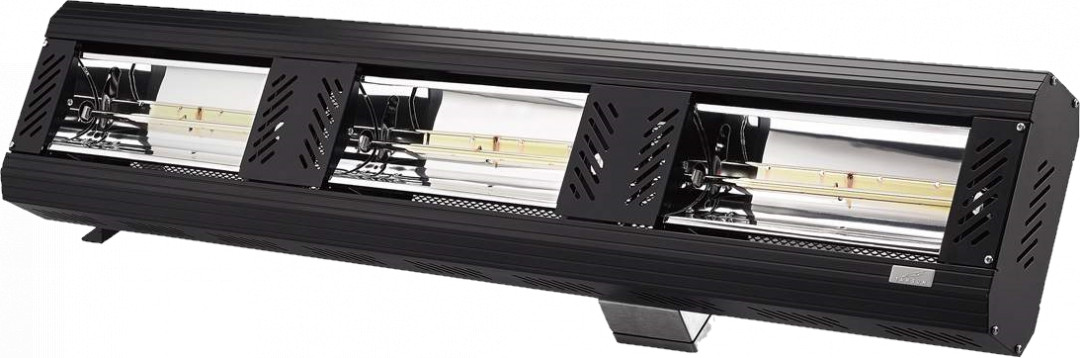
Electric shortwave infrared heaters of the Tansun Apollo Series

With a heating output of 2 to 18 kW, depending on the model, the electric Apollo hall heater offers an efficient and maintenance-free heat source. It is possible to heat individual workstations or entire halls. Thanks to the long-lasting infrared tubes, regular maintenance is no longer necessary, which makes operation not only easier but also cheaper.

Short-wave infrared heaters offer the benefit of directly heating the surfaces and individuals in the radiation range rather than heating the surrounding air. This occurs similarly to sunlight, which can create a comforting warmth even on chilly days. The most important benefits of this technology are:

  • Instant heat: No lead time is required.
  • Efficiency: Since the surfaces and not the air are primarily heated, less energy is wasted. This is especially beneficial in spaces where doors are frequently opened, such as warehouses and production facilities.
  • Environmental friendliness: In combination with a climate-neutral power supply, CO2-neutral operation is possible. Electric infrared heaters provide a more environmentally friendly alternative to gas-powered systems, which rely on hydrogen and experience energy losses during production.

Apollo infrared heaters are available with heating tubes arranged side by side or stacked and are  suitable for use in large halls, storage rooms and production areas. A practical example illustrates the efficiency: In order to heat an effective working area of ​​less than 100 m² for 8 hours a day in a hall of 2500 m³ of air, conventional heating systems would be inefficient, especially with regularly opened doors. Electrically operated short-wave infrared heaters offer a solution. The immediate supply of heat without preheating and the possibility of climate-neutral operation make them the ideal choice for modern, environmentally conscious companies.

(Source: TEL GmbH)

Schlagworte

ClimateElectricEnergyEnvironmentGasHeaterHeatingInfraredProductionSCHWEISSEN & SCHNEIDEN 2025SustainabilityTechnologyWeldingWorking AreaWorkplace

Verwandte Artikel

30.05.2026

Advanced Lithium Carbonate Process Supports Battery Materials Production

Metso is introducing the next generation of its lithium carbonate production process, a single-pass technology designed to produce battery-grade lithium carbonate from sp...

Batteries Battery Storage Carbon Emissions Energy Transition Lithium Materials Renewable Energy Sustainability
Read more
29.05.2026

Auto-Darkening Helmet Brings Natural Colour Visibility to Welders

GCE® has introduced its Mach2 auto-darkening welding helmet, designed to enable operators to work with greater clarity, comfort and versatility across welding, cutting an...

Cutting Eye Protection Grinding Headgear MAG MIG Personal Protective Equipment PPE Safety Gear Solar Cells Sustainable TIG Welding Welding Helmet
Read more
28.05.2026

Technology for the Energy Transition

Hargassner and Fronius are driving the energy transition, each in their own field but united in their approach.

AI Automation Energy Energy Transition Low Carbon Emissions NetZero Robotics Robots Steel Transformation Welding
Read more
Jan Stekly
27.05.2026

Welding Alloys Celebrates 60 Year Anniversary

Since its founding in 1966 by Jan Stekly Welding Alloys has grown into an international organisation with a presence in multiple continents, serving heavy industries arou...

Alloys Automation Cored Wire Energy Material Steel Welding Welding Consumables Welding Equipment
Read more
20.05.2026

ABB Invests $200M for European Grid Transformation

ABB announced that it is investing around $200M in its medium-voltage manufacturing capabilities across Europe over the next three years to expand production capacity.

Electrical Grid Energy Manufacturing Power Grid Production Transformation
Read more