
24.11.2026
Forschung
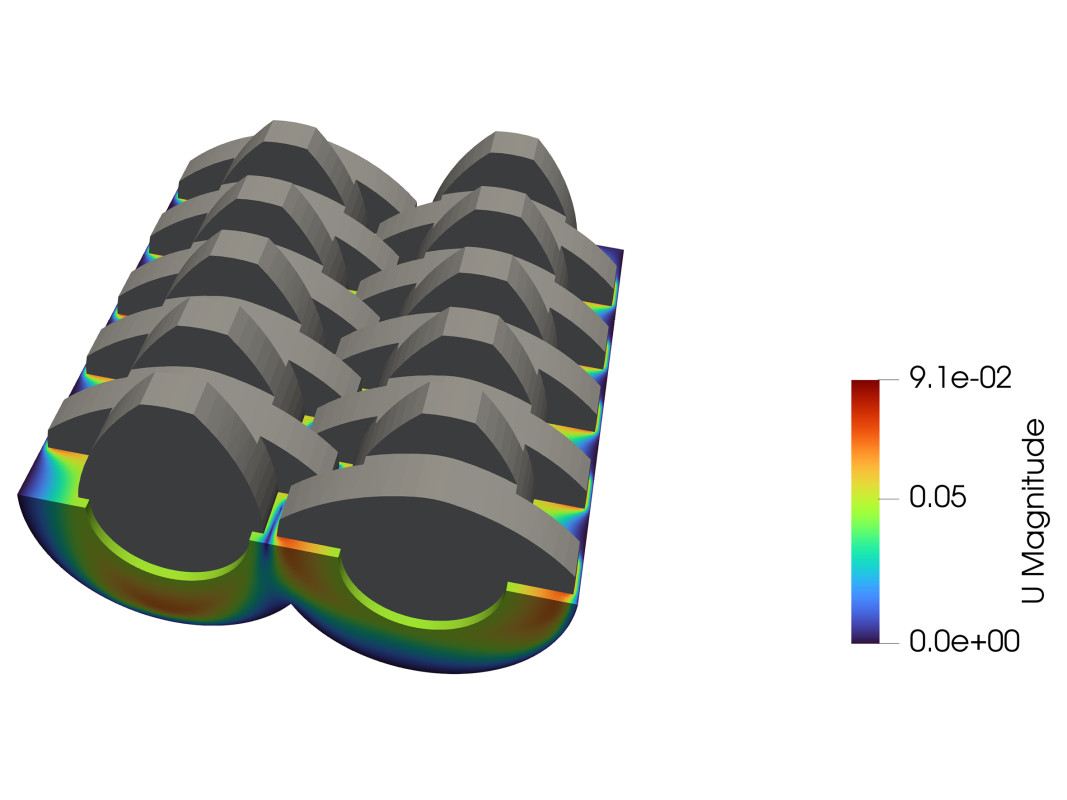
The uniform distribution of components is crucial to the quality of plastic blends. However, what happens during compounding has so far been only partially predictable. A new research project by the SKZ Plastics Center and the Institute for Plastics Technology (IKT) at the University of Stuttgart aims to close this knowledge gap and open up new possibilities for the efficient development and optimization of mixing processes in twin-screw extruders.
SKZ and IKT launch researchproject to improve mixing quality prediction in twin-screw extrusion
The production of plastic blends plays a central role in the development of new materials as well as in the processing of recycled materials. The resulting product properties depend crucially on how well the individual components are broken down and distributed during the compounding process. For companies, however, designing suitable screw configurations and process parameters often remains a challenge, as the flow and mixing processes inside twin-screw extruders are complex.
This is precisely where the research project comes in. The goal is to develop a completely novel computational method based on the Immersed Boundary Method. While existing computational models typically consider only single-phase flows, this new method will directly account for the interactions between different polymer phases. This will allow mixing processes to be investigated and understood in much greater detail.
More efficient process development for companies
“For small and medium-sized enterprises in particular, extensive test series for process design involve significant time and cost. “Our goal is to make the development and optimisation of compounding processes significantly more efficient through improved simulation tools,” explains Alina Heihoff, a scientist at SKZ. “The research results are intended to help companies design process parameters more precisely, reduce material usage and scrap and increase energy efficiency and product quality,” says M.Sc. Jia Jie Wang of the Institute of Plastics Technology.
Participation in the project is available free of charge
The methods developed in the project for characterising blends and validating simulations, as well as the accumulated expertise and process equipment, are continuously available to companies as technology transfer offerings through the research institutions’ service portfolios. For example, based on the results, customized in-house training or pilot-scale production runs – including characterisation –are offered.
Companies from the plastics industry and related sectors are welcome to actively participate in the research project through the project steering committee. Participating companies receive early insights into the project’s progress, can contribute practical questions and use cases and can help shape the research through technical exchanges. Participation is free.
Funding
The “Mehr-Phasen” research project (funding code 01IF25516N) is funded by the Federal Ministry for Economic Affairs and Energy (BMWE) as part of the Industrial Collaborative Research (IGF) program, pursuant to a resolution of the German Bundestag.
(Source: SKZ – The Platics Center)
Schlagworte
Blended PlasticsJoining PlaticsJPPlasticPlasticsPolymersRecycled MaterialsRecyclingSME