

16.01.2026
International
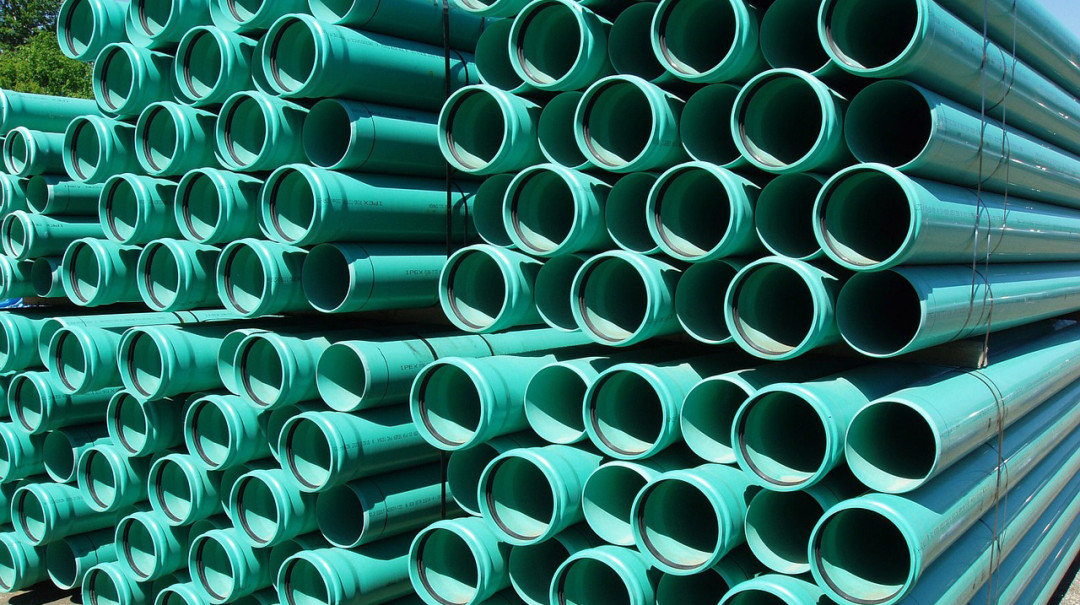
For some time, the European market for PVC pipes, polypropylene pipes, and pipes made of other polymers stagnated at around 5 million tonnes per year. However, Ceresana market researchers are now expecting a slight recovery in demand: EU directives on drinking water (DWD) and urban waste water treatment (UWWTD) are gradually coming into force and driving the expansion of water pipe networks. Adapting to climate change and extreme weather events requires investment in new pipes in agriculture and horticulture, but also in many municipalities, for example for pressure pipes, plumbing pipes, or water treatment. In addition, there is a growing need for empty conduits to protect power and telecommunication lines: For cable protection, often made of polyethylene, Ceresana expects growth of 1.7 % per year.
Plastic pipes for indoor and outdoor use
The latest, already eighth edition of Ceresana’s European plastic pipe market report distinguishes for the first time between in-building installations and external utility networks when it comes to the key figures for the two application areas “potable water” and “sewage”. The market volume for in-building installations is heavily dependent on construction activity in the building construction sector and on the energy-efficient refurbishment and modernization of buildings. The trend continues towards lightweight, durable plastics: Old metal pipes are replaced with new pipes made of polypropylene random copolymer (PP-R pipes) or cross-linked polyethylene (PE-X pipes), particularly during renovations. Glass fiber reinforced plastics (GRP) are used in particular for large pipes where rigidity and corrosion resistance are required. The market share of pipes made of fiber composites, mostly mixtures of glass fibers and thermosetting polyester or epoxy resins, is still low. However, Ceresana’s plastic pipes industry analysis expects high growth of around 3% per year for GRP pipes, although the prospects for this depend on a few major projects. Ceresana is forecasting growth of 1.4% for polyethylene pipes, which are used in particular for potable water, irrigation, and parts of gas networks. One of the reasons for the increasing demand for plastic pipes is the trend towards trenchless construction methods, among other things.
Opportunities and risks for plastic pipes
The European construction industry could recover from 2026 onwards. However, many construction projects are held up by bureaucratic approval procedures, a shortage of skilled workers, and rising construction and financing costs. Municipal projects are particularly affected by budget cuts; on the other hand, there are large government investment programs for infrastructure. With a “European Grid Package” and new “energy highways”, the European Union wants to expand the trans-European energy networks, especially the cross-border electricity, gas, and hydrogen pipelines. The market report on plastic pipes examines demand in the various segments of the construction industry separately. In most European countries, commercial, infrastructure, and military buildings are outperforming residential construction. The hype surrounding artificial intelligence is currently causing a boom in the construction of data centers in particular. In addition to market data and forecasts, the new study also contains background information on the regulatory framework in the EU as well as the general economic situation and the situation in the construction industry in various European countries (including important companies, construction activities, investments, planned construction projects).
Current edition of the market study “Plastic Pipes – Europe”
Chapter 1 analyzes the entire European market for plastic pipes – and provides forecasts up to the year 2034. Key figures on revenues (in dollars and euros) as well as demand and production volumes (in tonnes) are provided. Revenues are also broken down into application areas. Demand is broken down in detail for the various application areas, construction segments, and plastic types. The production volume is broken down by type of plastic.
Chapter 2 provides specific market data on plastic pipes for 23 European countries: Turnover, imports and exports, production and consumption volumes.
The following application areas are analyzed:
- Sewage disposal (broken down into the sub-segments “in-building installations” and “external utility networks”)
- Potable water supply (broken down into the sub-segments “in-building installations” and “external utility networks”)
- Cable protection
- Gas supply
- Agriculture
- Industry
- Other applications
The following plastic types are differentiated
- Polyethylene (PE)
- Polypropylene (PP)
- Polyvinyl chloride (PVC)
- Glass fiber reinforced plastics (GRP)
- Other types of plastic.
The figures for the various construction segments are also shown separately
- New construction
- Renovation
- Residential construction
- Commercial construction and infrastructure.
Chapter 3 provides company profiles of the largest plastic pipe manufacturers in Europe – clearly arranged according to contact details, revenues, net income, product range, production sites, and short overview of the company. In-depth profiles of the 59 most important plastic pipe producers are given, for example of Aalberts, Aliaxis, Geberit, Georg Fischer, Pipelife International, Polyplastic Group, Rehau Industries, Tessenderlo Group , Viega and Wavin.
(Source: Ceresana)
Schlagworte
Market StudyPlasticsPlastics JoiningStudy