International
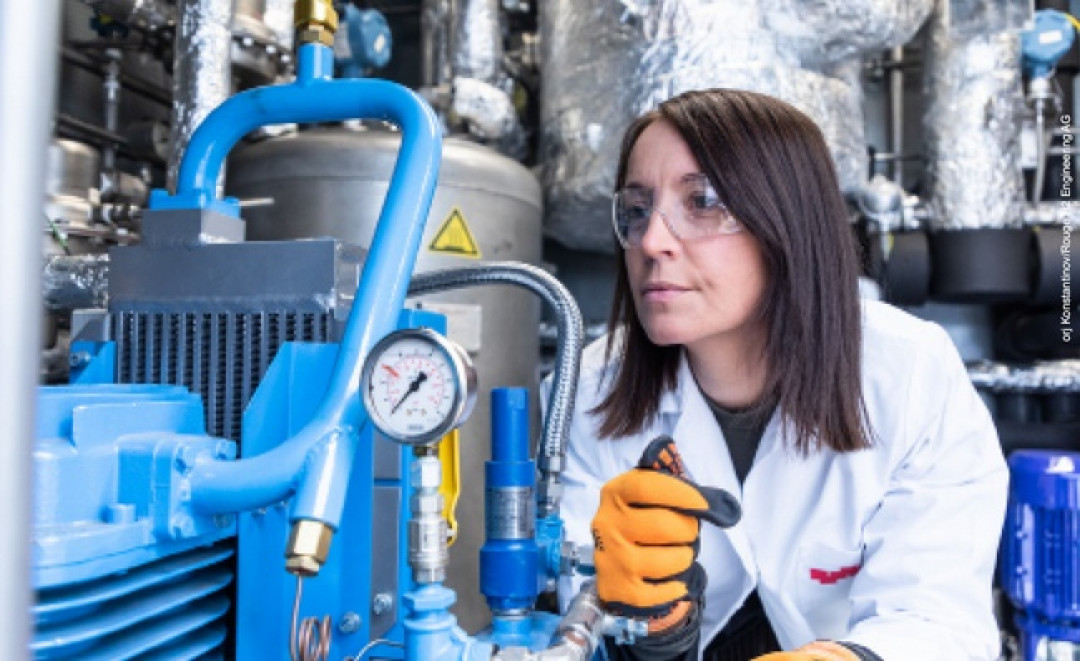
Testing of the chemical looping hydrogen reactor at Rouge H2 Engineering - © Ambartec
21.11.2025

Solutions for Climate-Neutral Steelworks

Ambartec and Rouge H2 Engineering are set to collaborate closely in the future to bring the chemical looping hydrogen process to market maturity. This process can be used to produce clean hydrogen and concentrated carbon dioxide from blast furnace gas and other steel mill gases. It is based on the steam-iron process, which can be used to produce high-purity hydrogen by reducing and oxidising iron oxide or iron nuggets. The highly concentrated CO2 obtained can be effectively utilised in CCU (Carbon Capature and Utilization) or CCS (Carbon Capture and Storage) processes.

The chemical looping hydrogen process

This two-stage process uses iron oxide (FeOx) to convert carbon-containing gas mixtures into hydrogen (H2) and carbon dioxide (CO2). “Our collaboration aims to optimise the process for blast furnace gases and implement it in steelworks,” reports Uwe Pahl, Chief Technology Officer at Ambartec. 

Blast furnace gas, coke oven gas and converter gas can thus be processed to generate high-quality hydrogen. The high-purity carbon dioxide produced during this process can be utilised as a material (CCU) or stored (CCS). The precondition for this green transformation of the steel industry is that the CCS Act, which is currently being revised, must authorise the storage of CO2 from the steel industry. 'This gives the steel industry the chance to make its production more climate-friendly without having to invest heavily in converting the entire process chain. This will ensure that steel production in Europe remains competitive despite the stringent climate protection requirements,’ emphasises Uwe Pahl.
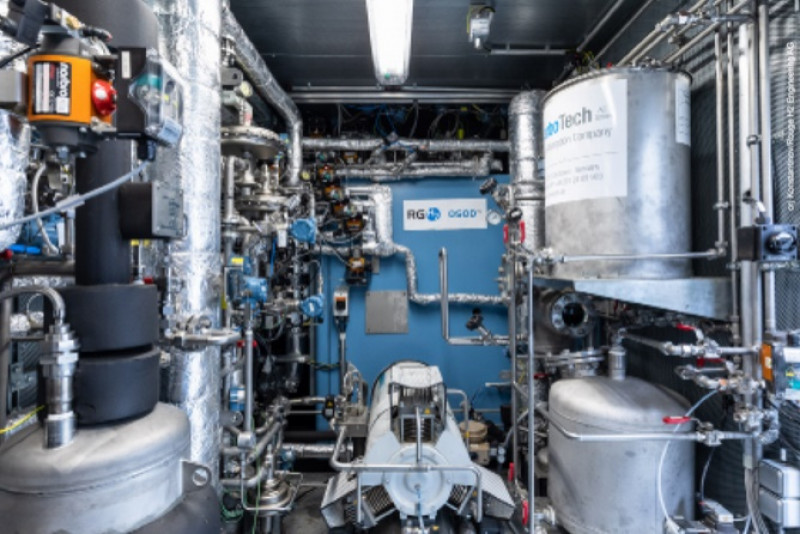
Test plant for the chemical looping hydrogen process at Rouge H2 Engineering AG - © Ambartec
Test plant for the chemical looping hydrogen process at Rouge H2 Engineering AG © Ambartec
Partner from the steel industry

The EU project H2Loop* provides the framework for this cooperation. ‘We are combining our expertise in iron oxide nuggets and our experience in plant operation with the knowledge of our colleagues at Rouge H2 Engineering in the processing of residual gases,’ explains Matthias Rudloff, CEO of AMBARtec.

(Source: H2UB GmbH)

Schlagworte

Carbon CaptureCCSCCUChemical IndustryClimateEnergyGreen SteelH2HydrogenSteel

Verwandte Artikel

Angel Guijarro, Managing Director of Linxon Europe
01.11.2026

Linxon Wins Twin Substation Contracts as Svenska kraftnät Extends Grid

Linxon has been awarded contracts by Svenska kraftnät to deliver two major substation projects as part of the Gotland Interconnection.

Carbon Reduction Electricity Electrification Emissions Energy NetZero Power Grid
Read more
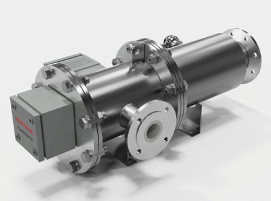
Kanthal Flow Heater Generation 3, the latest generation of Kanthal’s electric process-gas heating technology.
29.10.2026

Flow Heater Technology for High-Temperature Industrial Electrification

Kanthal introduces the Flow Heater Generation 3, the latest development of its electric process-gas heating technology.

Carbon Reduction CO2 Electrification Emissions Energy Flow Heater HIgh-Temperature Industrial Electrification Metal production NetZero
Read more
21.10.2026

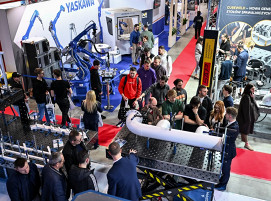
2027 Industrial Spring: More Space for Technology in Action

From April 6 through 9, 2027, Expo Kielce will return on a larger scale; for the first time, the trade show cycle will make full use of the new exhibition hall.

Additive Manufacturing AI Automation CNC Cutting Digitalisation Digitalization Energy Grinding Joining Laser Technology Material Testing Metal Work Milling Process Automation Process Control Quality Assessment Quality Control Robotics Sheet Metal Processing Surface Treatment Trade Fair Welding
Read more
20.10.2026

Three Questions that Decide the Laser Operating Mode

Why the material, the joint and the allowed heat input come before the parameter screen, which modes the Nd:YAG and fibre laser series offer, and why a test weld settles...

Fusion Heat Input Joining Laser Beam Welding Pulsed Mode Stainless Steel Steel Titanium Weld Seam Welding Welding Parameters
Read more
19.10.2026

Prediction of the Mechanical Strength of Metal Ultrasonic Welds Using Short-Term Electrical Current

For the first time, a non-destructive, process-oriented testing method is available that could help to reduce scrap, optimise parameters and make quality assurance more e...

Automation Energy NDT Non-Destructive Testing Shear Tensile Strength Short-Term Electrical Current Ultrasonic Metal Welding Ultrasonic Welds USMW
Read more