
10.03.2026
International
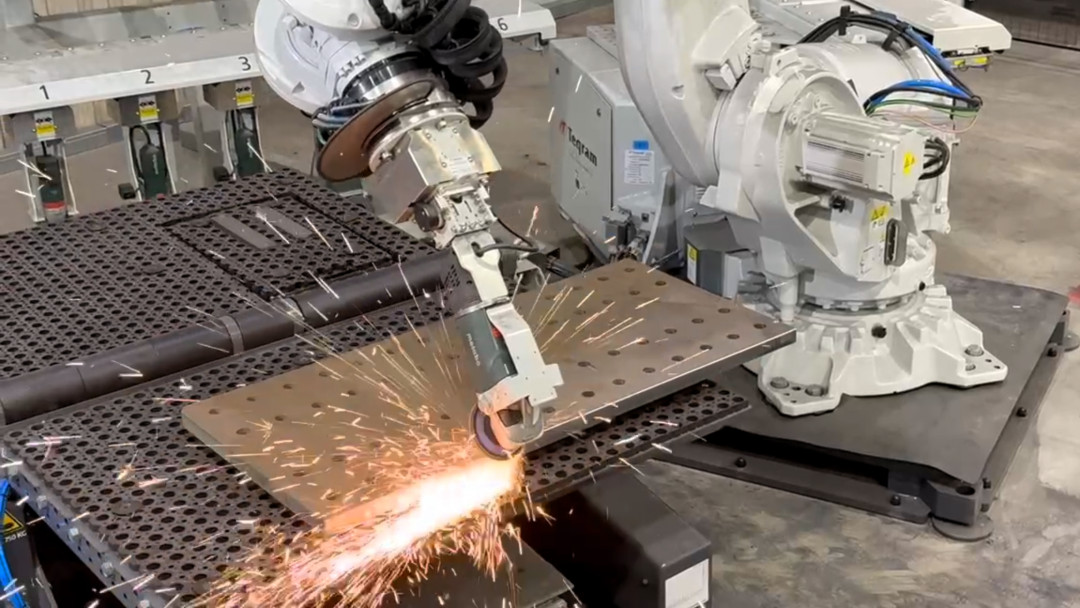
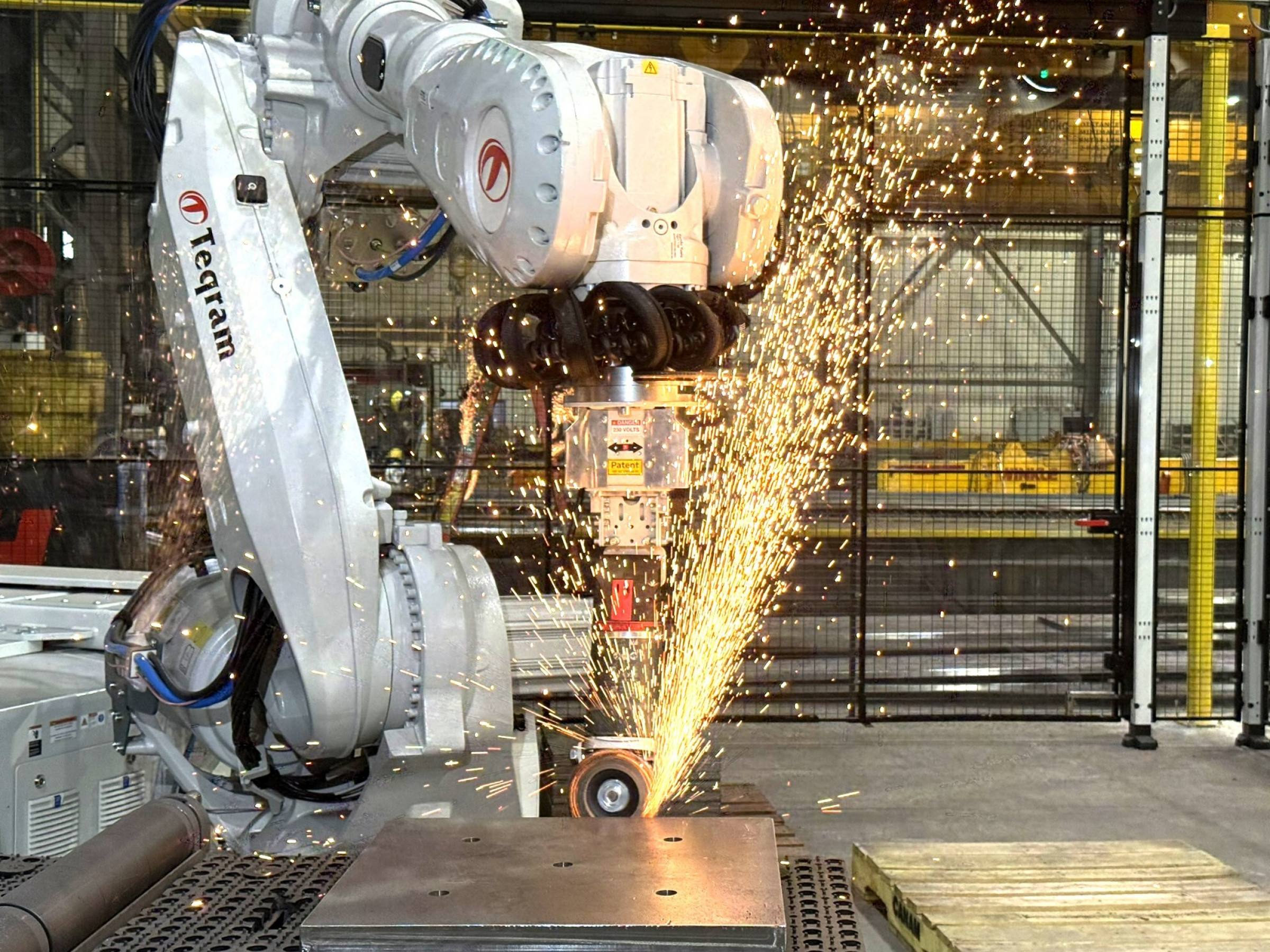
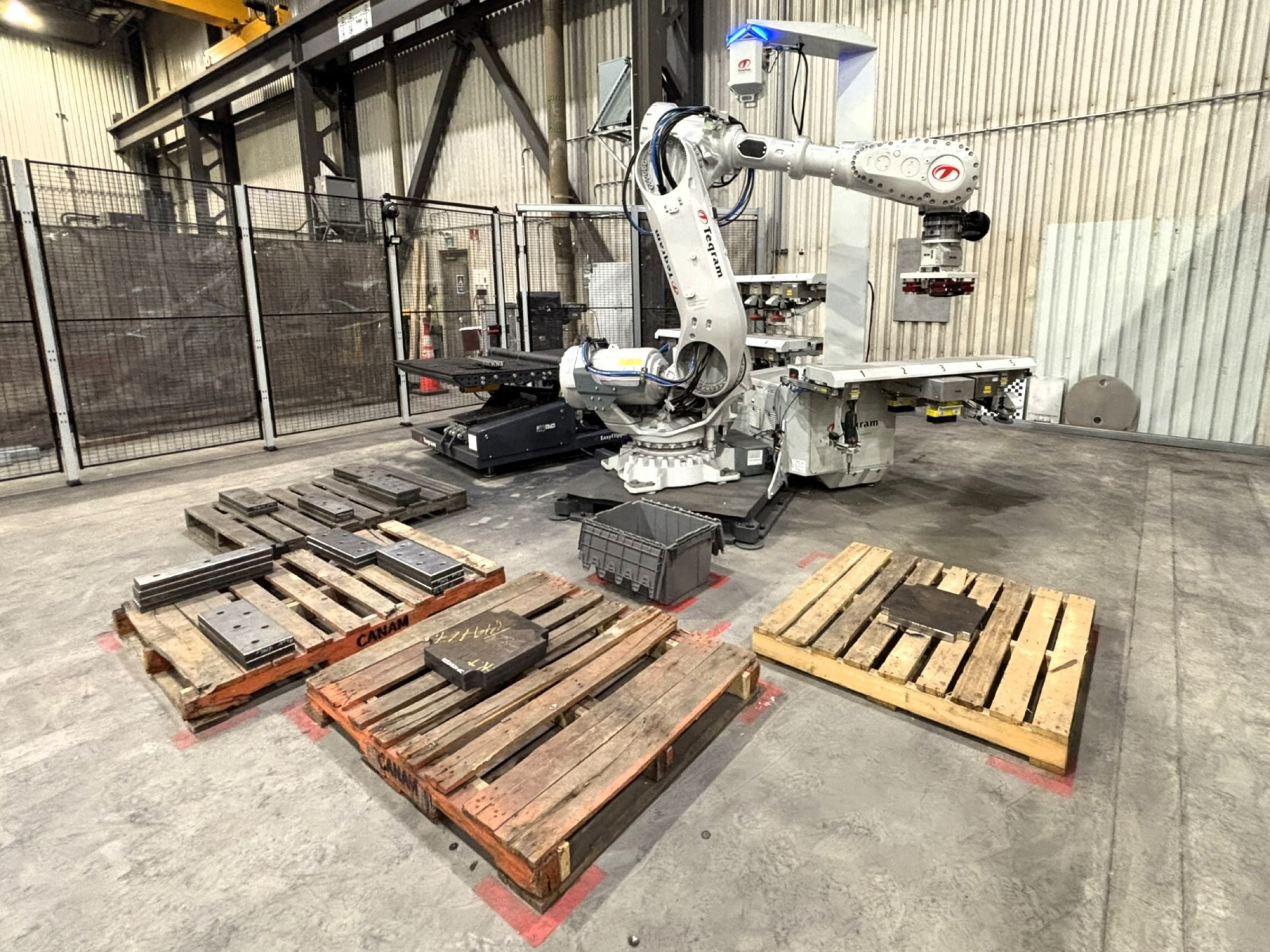
In bridge construction, tight deadlines, strict quality standards and high volumes leave no room for delays. Canam-Bridges, a North American bridge manufacturer, delivers steel structures for bridges across Canada and the U.S. Managing complex projects with multiple cutting and grinding processes was putting pressure on the team. Repetitive deburring tasks, heavy manual labour and the need for consistent quality created a bottleneck in production. To stay on schedule, improve safety and scale efficiently, Canam-Bridges implemented the EasyGrinder, an autonomous grinding robot from Teqram.
Bridge construction leaves no room for delays
Quality and on-time delivery are non-negotiable in bridge projects. Canam-Bridges often executes multiple large-scale projects simultaneously under tight deadlines. “Product quality, jobsite management and deadlines are critical factors in every project we execute,” says Mathieu Larouche, Project Engineer at Canam-Bridges. These pressures made the company look closely at internal processes, especially in the cutting and deburring department.
Manual deburring reached its limits
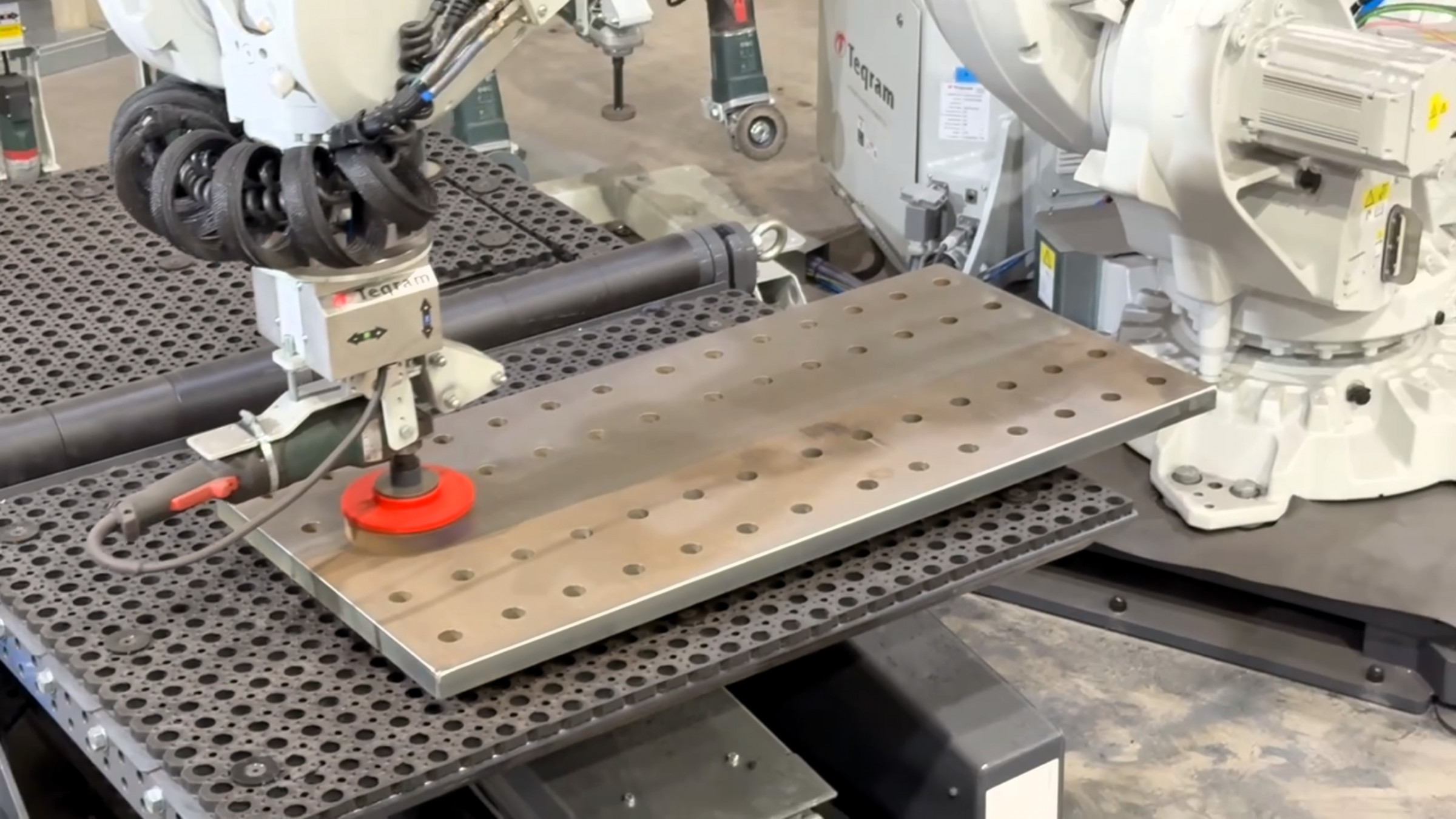
Each week, Canam-Bridges processes about 300 t of plasma- and oxyfuel-cut parts. After cutting, parts move to grinding stations for slag removal, edge rounding up to one inch, oxide layer removal, side grinding to remove the heat-affected zone and removing lead-ins. “At one point, we had 16 to 18 grinding technicians working in three shifts,” Mathieu explains. “That was no longer scalable. Manual deburring made it difficult to meet deadlines and handle multiple projects.” The work itself was also physically demanding and there was a lot of dust and debris. A more modern solution was needed.
Scalable approach to deburring and furface finishing
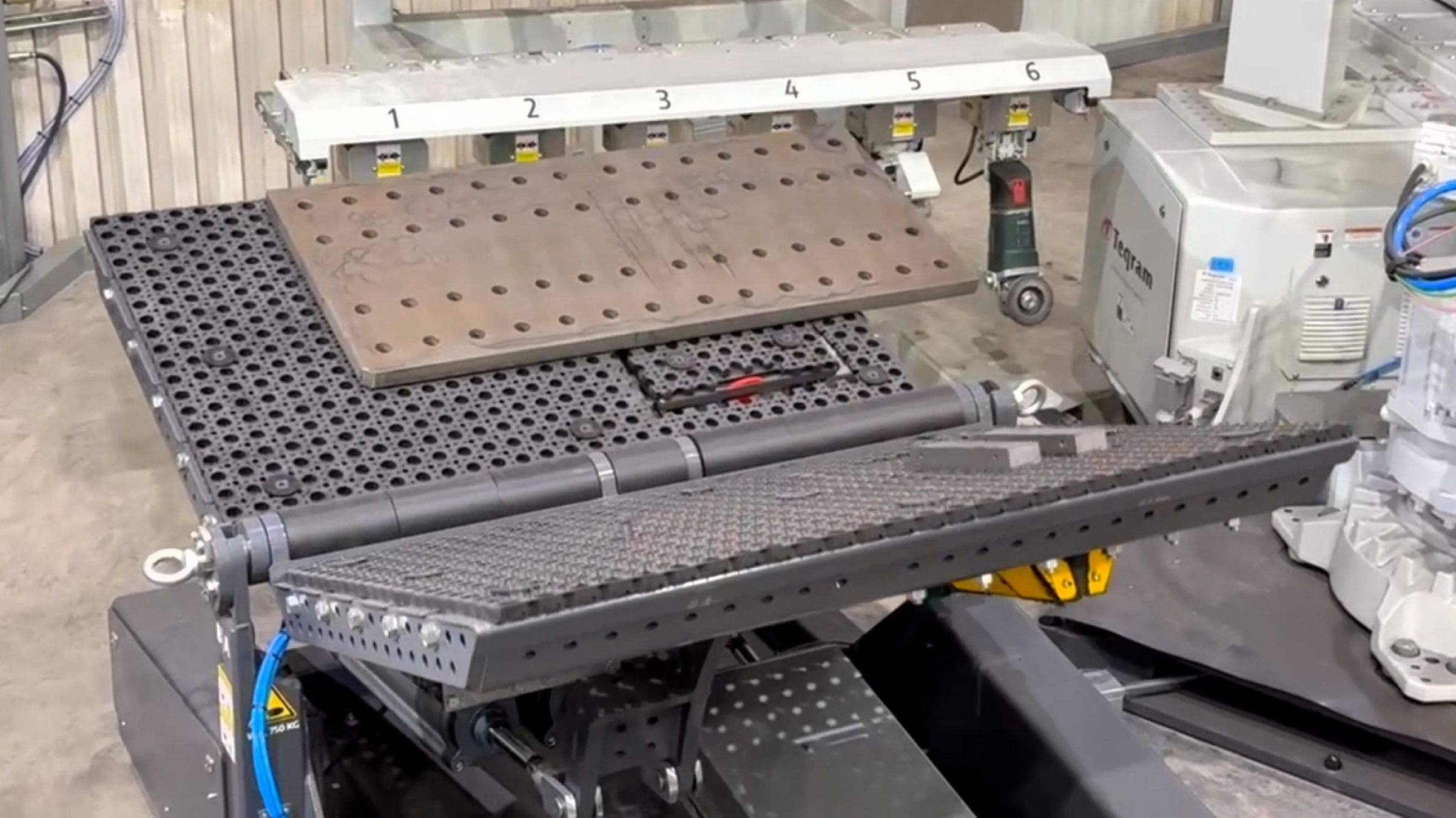
Canam-Bridges set a clear goal: reduce manual grinding, improve consistency, and create a process that could scale without increasing physical strain. “With the EasyGrinder, all small and medium-sized parts are now fully processed automatically,” Mathieu says. “Where we previously needed 2-3 grinding technicians for removing the heat-affected zone, we now have one person mainly focused on logistics and fine-tuning the robot.”
Consistent quality
Quality consistency was a key requirement, and the EasyGrinder delivered. “The EasyGrinder always produces the same high quality,” Mathieu notes. “... We adjusted some parameters to increase output because the finish exceeded what was required for certain surface treatments.”
EasyEye eliminates programming
One of the biggest advantages for Canam-Bridges is the EasyEye 3D vision system. “It was a real eye-opener. You don’t need any programming, even for complex parts, that’s a big win for us,” says Mathieu. This flexibility keeps the deburring process fast and efficient, even with changing part geometries. Even small series and single pieces can be produced efficiently with minimal overhead.
Foundation for future automation
Today, the EasyGrinder is a stable and scalable part of Canam-Bridges’ deburring process for small and medium-sized parts. Larger components are still processed manually, but future automation is already being considered. “We’re definitely looking at automating larger parts as well,” Mathieu concludes.
(Source: Teqram BV)
Schlagworte
CuttingDeburringGrindingMetalRoboticsRobotsSteelSurface FinishingSurface Treatment