
International
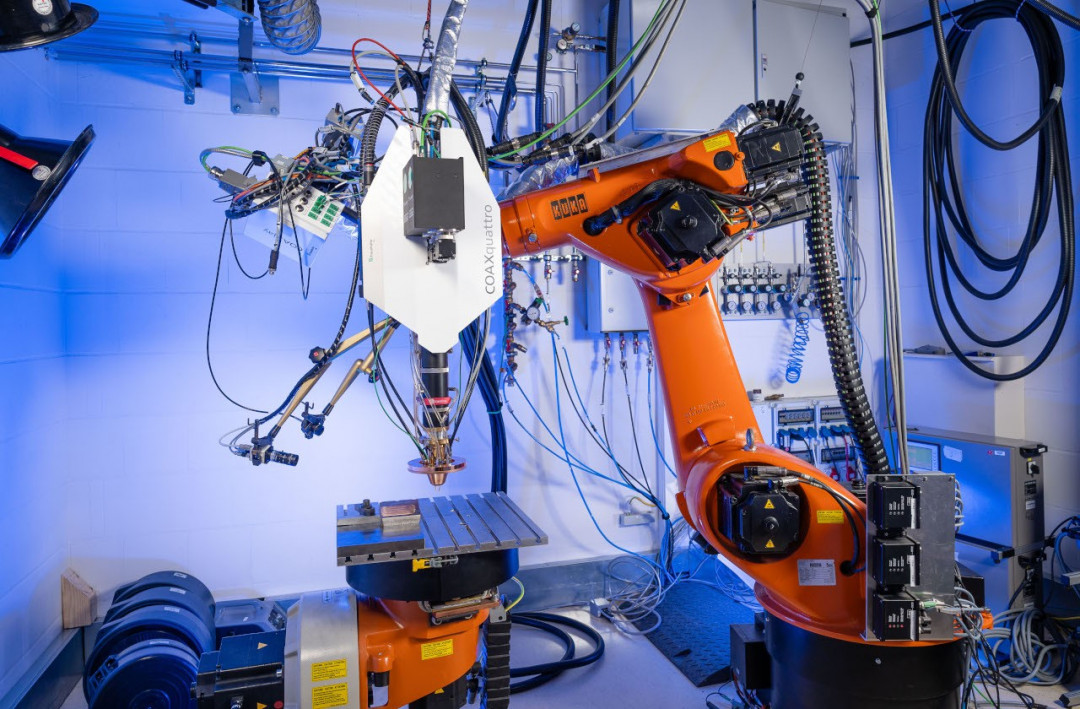
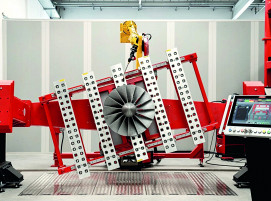
The COAXquattro can be connected to industry-typical robotic systems and opens up new perspectives for wire-based laser cladding. - © ronaldbonss.com
12.11.2025

Systems in Laser Cladding and Additive Manufacturing

A new nozzle opens up perspectives for wire-based laser cladding in automotive and many other industries: The COAXquattro system by Fraunhofer IWS simultaneously feeds four wires into the center of the laser beam, increasing the deposition rate and energy efficiency of laser wire cladding for coatings, repairs or additive manufacturing. Systems equipped in this way achieve productivity rates previously reserved only for powder-based laser cladding. At the same time, the COAXquattro system reduces material costs, increases safety at work and improves the environmental balance.

As diode laser prices are falling, more and more companies are turning to laser cladding to coat or additively manufacture complex components. In this process, the system melts a metal-based powder or wire and manufactures the desired component from the molten metal layer by layer. Wire has been used primarily for small-batch repairs.

For larger production runs, on the other hand, users have previously preferred powder because it has allowed higher material deposition rates (for example, around 18 kilograms per hour for Inconel 625 using a 20 kW diode laser). However, powders involve increased occupational safety risks: Some of them are hazardous to health, others even explosive.
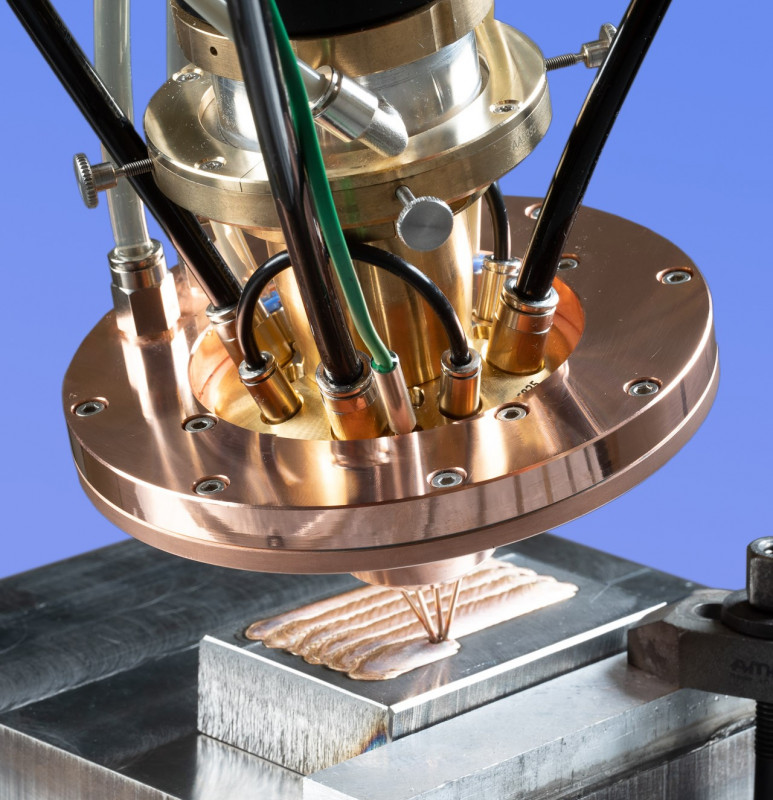
Four wires feed simultaneously to the center of the laser beam and ensure competitive deposition rates. - © ronaldbonss.com
Four wires feed simultaneously to the center of the laser beam and ensure competitive deposition rates. © ronaldbonss.com

By automatically feeding four wires into the Fraunhofer IWS nozzle all at once, these laser cladding systems now also achieve cladding rates of around 18 kg per hour. However, while powder-based systems actually use a maximum of about 90 to 95 % of the feedstock material, the new nozzle head deposits effectively up to 100 % of the fed wire. In addition, wire costs approximately 50 % less compared to powder made from the same material, thus positively impacting manufacturing costs.

(Source: Fraunhofer IWS)

Schlagworte

Additive ManufacturingCladdingDEDLaserMetall AMPowder Bed Laser CladdingWire
Verwandte Artikel

09.05.2026

Summer School: Trends and New Developments in Laser Technology

The Technische Universität Dresden and Fraunhofer IWS are organizing the 15th International Summer School “Trends and New Developments in Laser Technology“.

2D Laser Cutting Additive Manufacturing Cutting Laser Process Simulation Laser Technology Laser Welding Surface Hardening Technologies Training Ultra Short Pulsed Lasers USPL Welding
Read more
06.05.2026

Oerlikon 1. Quarter Trading Update

Oerlikon reports an orders and sales increase of 18 % which was driven by materials, particularly in aviation and general industries.

Additive Manufacturing Aviation Financial Report Materials Thermal Spray Bulletin TSB Tungsten
Read more
30.04.2026

RIPT 2026: International Conference on Thermal Spraying

From June 10 through 12, 2026, the international thermal spray community will gather for the 12th RIPT – “Les Rencontres Internationales de la Projection Thermique” in Jü...

Additive Manufacturing Alloy Coating Biomaterials Coating Cold Spray Conference Event Functional Coatings Post Treatment Processes RIPT Simulation Spraying Surfacing Thermal Spray Bulletin Thermal Spraying TSB
Read more
25.04.2026

Fraunhofer IWS: Activity Report 2025/2026

Fraunhofer IWS' activity report focuses on selected developments in research and transfer. Current figures on budget, staff, publications and patents round out the e-pape...

Additive Manufacturing Aerospace Automobile Batteries Cutting Dry Coating Dry Electrodes Fraunhofer IWS Industrial Application Joining Laboratory Laser Materials Materials and Laser Technology R&D Research Robotics Robots Surface modification
Read more
Die neue Laserlösung von Trumpf sorgt für effizientere Spannungsverteiler in Elektroautos.
25.04.2026

Schweißlösung für die Herstellung von Leistungselektronik für E-Autos

Eine neue Laserschweißlösung von Trumpf macht die Herstellung von Leistungselektroniken für Elektroautos effizienter und zuverlässiger.

Automatisierung Elektroautos Elektromobilität Elektronik KI Laser Laserschweißen Laserstrahl Plug‑in‑Hybridfahrzeuge Qualitätskontrolle Schweißen Schweißnaht Sensorik Spannungsverteiler
Mehr erfahren