
16.09.2025
International
The lecture series Connecting Continents in the new Future Hub featured presentations from Morocco, Brazil, China and Slovakia that focused on international collaboration. Brazil, the world’s fifth-largest economy, relies heavily on welding as a cornerstone of its industrial strength – but it remains a challenging field that demands constant innovation and skill. The Brazilian Welding Association (ABS), with around 200 active members, plays a pivotal role in advancing the profession, fostering knowledge exchange and strengthening ties with international partners.
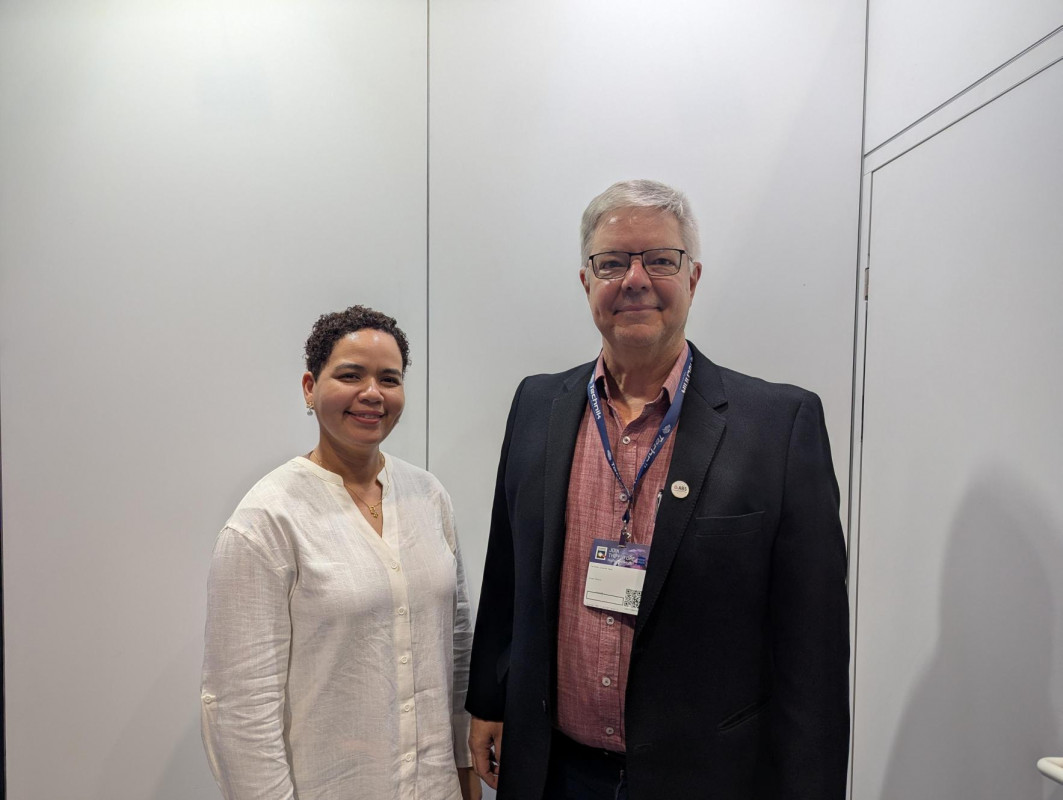
In this interview, we speak with Eng. Fernando Lescovar, General Director of ABS, and Zorailde Morais, International Welding Engineer, about the opportunities and challenges facing the Brazilian welding community. From the importance of global collaboration to the country’s reliance on imported technologies, they share their perspectives on how Brazil is positioning itself in an increasingly connected industry.
What technological challenges do you currently see for welding in Brazil?
Fernando Lescovar: A central issue is the low level of automation. Many processes are still carried out manually, and the number of robots per 10,000 employees is very low compared to international standards. In addition, universities often teach general mechanical engineering but not specific welding technologies. So we need more specialists who engage deeply with this field.
What role does international collaboration play in this?
Zorailde Morais: Brazil relies on technology partnerships, for example with Europe. There are many small, innovative companies with know-how that we urgently need. To increase our productivity – and thus our competitiveness – we need to cooperate more closely with international partners. The first bridges are already forming, through trade fairs and joint projects.
How does Brazil’s economic situation affect the industry?
Fernando Lescovar: Brazil is not a wealthy country and the profitability of many companies is limited. Often, companies only focus on the next month – which is a problem. We need to think more long-term, in five years, not just the next quarter. This requires investments and, above all, trust. If we manage to increase our productivity, we can also sustainably improve profitability.
What should a European reader absolutely know about welding in Brazil?
Zorailde Morais: That we are very open to exchanging knowledge and technologies. The Brazilian welding community is small but committed and eager to learn. Once trust is established, we can jointly create a very exciting future – step by step.
Thank you!
Schlagworte
ABSBrazilian Welding AssociationCollaborationCuttingInterviewJoiningSCHWEISSEN & SCHNEIDENTechnologyTrainingUnderwater WeldingWelding