
20.01.2026
International
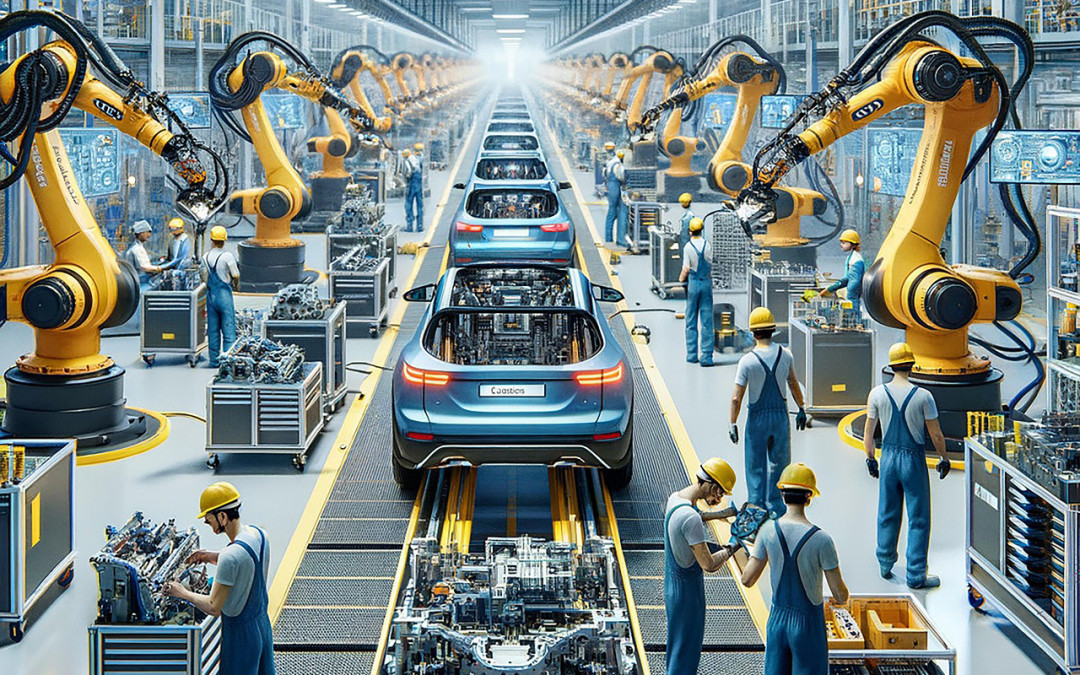
Today’s manufacturing industry has reached a new era entering the new year. If 2025 was defined by the cautious exploration of "experimental pilots" and the collection of vast data lakes, 2026 marks the year that data finally gains a mind of its own. There is a transition from passive automation to integrated, agentic autonomy – a shift that moves beyond simple programmed responses toward systems capable of independent reasoning and real-time optimization. This evolution is not just a technical upgrade; it is a fundamental restructuring of how industrial value is created, de-risked and scaled in an increasingly volatile global economy.
From automation to agentic reasoning
For decades, factory automation was a linear affair: machines followed pre-set instructions to perform repetitive tasks. Even early AI integrations were largely diagnostic, alerting human operators to anomalies without the agency to fix them. In 2026, the arrival of "Agentic AI" will rewrite this script. These systems function as intelligent agents that don't just flag a delay in the supply chain or a spike in machine temperature; they independently reason through the implications, plan corrective actions, and re-optimize production schedules on the fly. By shifting from "human-in-the-loop" to "human-on-the-loop," manufacturers are achieving a level of operational fluidity that was previously impossible, allowing the factory floor to breathe and adapt with the speed of software.
The industrial metaverse as an operating system
This move toward autonomy is anchored by the maturation of the Industrial Metaverse. No longer a buzzword for virtual reality headsets, the metaverse has become the functional operating system of the modern facility. High-fidelity digital twins now serve as the primary environment for strategic decision-making. These are not static 3D models but living, breathing digital replicas that mirror every physical asset and energy load in real-time.
By utilizing these twins, engineers can stress-test radical production changes or simulate complex energy-intensive cycles in a virtual space before a single physical machine is engaged. This "sim-to-real" workflow effectively de-risks massive capital investments, ensuring that when a physical change is finally implemented, it has already been perfected a thousand times in the digital realm.
Reshoring through strategic job redesign
The rise of the agentic factory has paradoxically sparked a renaissance in domestic labor. As production becomes more software-defined, the old narrative of machines replacing humans is being replaced by "Strategic Job Redesign." Manufacturers are decomposing traditional roles into granular tasks, strategically delegating high-precision or high-risk actions to collaborative robots (cobots) while elevating human workers into tech-enabled roles.
We are seeing a massive "resharing" and "re-skilling" effort where the manual laborer of yesterday is becoming the robotics coordinator or data interpreter of today. This evolution ensures that domestic production remains competitive not by matching the low wages of the past, but by maximizing the unique cognitive strengths of a highly skilled, tech-fluent workforce.
The evolution of digital offshoring
As domestic facilities become more automated, the nature of global trade is also transforming. The traditional model of offshoring – the hunt for the lowest manual labor costs – is being phased out in favor of Digital Offshoring. In this new paradigm, global centers of excellence manage the software architectures, AI model training and cloud-based infrastructure that power domestic, highly automated facilities.
This shift allows companies to tap into global specialized talent to maintain the "digital brain" of the factory while keeping the physical production "muscle" close to home. This model provides a hedge against volatile trade policies and shipping disruptions, creating a decentralized yet deeply interconnected manufacturing network.
Efficiency, sustainability and the double win
One of the most profound benefits of this shift is the emergence of the "double win": the simultaneous optimization of operational speed and environmental sustainability. By migrating the heavy computational burdens of AI and augmented reality to the cloud, manufacturers are reducing the physical footprint and heat output of on-site hardware.
Furthermore, agentic systems are now capable of predictive, AI-timed power consumption. By analyzing grid demands and production requirements, these systems can shift energy-heavy processes to off-peak hours, stabilizing the local energy grid while lowering costs. This level of granular control turns the factory from a passive energy consumer into a proactive participant in the regional energy ecosystem.
Building a resilient, software-defined future
Ultimately, the transition expected in 2026 represents the birth of a more resilient, software-defined industrial base. The competitive advantage of a nation or a firm is no longer determined by raw labor costs but by the sophistication of its human-machine collaboration.
By embracing agentic autonomy and the Industrial Metaverse, manufacturers are creating a "de-risked" environment that can withstand labor shortages and global supply shocks. The smart factory of today is not just a place where things are made; it is a dynamic, learning organism that integrates human ingenuity with machine precision to build a more stable and prosperous future.
(Source: Dijam Panigrahi, Co-founder and COO of GridRaster Inc.)
Schlagworte
Agentic AIAIAutomationDataITSmart FactorySoftware