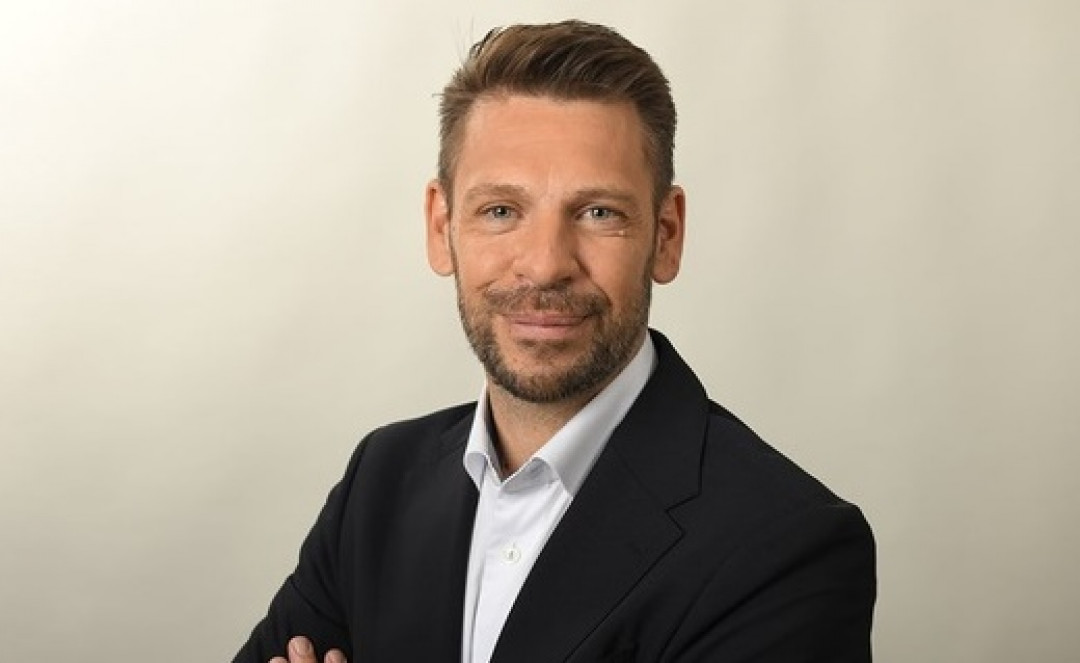
EWM is taking a holistic approach to shaping the future of welding technology. The full-service provider from the Westerwald region of Germany is focusing on intelligent automation, digital networking and sustainable process solutions. In this interview, Thomas Häusle, Chief Business Officer (CBO) at EWM, explains how an industry in transition can master technological, ecological and personnel challenges.
Welding technology has developed rapidly in recent years – from automation to AI-supported systems. How do you assess the current developments in the welding market and which trends do you consider to be the most significant?
Häusle: The industry is currently undergoing profound change. Welding technology is becoming increasingly intelligent – through automated processes, digital networking and the integration of AI. This is no longer just about robotics, but about the systemic development of the entire process. Applications such as EWM React allow complex tasks to be performed in a material-specific and reproducible manner – regardless of the operator's level of experience. This increases process reliability and reduces errors. Digitalisation is providing a further boost: the networking of all components – from the power source to quality control – is creating new opportunities for monitoring and optimisation.
The use of artificial intelligence is particularly forward-looking. It evaluates process data, recognises patterns and provides targeted support for parameterisation. This turns experience into a systematically usable resource. AI is intended to make work easier, not replace it. The goal remains to achieve the highest quality efficiently and safely – for every material and every application.
Question: Sustainability is an increasingly important issue. To what extent do energy efficiency and emission reduction play a role in the welding industry and how is EWM responding to these challenges?
Häusle: Energy efficiency and emission reduction – especially with regard to welding fumes – are key factors in modern welding technology. They not only influence the environmental balance, but also economic efficiency and occupational safety.
EWM takes a holistic approach here. Our modern inverter power sources are particularly energy-efficient and significantly reduce power consumption compared to conventional devices – without compromising welding quality or process stability. This is complemented by sophisticated cooling systems that minimise heat loss and extend the service life of the devices.
But sustainable technology does not end with the device: it begins with the right process selection, continues with intelligent control and is expressed in the digital networking of the entire welding infrastructure. Systems such as ewm Xnet create transparency regarding consumption and enable targeted optimisation. Integrated welding fume extraction systems are also part of our standard equipment – because sustainable welding always means health protection.
The shortage of skilled workers is a major challenge for many industries, including welding technology. How do you see the impact on the market and what solutions does EWM offer to meet the demand for qualified specialists while driving innovation forward?
Häusle: The industry is facing a paradigm shift – both technologically and culturally. At EWM, we are pursuing four key approaches to counteract the shortage of skilled workers: Firstly, we are increasing the attractiveness of the profession through modern working environments and flexible development paths. Secondly, we are focusing on practical and digitally supported training formats – from virtual welding trainers to AI-supported fault analysis. Thirdly, we make targeted use of automation to relieve skilled workers and direct their focus to value-adding tasks. And fourthly, we see digitalisation as the key to increasing efficiency: with ewm Xnet, we network the entire fleet – and translate data into concrete recommendations for action.
(Source: EWM GmbH)


![SCHWEISSEN & SCHNEIDEN 2025 [EN]](/images/frontend/journals/dvs-sus_sm.png)