
08.03.2026
International
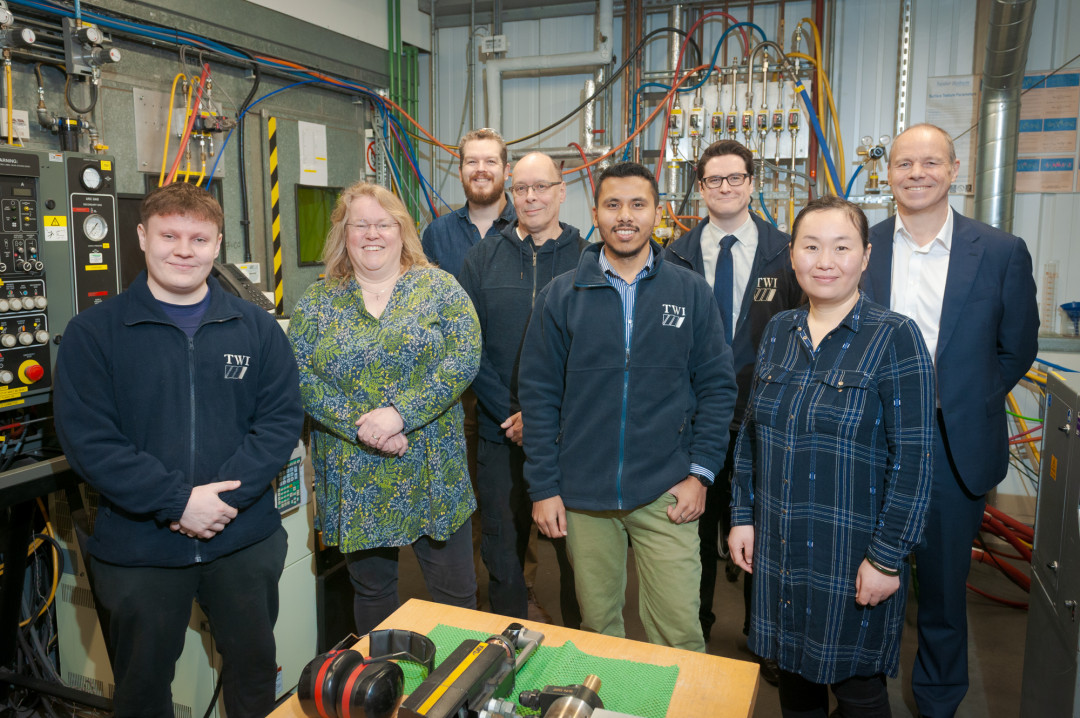
TWI has been providing thermal spray services and support since 1975, delivering over half a century of knowledge, research and consultancy advice to a range of industry sectors. While the first mention of sprayed ceramic and metal coatings at TWI was made in the January-February 1975 edition of the Research Bulletin, things have progressed since then, with new capabilities and applications being found for thermal spraying.
TWI has become a trusted source of technical excellence on thermal spraying over the intervening years and is set to host a Surface Engineering and Advanced Coatings Industrial Members Day, covering their surfacing engineering capabilities, along with the Thermal Spraying and Surface Engineering Association (TSSEA) annual conference in April 2026. TWI is also engaged in projects from across industry and has launched a Core Research Programme (CRP) project for the benefit of our Industrial Members to further High Velocity Air Fuel (HVAF) and High Velocity Oxygen Fuel (HVOF) spraying.
Why use Thermal Spraying?
Thermal spraying offers a number of benefits to industry due to its ability to use a range of coating materials including metals, alloys, ceramics, cermets, carbides, polymers and plastics with high rates of deposition. The spraying process mechanically bonds the coating material to the substrate, even when the materials are otherwise metallurgically incompatible. The process can spray coating materials with a higher melting point than the substrate, yet most parts can be sprayed with little or no pre or post-heat treatment, and component distortion is minimal.
Thermal spraying has the capacity to form barrier and functional coatings on a wide range of substrates, to meet the needs of a wide variety of applications, in particular protection from wear and corrosion damage.
The process is recognised as a key process for the synthesis of specialised coatings and materials and coatings can also be applied to thermal sensitive substrates, such as low melting point metals and plastics.
Thermal spraying also offers the ability to create freestanding structures for net-shaped manufacture of high performance ceramics, composites and functional graded materials and is used for the rapid-solidification synthesis of specialised materials. It is also being used for the synthesis of advanced functional surfaces such as catalytic coatings, dielectrics, ferrites, bioactive materials and solid oxide fuel cells. In addition to coating, the process can be used to rebuild or repair parts quickly and typically at a fraction of the cost of a replacement. By using premium coating materials, it is also possible to extend the lifetime of new components.
(Source: The Welding Institute)
Schlagworte
AlloysCarbidesCeramicsCermetsCoatingPolymersSurface TreatmentThermal Spray BulletinTSBTWI