
12.05.2026
International
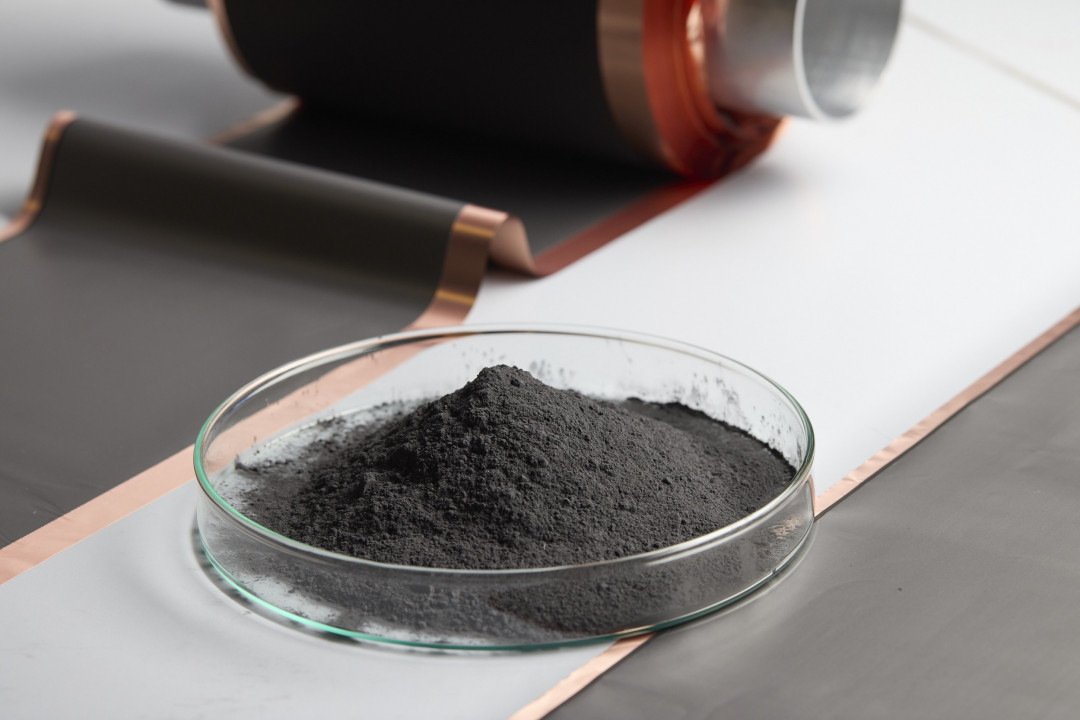
The FREDY project develops new technologies for dry-coating of battery electrodes. Fraunhofer IWS and Taiwan’s Industrial Technology Research Institute (ITRI) combine their expertise for this purpose. The project partners develop fluorine-free binders, optimize active materials using atomic layer deposition (ALD) and link material, process and equipment development in an integrated approach. Fraunhofer IWS funds its work through the internal ICON program, while ITRI finances its project share from its own resources. The partners address material manufacturers, equipment suppliers and cell producers, aiming to enable industrial implementation within a few years after the project ends.
Developing new binders and active material surface functionalisations for improved dry battery electrode coating is the focus of the joint ICON research project FREDY between Fraunhofer IWS and ITRI. Fraunhofer IWS advances dry coating in a targeted way. The project “Fluorine-free binders and optimized active materials increase performance and improve the sustainability of cell production” (FREDY) combines new binder chemistries, modified active materials and industrial process chains for the first time. The goal is scalable manufacturing without fluorinated polymers while improving electrochemical performance.
“We link material development directly with process and equipment concepts and thus accelerate transfer to industrial applications,” says Dr. Benjamin Schumm, Head of Particle Technology at Fraunhofer IWS.
Fluorine-free binders: alternative to PTFE
Current dry-coating processes often use binders based on polytetrafluoroethylene (PTFE), whose production often relies on per- and polyfluoroalkyl substances (PFAS). This group of substances is at the center of regulatory and environmental debate. The FREDY project develops fluorine-free alternatives with comparable or improved processability. Fraunhofer IWS contributes its DRYtraec technology and expands it with new material systems. This approach reduces reliance on critical substances and enhances the sustainability of electrode manufacturing.
Dry coating as key technology
The production of battery electrodes ranks among the most energy- and cost-intensive process steps in cell manufacturing. Conventional wet-coating processes use solvents that require extensive drying and recovery. This process needs large systems, high temperatures and considerable energy input. Dry coating eliminates these solvents. It significantly reduces energy demand and simplifies the process chain. At the same time, it places high demands on the materials used, especially binders, additives and active materials. They must ensure mechanical stability, electrical conductivity and uniform layer formation even in the absence of a liquid phase. Against this backdrop, new material concepts and integrated process approaches are gaining significance. They determine whether dry coating can scale in industry and contribute to the cost-effective production of modern battery cells.
More stable active materials through ALD
In parallel, the project optimizes active materials. The team uses ITRI’s atomic layer deposition technology to apply defined coatings to particle surfaces. These core-shell structures increase electrochemical stability and improve cell performance. ITRI contributes its expertise in developing such particle systems and complements Fraunhofer IWS’s dry-coating capabilities.
Focus on industrial implementation
The project addresses material manufacturers, equipment suppliers and cell producers. The close integration of material, process and equipment development shortens development cycles and facilitates transfer to industrial manufacturing. The collaboration also strengthens technological sovereignty in battery technology in Germany and Taiwan. The project runs from September 2025 to August 2028.
About the Industrial Technology Research Institute (ITRI)
The Industrial Technology Research Institute (ITRI), headquartered in Hsinchu, Taiwan, ranks among Asia’s leading applied research organizations, with offices in the USA, Germany, the UK, Japan and Thailand. Since its founding in 1973, the institute has driven technology transfer to industry and supported companies in developing market-ready innovations. ITRI works in strategic future fields such as energy, semiconductors, sustainable materials, and intelligent manufacturing. A particular focus lies on the rapid transfer of research results into industrial applications and on international cooperation.
Fluorine in battery coatings
Fluorinated polymers such as polytetrafluoroethylene (PTFE) stabilize many dry-coating processes today. Their production often uses per- and polyfluoroalkyl substances (PFAS). These substances persist in the environment and accumulate in living organisms. Regulatory initiatives in Europe aim to significantly restrict this class of substances.
Fluorine-free binders replace these functions with alternative polymer chemistries. They enable stable electrode structures without PFAS, thereby reducing potential environmental and health risks. At the same time, they must ensure mechanical strength, conductivity, and processability in dry coating.
(Source: Fraunhofer IWS)
Schlagworte
Atomic Layer DepositionBatteriesCoatingDry-CoatingEnergyFlourine-Free BindersHigh-Performance-BatteriesIntelligent ManufacturingMaterialsPFASPTFEResearchSemiconductorsSurfacingSustainability