
17.09.2026
Unternehmen
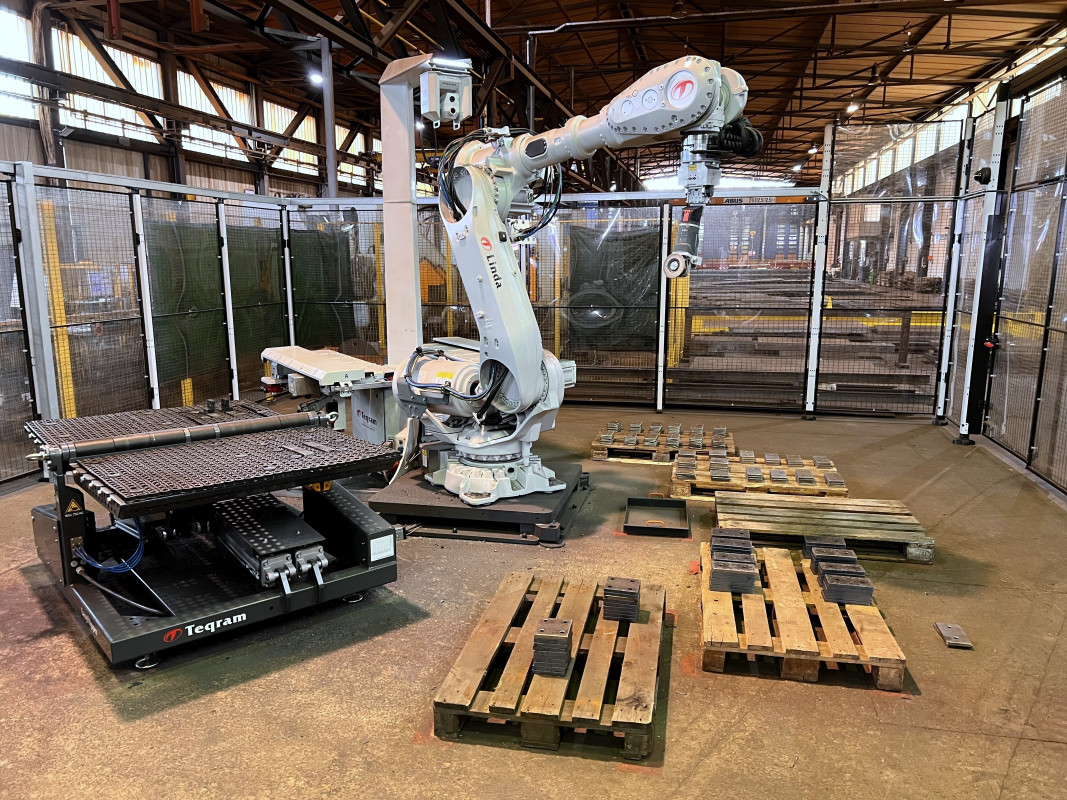
Automation in steel construction is no longer a thing of the future. It is the key to consistently high quality and reducing the workload for skilled workers. When manually deburring flame-cut and plasma-cut components, Stahlbau Queck faced the industry's typical bottlenecks: inconsistent results and significant physical strain on employees. By deploying the autonomous, AI-powered EasyGrinder grinding robot from Teqram, this company has overcome these challenges. The result is perfectly reproducible surface quality that meets strict industry standards, maximum production efficiency and a noticeable reduction in employee workload. It is a best-practice example of how modern robotics can secure competitive advantages while helping address the skilled labor shortage.
Manual post-processing slows production
In many metalworking companies, grinding and deburring are among the most labour-intensive and least predictable process steps. At Stahlbau Queck, the grinding department was often the bottleneck in production. Manual processing was highly time-consuming and tied up valuable skilled workers with repetitive, physically demanding tasks.
Inconsistent quality
With manual grinding, differences in quality are unavoidable, as shop-floor experts confirm. Thomas Nehring, Head of the Cutting Department at Stahlbau Queck, describes the reality of manual processing in practical terms: "Two employees will always deliver different levels of quality – with the EasyGrinder, those variations are a thing of the past." The performance of an individual employee cannot remain identical throughout an entire workday. Factors such as concentration, fatigue and physical strain inevitably affect the grinding finish. Particularly on large-scale projects with strict quality requirements purely manual processing reached both its economic and operational limits.
Focus on quality, safety and ergonomics
To ensure long-term process reliability while improving working conditions, Stahlbau Queck's management decided to take the next step toward automation. The chosen solution was Teqram's EasyGrinder, which combines 3D vision technology with artificial intelligence. Alongside economic considerations, the key drivers behind the investment were the guaranteed achievement of the required P3 preparation grade for Deutsche Bahn projects and the protection of employee health and well-being.
Up and running in no time
Thanks to the intuitive operation of the Teqram system, the robot was quickly integrated into daily production processes. Today, employees affectionately refer to the AI robot as "Linda." Thomas Nehring summarises the unbeatable advantage of their automated colleague: "Linda does not call in sick and heavy components do not give her back problems either." Rather than seeing the intelligent grinding robot as competition, the team now views it as a valued colleague that handles the heavy lifting.
Precision at the push of a button
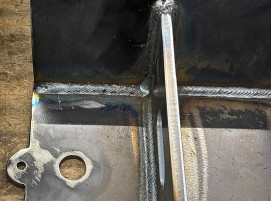
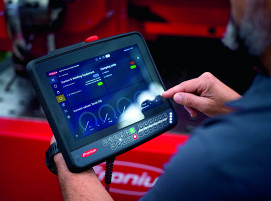
Today, the EasyGrinder at Queck is responsible for deburring and grinding of demanding flame-cut and plasma-cut components. The operator simply selects the required preparation quality, after which the robot processes each component autonomously using the same parameters every time. Even complex geometries and heavy components are finished with consistent pressure and an impeccable surface finish.
(Source: Teqram)
Schlagworte
AIAutomationCuttingDeburringRoboticsRobotsSkilled WorkersSteel