
30.09.2026
Anwenderbericht
Graphite is a form of carbon known for its chemical stability and resistance to high temperatures and thermal shock.¹ These characteristics make graphite a highly desirable material for a wide range of modern, high-tech applications. For example, it can be used in thermochemical heat storage systems, where energy collected in summer is later used for building heating in winter.
As demand for high-purity carbon materials increases, conventional production processes are facing greater environmental scrutiny due to their greenhouse gas emissions.³ In response, researchers worldwide are working to develop more sustainable solutions to meet this demand. Notable progress has been made by the Department of Innovative Technologies (DTI) at the University of Applied Sciences and Arts of Southern Switzerland (SUPSI), where research teams are developing graphite-based components for cleaner energy and materials applications.
The path to more sustainable carbon production
The Institute of Mechanical Engineering and Materials Technology (MEMTI), one of six research institutes within the Department of Innovative Technologies (DTI), conducts applied research for the manufacturing and energy sectors. The institute features six state-of-the-art laboratories, including the Hybrid Materials Laboratory (HML). HML specializes in materials science and technology, with a focus on carbon-based and porous ceramic materials.
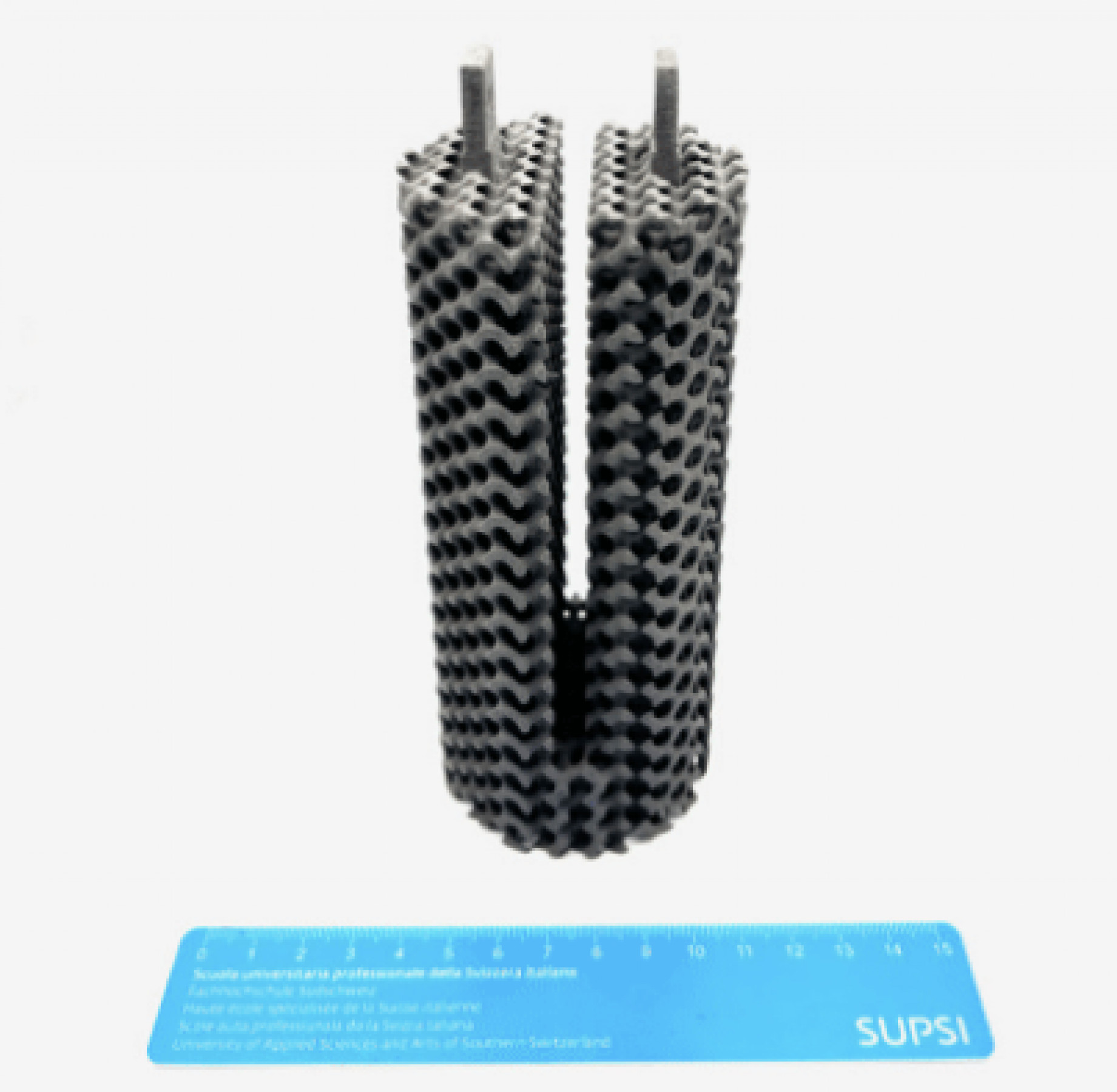
Among its projects, including work supported by Innosuisse (the Swiss Innovation Agency), the team developed a graphite-based electrode in the form of Periodic Open Cellular Structures (POCS). These highly engineered geometries consist of repeating, specifically defined geometric unit cells arranged in a periodic pattern to achieve predictable and uniform material properties. The cells feature an open architecture with interconnected pores, which facilitates efficient fluid flow and heat transfer.⁴
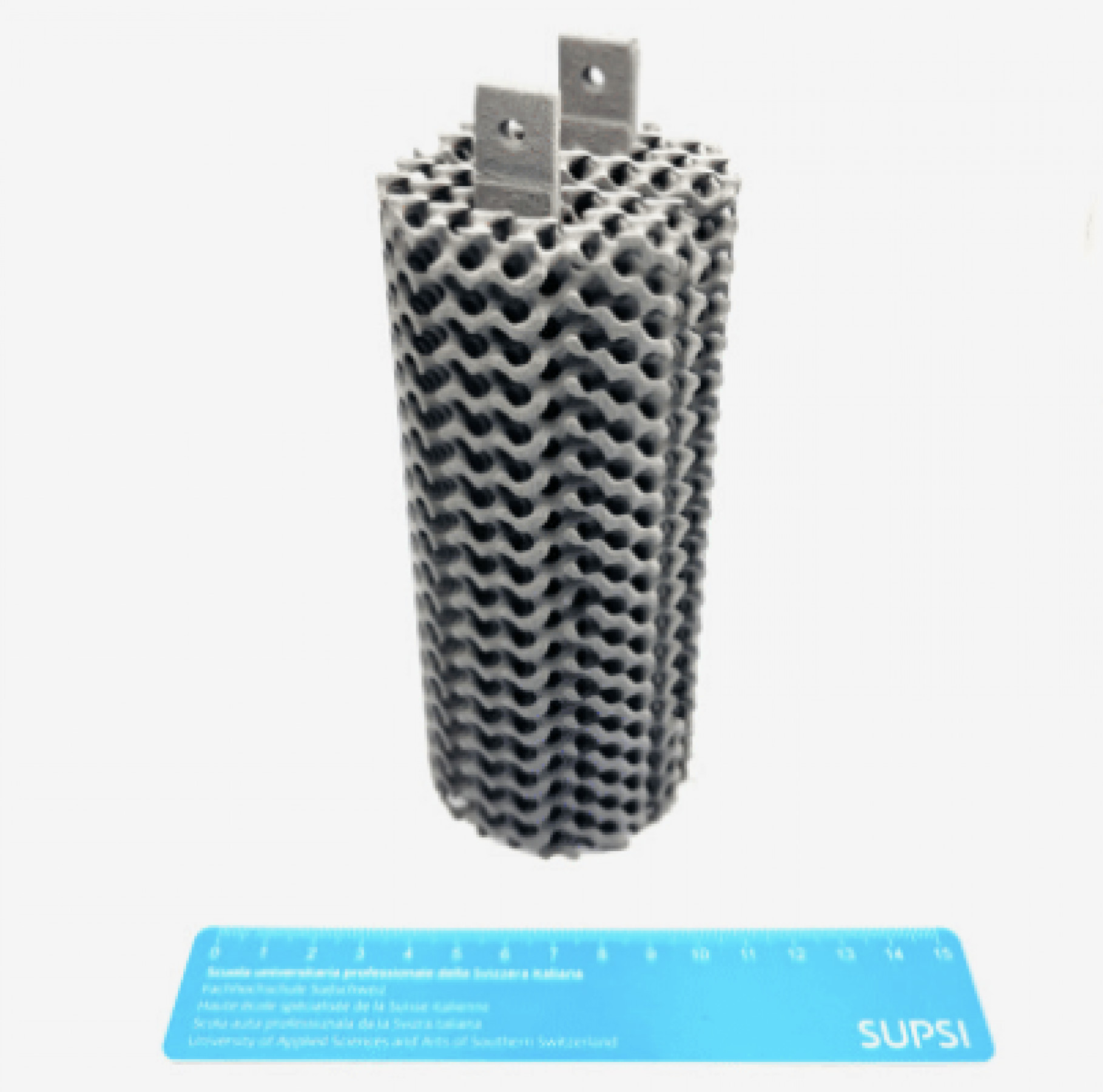
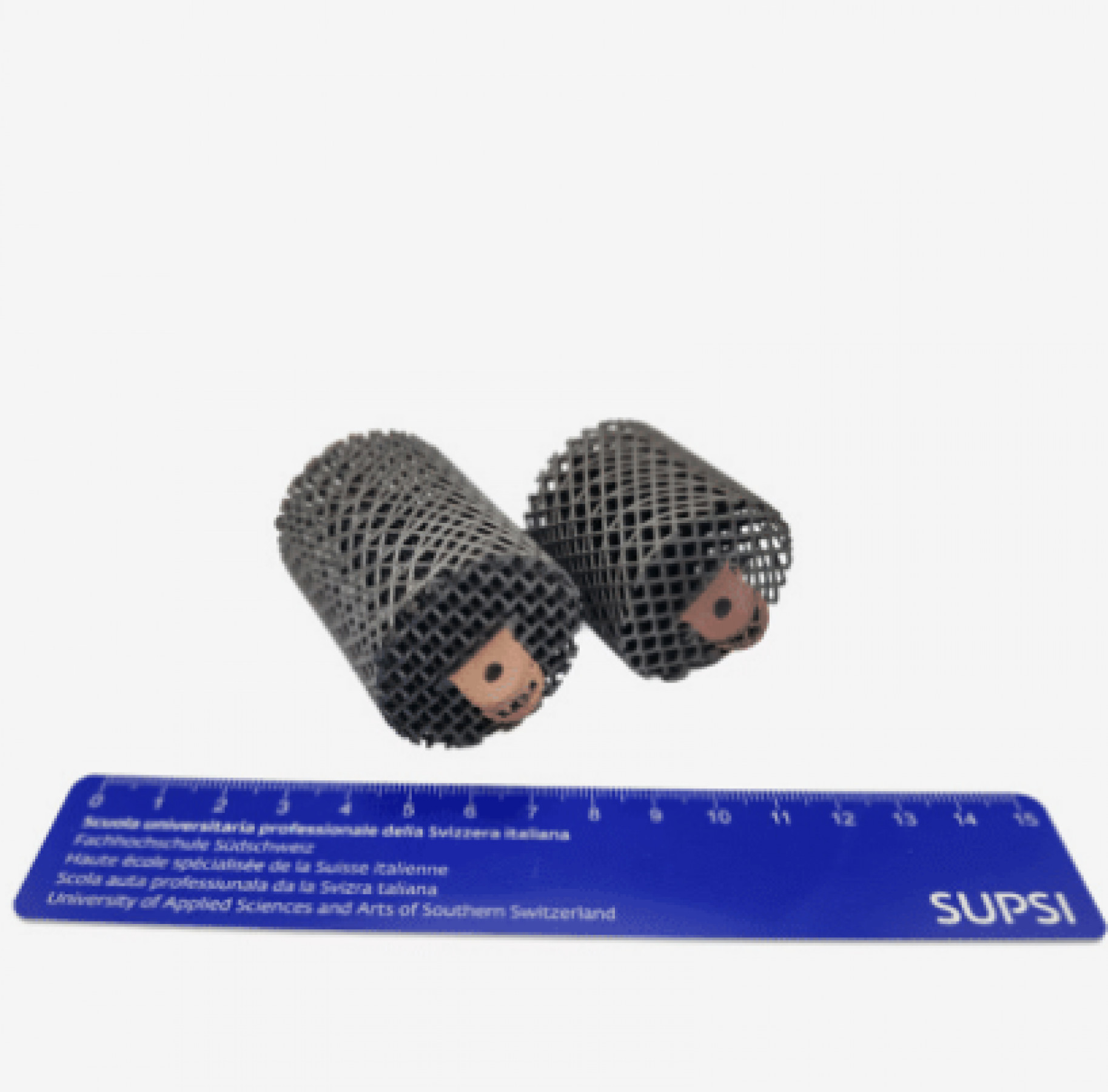
Graphite-based POCS are highly versatile components suitable for a wide range of applications, including heat exchangers, energy systems and lightweight aerospace or automotive components.² In this project, the SUPSI research team investigated graphite POCS as structured internals to support direct internal Joule heating within reactors, Fig. 1. These reactors are employed to produce carbon-based materials and hydrogen via the methane cracking process. To create these parts, the graphite POCS were printed using the Innovent X binder jetting system and then consolidated through precursor infiltration pyrolysis (PIP).
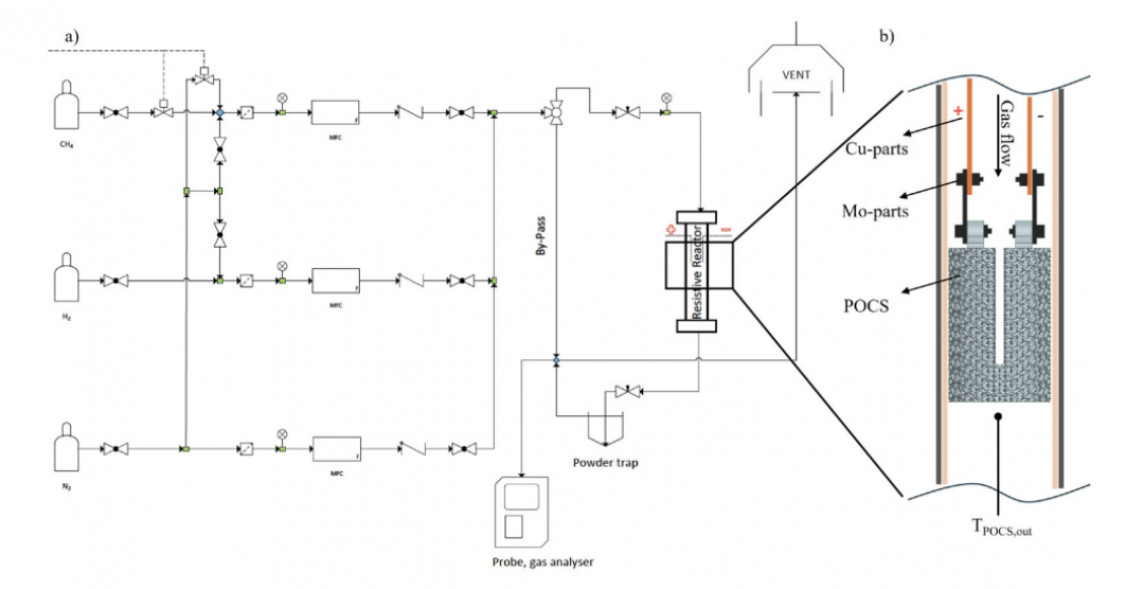
The graphite-based POCS play an important role in a reactor’s heat generation process, as confirmed by Riccardo Balzarotti, Researcher at SUPSI. “The POCS reduce the heat demand of the methane cracking process due to its carbon composition. In this process, graphite serves as a catalyst.”
Methane cracking decomposes methane (CH4) into hydrogen gas (H2) and solid carbon without direct emission of carbon dioxide (CO2). This process is theoretically superior to traditional methods because it produces higher purity hydrogen alongside solid carbon, a valuable material that is easily stored and sold for carbon black or graphite applications.³ By avoiding CO2 formation at the source, methane cracking offers a more sustainable route for industrial hydrogen and carbon production.
While these advantages exist, the process is highly energy-intensive and faces physical limitations when utilising conventional external heating methods. To address this, the SUPSI research team investigated internal reactor heating as a way to meet the high energy demands more efficiently. By shifting heat generation from outside the reactor to the inside, the team was able to overcome the traditional constraints of external heat transfer, effectively localizing the energy where it is most needed.³
To implement this internal heating, the team utilised direct Joule heating, which generates heat by passing an electrical current through a medium with limited conductivity. SUPSI addressed the complexity of this implementation by using 3D-printed, graphite-based Periodic Open Cellular Structures (POCS) as structured internals. These POCS not only support the internal heating mechanism but also serve as a catalyst, further reducing the overall heat demand of the methane cracking reaction. Feasibility tests of this combination of 3D-printed architecture and direct Joule heating have produced promising results.
Challenges in processing graphite with complex geometries
Producing carbon and graphite-based structures presents a well-known manufacturing challenge. Beyond the environmental concerns associated with processing these materials, graphite is notoriously difficult to machine or form using traditional methods. Furthermore, graphite cannot be melted, which renders additive manufacturing techniques that rely on melting materials ineffective for its processing.
The geometric complexity of the POCS also poses significant production challenges. These structures are reticulated, featuring interconnected cylindrical bars that create a network-like configuration. Such thin, porous features are difficult to manufacture using conventional methods due to their fragility, which often leads to breakage or deformation during machining or mold removal. “It’s nearly impossible to produce these complex graphite parts conventionally without laborious or complicated manufacturing processes,” confirmed Balzarotti.
To address these limitations, the HML team evaluated several alternative production methods for graphite-based reticular structures. For instance, they assessed a hybrid technique that combined powder bed fusion with infiltration of pre-ceramic polymers; however, they found this process to be too complex. The team also explored the use of fused deposition modeling to produce these structures, but this option was determined not to be the most suitable due to concerns regarding quality and process reliability.
After careful consideration, the decision was made to utilise binder jetting technology for 3D printing the graphite architectures. “We worked closely with Arc Impact’s binder jetting team to assess the technology’s capabilities with different carbon and graphite materials in complex geometries,” said Balzarotti. “For this application, binder jetting proved to be the most reliable method for producing the graphite POCS.”
Binder jetting of graphite-based POCS
The 3D design for the binder-jetted POCS, featuring a rotated cube unit cell, was developed by an in-house designer at HML specializing in complex geometries. These structures are exceptionally small, with cell sizes reduced to 4 mm and strut sizes as thin as 1 mm. Such intricate dimensions make production through conventional manufacturing methods nearly impossible.
To prepare for 3D printing the POCS, a graphite and carbon black powder blend was utilised for the powder bed. During the process, a phenolic resin served as the injection binder, which was selectively deposited into the powder by the print head. The green parts, or preforms, were printed using the Innovent X. This binder jetting system offers broad material compatibility and the precision needed to build fine lattice structures.
During the binder jetting process, the print head selectively deposited liquid binder onto the graphite powder bed. Layers were built up sequentially until the final parts were complete. Following the print, the entire job box, containing both the printed POCS and the surrounding unbound powder, was heat-treated in a drying oven. This critical step removed solvents from the binder and pre-cured the phenolic resin, providing the preforms with the mechanical resistance necessary for handling. Finally, excess powder was meticulously removed using a soft brush and a low-pressure air gun for the internal surfaces.
Post-process: precursor infiltration and pyrolysis (PIP)
To achieve the desired final properties of the printed parts, two critical post-processing steps followed the binder jetting phase. First, the graphite preforms underwent precursor infiltration, where they were infiltrated with a carbon-rich furan resin to fill the material pores. The second step was pyrolysis, which utilised heat to convert the precursor material into a stable, solid form.
The strengths of binder jetting
The SUPSI research team successfully utilised binder jetting technology to 3D print graphite-carbon materials featuring periodic open cellular structures with dimensions of only a few millimeters, followed by the necessary infiltration and pyrolysis steps. “So far, we haven’t found anyone publishing on the topic of 3D-printed graphite or its application,” stated Giovanni Bianchi, senior researcher at the HML, noting the novelty of this work. This process has the potential to support a more sustainable production route for solid carbon and hydrogen in methane cracking reactors.
The research team was very satisfied with the results of the heat transfer performance and catalytic activity tests of the 3D-printed POCS for methane cracking. As a result, these binder-jetted POCS can be utilised as direct, internal, Joule-heated supports within a reactor to produce solid carbon and pure hydrogen via the methane cracking process.
In describing their experience, the researchers highlighted several practical strengths of binder jetting for these graphite structures. Balzarotti pointed out that the binder jetting process is simple, stating: “Binder jetting is a very straightforward process. The green body is already 90 % of what would be the final product. With other methods, your structure will shrink significantly.”
Furthermore, binder jetting offers material flexibility, making it ideal for custom research projects. As Bianchi explained, “It is really easy to work with the initial material. You have to find the right powder, but with binder jetting, you can choose any material. That’s why we found it easy to start working with binder jetting to produce graphite parts. Of course, there were many trials in the beginning to select the correct graphite grade and to find the right binder combination. Once we found the right parameters, though, binder jetting became a very reliable technique. You can start working on the geometries you want, or take on applications to understand how changing the geometry of the heating element influences the performance of the heat exchanger or the Reactor.”
The technology also provides significant freedom of geometry, enabling the creation of parts with intricate internal geometries, such as reticulated structures, that traditional manufacturing processes cannot achieve. This geometric flexibility was particularly important for producing the delicate POCS lattices used in the methane cracking reactor. “At the moment, binder jetting is the most interesting, suitable technique to produce complex geometries like the reticulated structures. It simplifies the manufacturing of complex designs,” added Bianchi.
Another significant advantage is the rapid printing speed of the process. Balzarotti pointed out: “With other techniques, the overall production time would be longer due to the additional steps or post-processing needed. Even if the production time for the green body were the same for both binder jetting and the hybrid method, for example, the hybrid method would require much more post-processing.” The research team also benefited from the repeatability of binder jetting technology, which produces consistent results across multiple jobs due to its low-thermal, digitally controlled, and mechanically stable process. Additionally, the printed graphite parts retained their complex shapes throughout post-processing.
Lastly, binder jetting is a scalable additive manufacturing method, facilitating the transition to industrial-scale production. “The next step is to scale up this process of cracking methane under more industrially relevant conditions,” said Balzarotti. “Larger binder jetting systems are already available, and we have begun 3D printing a higher volume of samples using the X25Pro binder jet system as a first step toward industrial-scale production.”
Continuous research and development with binder jetting
Over the past several years, the team at SUPSI’s Hybrid Materials Laboratory has conducted numerous research projects involving challenging materials such as silicon carbide, tungsten carbide and carbon-based materials like graphite. The team has developed several high-performance applications using the Innovent X binder jetting system, frequently in partnership with Arc Impact’s binder jetting team.
Specific examples of applications developed by the SUPSI research team using the Innovent X platform and subsequent post-processing include:
- Reusable active heat shields (Si-SiC)
- Compact heat exchangers for high temperatures (Si-SiC)
- Latent heat thermal storage (Si-SiC)
- Porous burners (Si-SiC)
- High-temperature and high-pressure chemical reactors (SiC)
- Seasonal thermochemical heat storage (Graphite)
- Radiotherapy X-Ray Collimators (Tungsten Heavy Alloy)
Further binder jetting research projects are currently under discussion. “One possible application is printing molds for metal or other composite material castings instead of making complex molds that are not feasible or hardly feasible with conventional machining from large blocks of graphite,” said Balzarotti. “We are also exploring the potential to engineer heating elements with specialized shapes that can be used in applications requiring graphite heating systems”
Partnership with Arc Impact Binder Jetting Adoption Center
The Hybrid Materials Laboratory team at SUPSI has established a solid partnership with the Arc Impact Binder Jetting team to explore the potential of binder jet 3D printing in addressing the complex needs of the automotive, aerospace, healthcare and energy sectors. These industries increasingly require lighter, stronger and more sustainable components that can be difficult to produce with traditional manufacturing methods. Balzarotti emphasised the technology’s potential, stating, “We believe that additive manufacturing with binder jetting technology has the potential to meet the industry’s needs and challenges by facilitating the production of complex geometries and lightweight structures using a variety of materials, including metals and ceramics.”
The HML team has found that implementing binder jetting for a particular application often necessitates substantial adaptation in terms of material selection, process optimization, and post-processing. Research and development institutes, such as the HML team at SUPSI, play a fundamental role in this field by studying the materials and processes involved in this additive manufacturing technology. Currently, SUPSI is collaborating with industry leaders and binder jetting system manufacturers, including Arc Impact, to create customised processes that translate the industry’s functional requirements into manufacturable and reliable components.
Once a suitable material–process combination is developed, it is transferred into a production environment using industrial binder jetting platforms. Here, prototypes and initial production batches are manufactured to validate the research work. Parts are then tested in their intended applications to evaluate performance, reliability and adherence to design specifications, and to identify any process limitations or variability.
This cycle of feedback is passed back to the R&D department to improve material formulations, process parameters or equipment settings, allowing the cycle to begin anew. In this model, industrial applications act as both the starting point and the ultimate validator of innovation, while binder jetting and research activities form the responsive core that adapts to meet industrial needs. The approach emphasizes collaborative innovation, with industrial requirements guiding research and iterative development ensuring that new components are both technically sound and practically relevant.
Such collaborative frameworks are often accelerated through funding from national and international research programmes, such as Innosuisse, Horizon Europe or regional innovation agencies. These programmes support joint projects between academic institutions, technology providers and industrial partners, helping reduce risk, share knowledge and speed up the adoption of new manufacturing solutions such as binder jetting.
References
¹ European Advanced Carbon and Graphite Materials Association (ECGA), What is
Graphite, Retrieved from https://ecga.net/what-is-graphite
² Pelanconi, M, Blyweert, P, Bianchi, G, Nicolas, V, Viganò, D, Bottacin, S, Fierro, V, Celzard, A, Ortona, A. (2013). New, 3D binder-jetted carbons with minimal periodic surface structures. Carbon, Volume 213, 118252, ISSN 0008-6223. Retrieved from https://doi.org/10.1016/j.carbon.2023.118252
³ Balzarotti R., Minichini D., Bottacin S., Grignola M., Pelanconi M., Bianchi G., Hagen F.P., Trimis D. & Ortona A. Carbon-to-Carbon: 3D printed carbon architectures for carbon and hydrogen production via Joule-heated methane cracking. Carbon. Submitted
⁴ Iwaniszyn, M. (2022). Periodic Open Cellular Structures (POCS) as Catalyst Supports—A Review. Energies, 15(20), 7703. Retrieved from https://doi.org/10.3390/en15207703
(Author: Keith Murphy, Director of Product Marketing at Arc Impact)
Schlagworte
Additive ManufacturingAerospaceAutomotiveCase StudyEnergyGraphiteH2HIgh-Purity CarbonHydrogenPBFPOCSPowder Bed FusionSustainability