
04.04.2026
International
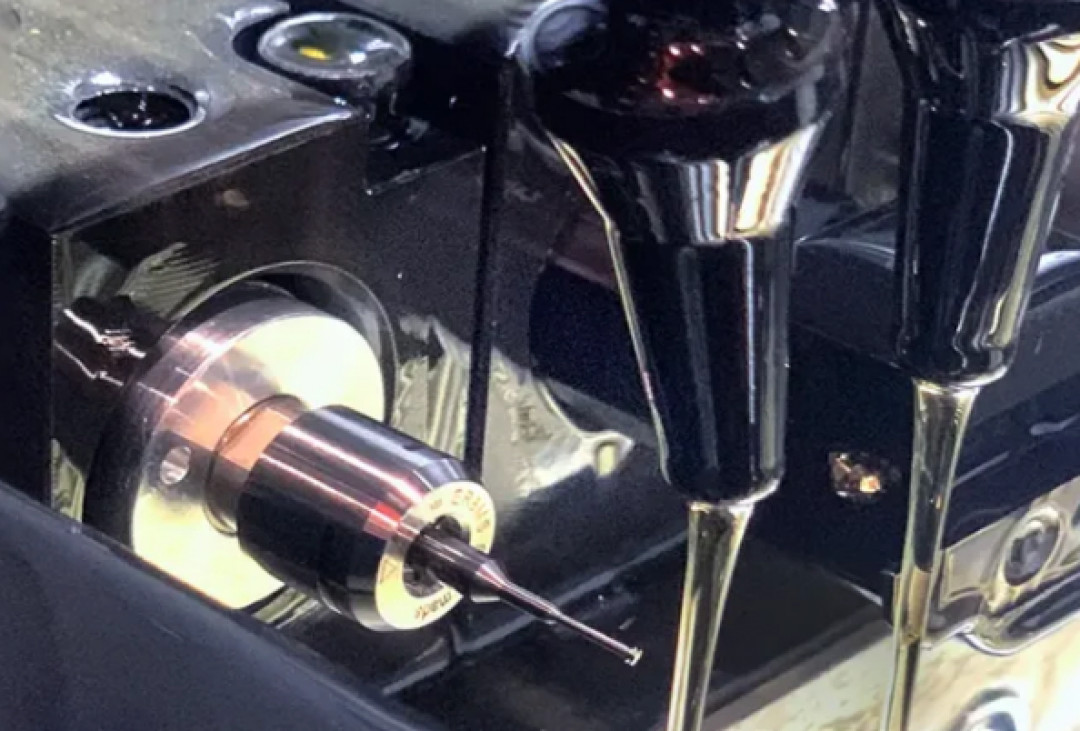
Swiss-type lathes require efficiency and consistency to produce intricate, high-tolerance components, such as medical implants, aerospace fasteners and precision electronic devices. Sliding headstock lathes are required to achieve accuracy and consistent quality, even under the demands of 24/7 high-volume production.
Live tools play a crucial role in transforming Swiss lathes into versatile machining centers. They enable secondary operations, such as drilling, milling and tapping, allowing for complex geometries and ultra-fine details without requiring the part to be moved to another machine. This integration boosts production efficiency by eliminating multiple setups and the potential loss of precision from re-chucking.
Drawbacks of traditional live tools
Conventional geared live tool technology often falls short, hindering the productivity of Swiss lathes with slow RPMs (revolutions per minute). The nominal speed of conventional electric and air powered live tools often drops dramatically once cutting begins, resulting in significant torque and speed loss. The traditional technology used in geared live tools also causes heat build-up and thermal growth that compromises precision, resulting in premature tool wear and poor surface finishes.
New technology for consistent high speeds
The solution lies in innovative new air-driven, governed high-speed live tools, which are transforming the performance of Swiss lathes. Unlike traditional tools, Air Turbine Live Tools incorporate their patented governor to deliver consistent performance. These spindles maintain consistent high speeds in cut without heat, vibration or compromising accuracy. This consistency reduces tool deflection, lowers scrap rates and ensures repeatability for micro-machining applications. These tools are enhancing Swiss sliding headstock lathes by increasing cutting speeds, reducing cycle times, improving surface finishes and extending tool life.
The new governed, air-driven, high-speed models from Air Turbine Tools achieve steady rotational speeds 6 to 10 times greater than conventional live tools, all while maintaining consistent torque. This innovation facilitates an easy and cost-effective upgrade to fixed speeds of 60,000 and 80,000 RPM by simply dropping these governed air-driven spindles into existing Swiss lathe tool holders and connecting an airline.
When it comes to live tools in Swiss lathes, stable high speeds are crucial, especially given the small diameters of the tools. Smaller tools require higher rotational speeds to achieve the required surface feet per minute (SFM), which directly impacts cutting performance and tool life. Cutting at 10× higher speed accelerates production and improves throughput. Sustained high-speed performance in cut reduces cycle times, resulting in a material reduction of cost per part. Maintaining optimal SFM is vital for several reasons. First, it ensures efficient material removal and extends the life of cutting tools. Running a tool below the proper RPM or feed rate can cause it to overheat, leading to thermal fracturing, adhesions or galling.
Maintained high speeds also contribute to superior surface finishes by minimizing burrs, chatter marks, delamination and other imperfections, which is especially critical when working with difficult materials. For instance, when machining Inconel, a higher speed is essential to prevent the pitting or melting that can occur with slower RPMs due to heat build-up. Materials like carbon fiber, plastics and fiberglass also benefit from faster cuts to avoid separation or fraying, resulting in a cleaner finish with no fiber break-out.
How it works
The patented governor continuously and automatically adjusts airflow, maintaining high speed and consistent torque under variable cutting load, thereby ensuring the required SFM on the toolpath matching the tool manufacturer’s specifications. The design features only two moving parts – the turbine and air-cooled, grease-packed ceramic bearings. These bearings are robust, long-lasting and stay cool without generating heat, eliminating the need for spindle lubrication.
There is no thermal expansion even at 80,000 RPM, which is vital for maintaining accuracy and a high-quality surface finish. The system achieves 2-micron (2µ) accuracy, referring to its Total Indicator Runout (TIR) precision. This new technology requires a connection to a clean, dry air supply of 90 psi / 6.2 bar, an airline and filter and the accessories included with purchase to operate.
(Source: Mike Blanchard, Technical Advisor at Air Turbine Tools)
Schlagworte
AerospaceCNCComponentsDrillingEfficiencyLatheMachiningMetalMillingPartsProductionRotationToolsTorque