
01.10.2026
Unternehmen
Forschung
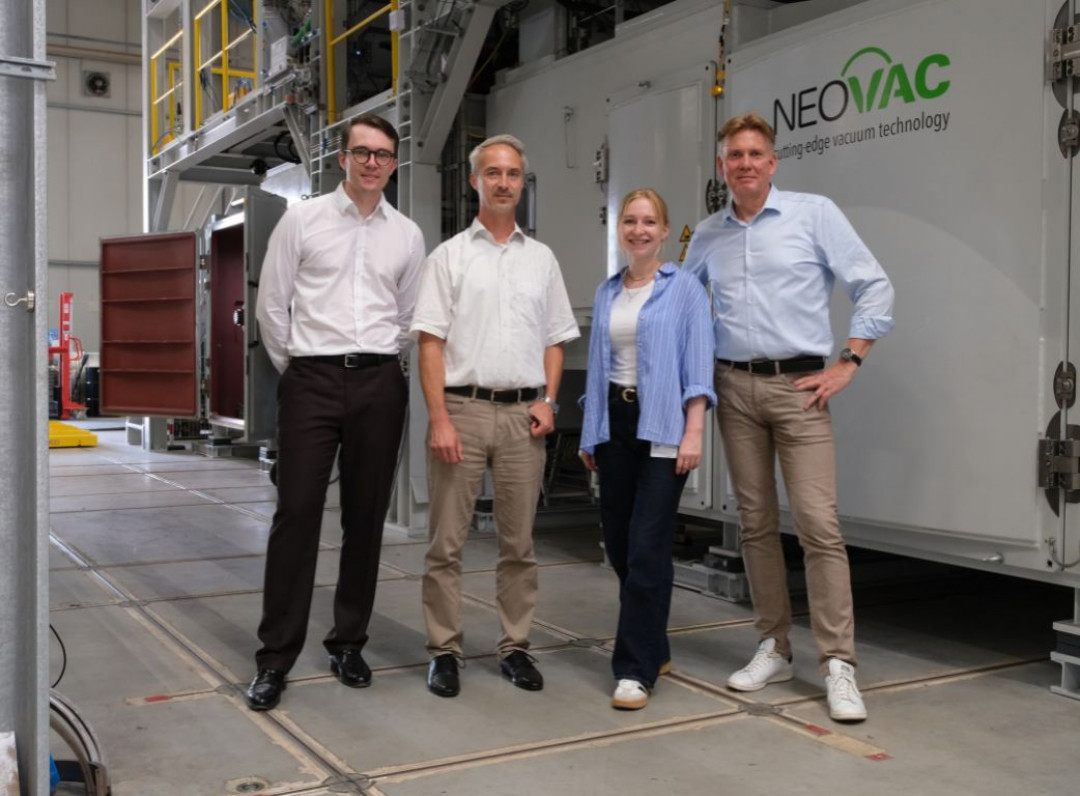
High-strength steels require reliable corrosion protection, but they pose particular materials-engineering challenges for established coating processes. Heat and hydrogen absorption, among other factors, can impair the properties of the base material. Using a pilot line, Neovac is investigating how coatings can be deposited on steel under vacuum without changing its mechanical properties.
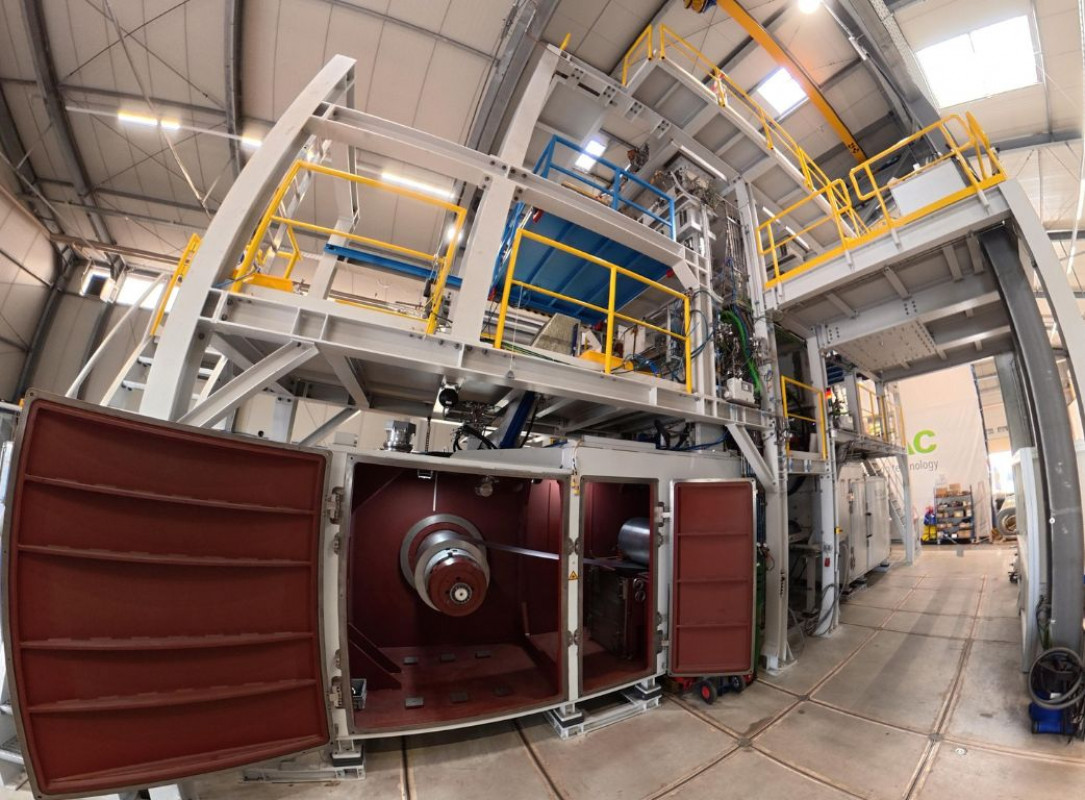
At first glance at the pilot plant (Figure 1), little of the developed process is visible. The plant is in standby mode during the visit to the Technology Centre in Karlstein am Main. Only by mentally following the steel strip through the process chambers with the aid of a schematic diagram does it become clear how the coating is applied under vacuum. As a pilot and development plant, it enables coatings to be tested on larger quantities of strip, coils to be sampled, and the coated materials subsequently to be further processed into the end product and inspected. The initial focus is on high-strength steels, where established coating processes for corrosion protection reach their limits.
Corrosion protection
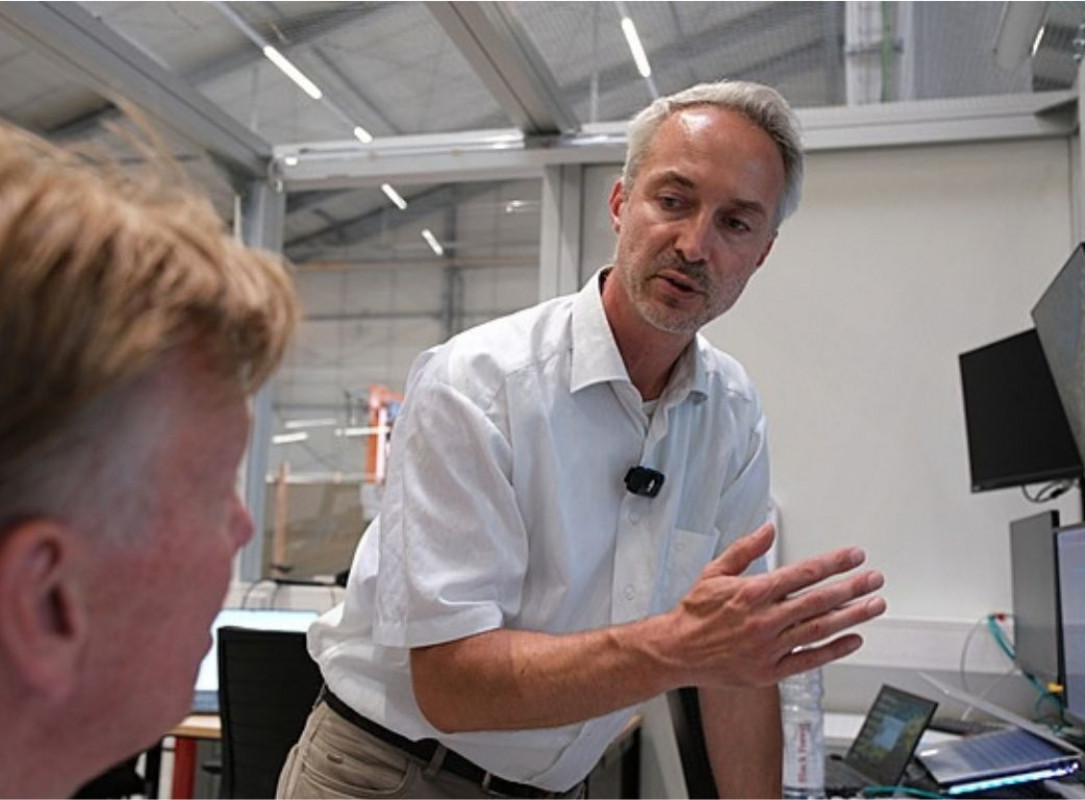
In an interview, André Herzog, Chief Technology Officer at Neovac, explains that hot-dip galvanising is currently suitable for high-strength steels up to 1,200 MPa. Otherwise, the heat input from the process affects the properties of the base material. For steel grades exceeding 1,500 MPa, electrogalvanising is therefore used for coating. This process, however, carries the risk of hydrogen-induced cracking. In order to provide corrosion protection without the high heat input associated with hot-dip galvanising and without electrochemical deposition, the pilot plant utilises physical vapour deposition (PVD). PVD processes can be divided into two main categories: evaporation and sputtering technology.
In vapour deposition technology, the material is heated in a vacuum to temperatures close to its boiling point, causing it to turn into a gas. The gaseous material then condenses onto the workpiece to be coated. In sputtering technology, argon ions are accelerated in an electric field and directed onto a solid source material. The particle bombardment causes atoms to be dislodged from the surface, which are then deposited as a thin layer onto the workpiece to be coated. In the pilot plant, these two processes are utilised within a single process chain. Whilst magnetron sputtering can be used to apply a bonding agent, the actual coating is carried out via evaporation. Here, the company utilises what is known as Plasma-Enhanced Evaporation Technology (PEPVD). The path taken by a steel strip through the individual process stages illustrates how the two PVD processes interact in the pilot plant.
The Journey of the Steel Strip
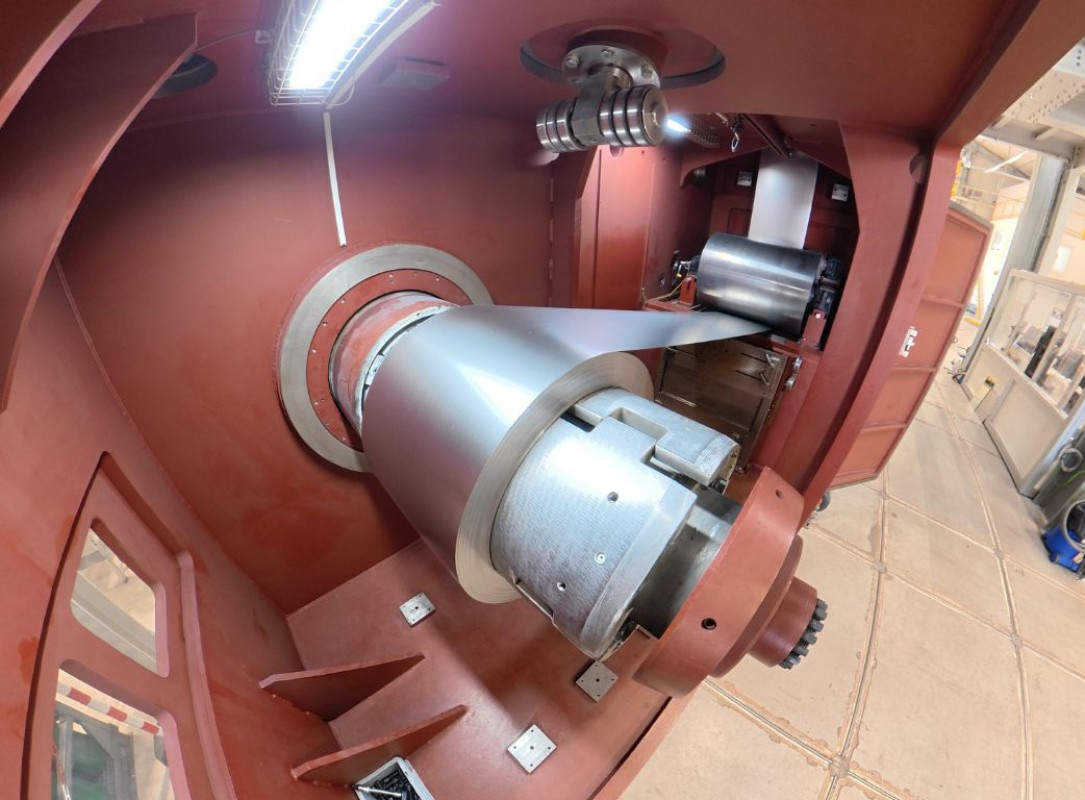
Before the vacuum process can begin, the steel strip, which is wound into a coil, must be degreased or de-oiled. The cleaned coil is then loaded into the system and welded to a steel strip already present in the system (Figure 3). After loading, the system is evacuated until a vacuum pressure of approximately 10⁻⁴ mbar is reached. The next step is plasma pre-treatment. This serves as a fine-cleaning process, during which contaminants, light particles and oxides are removed, and the surface is chemically and physically activated. Herzog describes the pre-treatment as being like ‘fine sandblasting’ that precisely targets the surface.
Magnetron sputtering can also be used to deposit an additional layer where required. “This gives us the option of applying bonding agents, amongst other things,” explains Herzog. This can be particularly advantageous for steels with oxide layers, such as manganese or silicon. The actual coating takes place in the next process step. Using the PEPVD process, for example, a 10 μm layer of zinc is deposited on both sides at a strip temperature of less than 200 °C. After coating, the strip passes through the strip positioning system to the winder and is rewound into a coil.
Materials engineering possibilities
Pure zinc initially forms the base layer and serves as the primary corrosion protection. However, vacuum coating also opens up the possibility of depositing other materials and coating systems. One example would be a zinc-magnesium coating with magnesium content exceeding the limit of approximately 3 to 6 % described for hot-dip galvanising. Furthermore, magnetron technology could also be used to deposit materials with higher melting points, such as nickel, chromium or tungsten.
As the plant is specifically designed for development and prototyping trials, the tests carried out to date have not been limited to individual steel grades. “From deep-drawing grades right through to martensitic steel (MS 1500), we have coated all possible types of steel,” reports Herzog. The process parameters to be set depend on the steel grade and the coating system to be applied. The plant is currently designed for high-strength steels up to around 2,000 MPa, and typical strip lengths range between 1,000 and 2,000 m. This allows different process variants to be tested within a single coil.
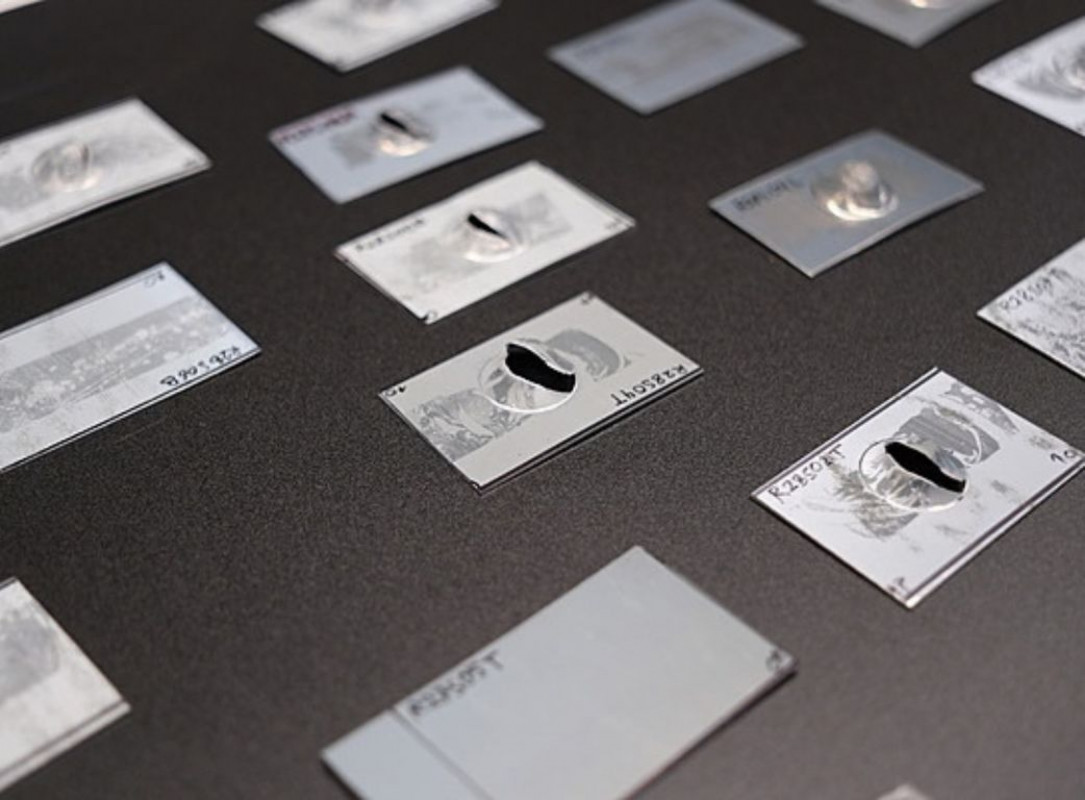
Within the experimental range, coating thicknesses of 2–30 μm have been achieved to date. André Herzog explains that, in images taken with a scanning electron microscope, the coating morphology was dense and fine-grained. For evaluation, during the ongoing process, samples with a diameter of 50 mm can be automatically punched out and ejected from the vacuum without interrupting the coating process. The properties examined include coating-thickness distribution, adhesion, mechanical load-bearing capacity and corrosion resistance. Bending and ball-impact tests, for example, are used for this purpose. The deformations caused by the ball-impact test are clearly visible. The samples can then be used to investigate how the respective coated materials behave under mechanical stress (Figure 4).
Process stability and prospects
As the process takes place in a closed vacuum, key process parameters are monitored via sensors and actuators (Figure 5). The pilot plant currently operates using fixed, reproducible recipes. This means that coating thicknesses and distributions can be precisely adjusted. The range of materials and coatings investigated to date is not intended to represent the limits of the process. “In principle, all types of metal strips can be coated using our process,” explains Herzog. In the future, the aim is to use this process to investigate coating systems that cannot be produced or can only be produced with great difficulty, using electrolytic or hot-dip galvanising processes.
Modularity and scalability
The range of possible coating systems is also reflected in the design of the plant. Process chambers and coating sources are arranged in a modular fashion and can be selected or added to depending on the specific product. If, for example, no carrier is required, the corresponding process stage can be omitted. The design of the material flow also depends on the intended application. The pilot plant in Karlstein is currently operating in research and development mode without a vacuum lock and is designed for flexibility rather than high throughput. For continuous, non-stop operation, SMS has developed a vacuum lock system in collaboration with Neovac. The pilot plant is prepared for its integration but is not currently using it.
From pilot plant to industrial production?
There is still some development work to be done before the tried-and-tested coating process can be turned into a production line. Even the requirements for throughput differ significantly: whilst the pilot plant is deliberately designed to
accommodate test runs and process variations, an industrial line would have to operate continuously and automatically adjust the coating thickness and distribution during the ongoing process. Even with other coating workpiece materials, technical feasibility in principle does not mean that an economically viable production process is already available. In any case, vacuum coating is not intended to fundamentally replace established processes. André Herzog himself describes
hot-dip galvanising as a highly advanced benchmark process in terms of energy consumption and manufacturing costs. The strength of vacuum-based processes therefore lies rather in situations where the materials, coating system or production requirements call for different process conditions.
By the end of the tour, it had become clear what path the steel strip takes through the plasma pre-treatment, magnetron sputtering and PEPVD processes. The next step is to test this coating process under real production conditions
and demonstrate its potential. The pilot plant in Karlstein forms a vital, industry-oriented bridge between the laboratory and industrial production. Here, the conditions are in place to develop, test and specifically refine new workpiece materials and coating systems under conditions that closely resemble real-world applications. The next phase therefore promises to be particularly exciting. In industrial operation, it will be demonstrated what opportunities vacuum-based coating opens up, both technically and economically. For this step, Neovac is currently seeking suitable industrial partners.
Schlagworte
CoatingElectrogalvanicHigh-strength steelsHot-dip galvanicMagnetron sputteringMaterials-engineeringPEPVDPilot plantPlasma-Enhanced Evaporation TechnologyPrototypesPVDTechnologyThermal Spray CoatingsVacuumVapour deposition