
30.06.2025
International
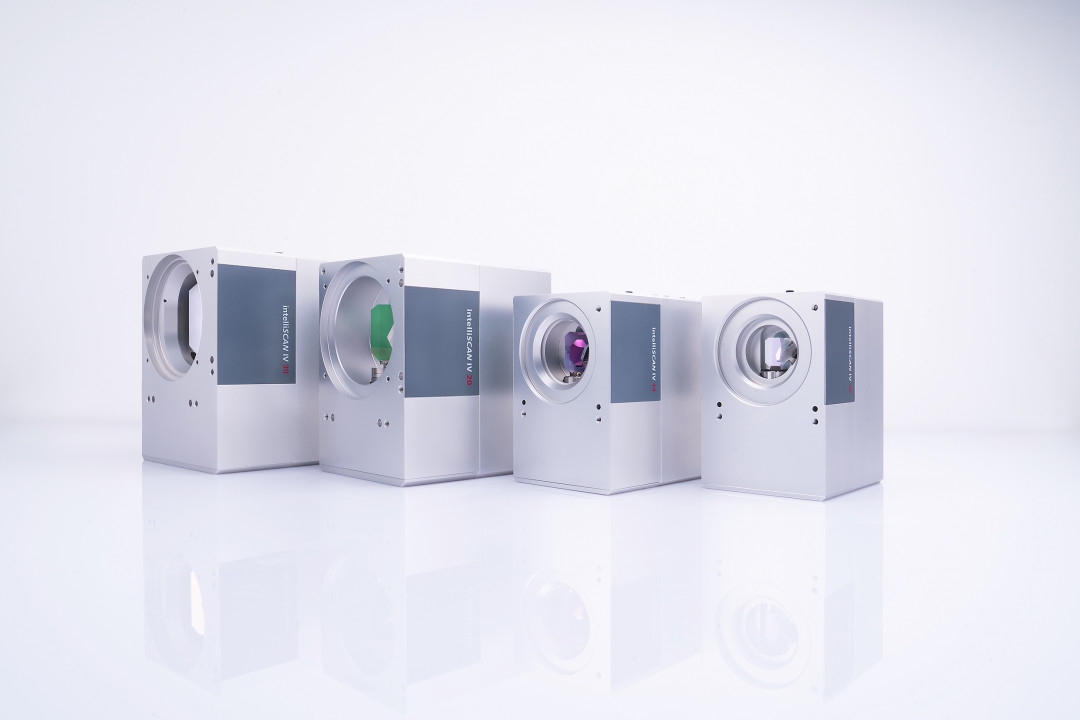
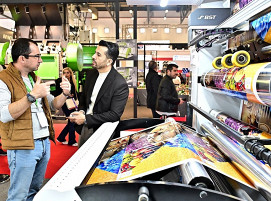
At the Laser World of Photonics trade fair in Munich, Germany, visitors were able to witness the SCANcube IV 7 in action: In a multi-head setup, six synchronized scan heads demonstrated the new system's speed. They could discover the completed intelliSCAN IV product family and take a look behind the scene of various development projects and engage with product experts.
The compact high-performance scan heads of the intelliSCAN IV product family by Scanlab have been further extended. The new intelliSCAN IV 10 scanner with 10-millimeter aperture is ideal for use in micro material processing and structuring. With the innovative SCANahead control, it achieves write speeds of around 1,310 cps in good quality. The achievable maximum speed corresponds to 360 rad/s or a remarkable 57.6 meters per second when using a lens with a focal length of f = 160 mm.
Scan heads for Additive Manufacturing
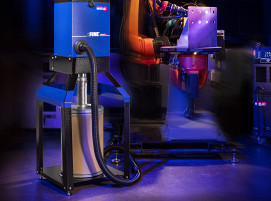
The second new addition is the intelliSCANse IV 30 with digital encoders. The latter provide it with a significant increase in long-term stability combined with maximum precision, which makes it ideal for additive manufacturing. Thanks to the reduced dimensions, integrated water cooling and a dust and water-protected housing with IP66 protection class, they are equipped for demanding industrial use. Users can choose between classic scanner control with tracking delay and the particularly dynamic SCANahead control. Further apertures with digital encoders will follow in the next 12 months. In addition, all these scan systems are 'ready for SCANmotionControl'.
Synchronous scanning
Another show highlight was the multi-head setup with the SCANcube IV 7, which was launched at the beginning of the year. Six scanners arranged in a row demonstrated their joint dynamic peak performance live. Reliable synchronization is achieved with RTC6 control boards. The compact scan heads are suitable for laser marking and coding thanks to their high writing speeds of up to 1,840 cps. For the first time, Scanlab presented its various development projects with an interactive Innovations Board at the trade fair. This included a new approach for beam shaping, a concept idea for a modular welding scanner, a self-tuning approach for individual on-site adjustments as well as the new software framework for additive manufacturing.
(Source: Scanlab)
Schlagworte
Additive ManufacturingAIAMDEDDevelopmentDINFairLaserManufacturingMaterialMaterial ProcessingPPEScannerSoftwareSystemTrackingTrade FairWelding