
13.10.2025
International
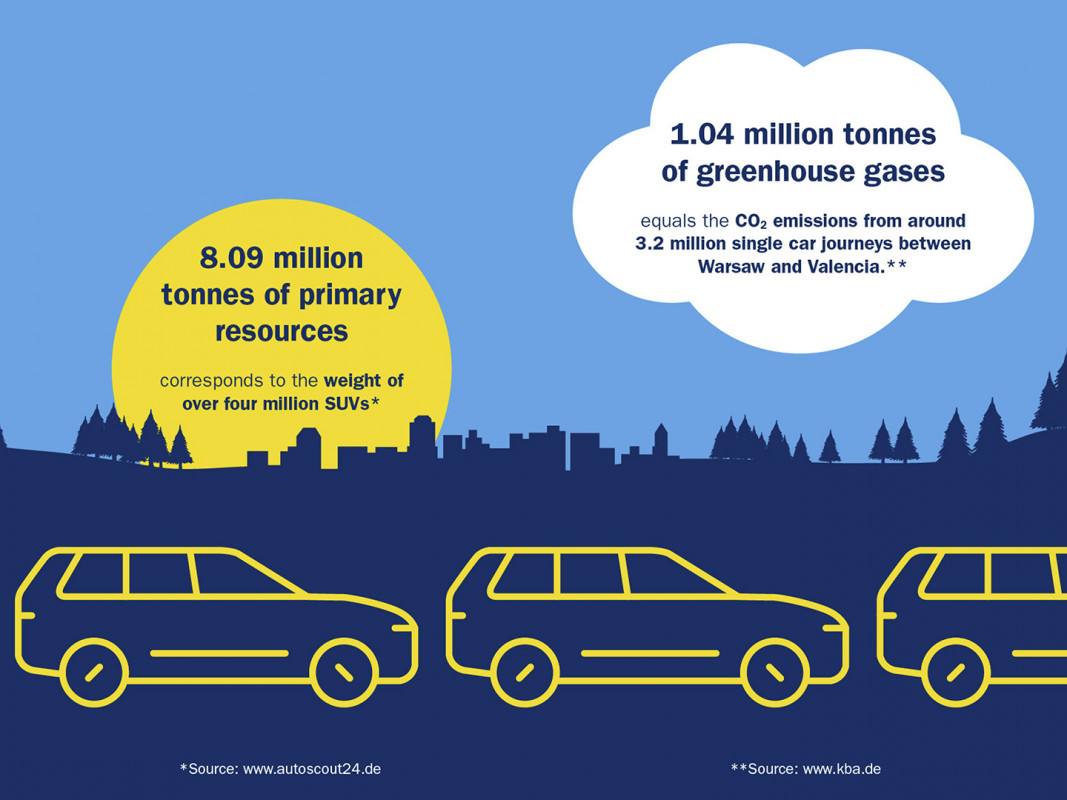
Fraunhofer Umsicht has been investigating the environmental impact of recycling and circularity for Interzero for over 15 years. In the study Resources Saved by Recycling 2024 published recently, the circular economy service provider Interzero announces the results for 2024: Around 1.94 mio tonnes of recyclable materials were – in fact – recycled, saving 8.09 mio tonnes of primary resources. This corresponds to the weight of over four million SUVs. At the same time, Interzero's recycling activities avoided a total of 1.04 mio tonnes of greenhouse gas emissions. This corresponds to the CO₂ emissions caused by around 3.2 mio single trips by car between the Interzero locations in Warsaw and Valencia.
"Our studies clearly show that recycling has a major positive impact on resource conservation and climate protection. Recycling and the implementation of appropriate circular economy strategies offer companies the opportunity to secure resources and thus make their supply a little more secure," explains Dr. Markus Hiebel, Head of Sustainability and Participation at Fraunhofer Umsicht.
Recycling plastics with great leverage
The results of the study also underscore the importance of consistent recycling, especially in the area of plastics and lightweight packaging: This fraction accounts for 49.9 % of the total amount of recycled materials – and is also responsible for the lion's share of the ecological impact: Interzero 2024 achieved 54 % of resource savings and as much as 62 % of total greenhouse gas emission savings by recycling petroleum-based materials. "The figures confirm our commitment to modern plastics recycling and spur us on to further improve the recycling of packaging waste from yellow bags in particular," says Jan Kroker, CEO of the Interzero Group.
(Source: Fraunhofer Institute foir Environmental, Safety and Energy Technology)
Schlagworte
Circular EconomyClimateEmissionsRecyclingResourcesStudy