
02.11.2025
International
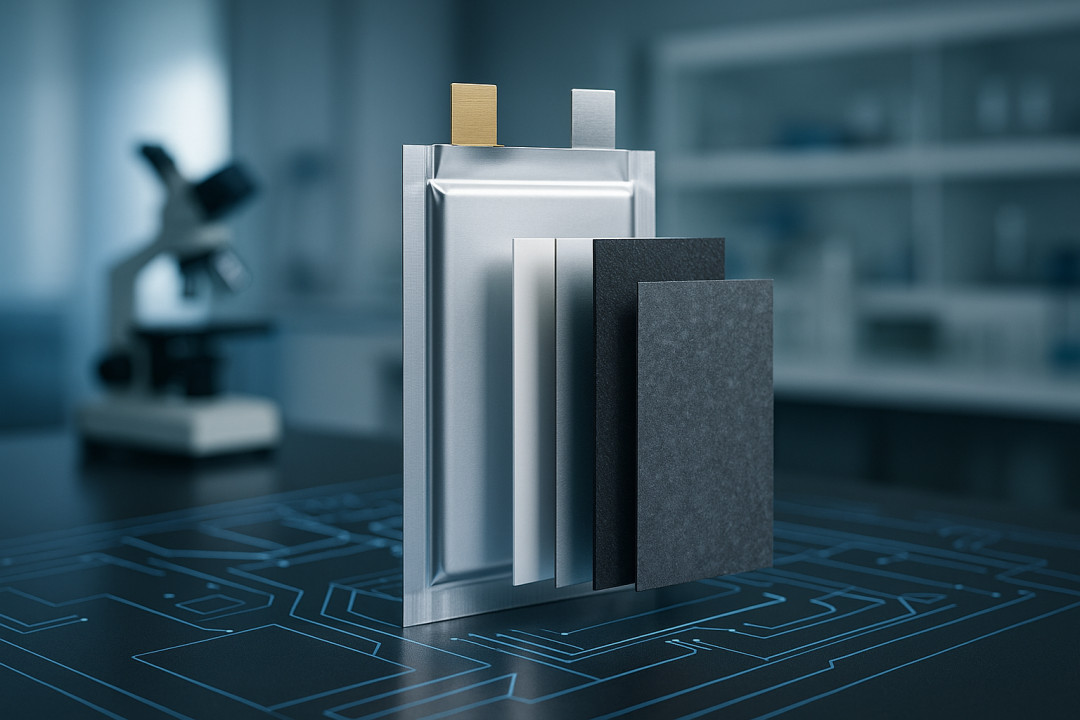
Lithium-sulfur batteries represent a promising alternative to conventional lithium-ion systems. To overcome existing technological hurdles of this cell chemistry, Fraunhofer Institute for Material and Beam Technology IWS and its partners are investigating a new cell architecture that reduces electrolyte content and adapts solid-state chemistry. Their goal is to develop practical cell concepts that combine high energy density with improved cycle life and enhanced safety. Two research projects – AnSiLiS, funded by the German Federal Ministry of Research, Technology and Space (BMFTR), and Talissman, funded by the EU’s Horizon Europe programme – form the structural framework for this work. The project aims to develop a solid-state lithium-sulfur cell that provides comparable energy while weighing significantly less than current batteries.
Conventional lithium-sulfur cells exhibit limited cycle life because their liquid electrolytes promote the formation of soluble polysulfides. These byproducts result in material losses and accelerated cycle stability degradation. Fraunhofer IWS researchers are pursuing an alternative approach: the direct conversion of sulfur to solid lithium sulfide in a predominantly solid-state environment, entirely free of liquid electrolyte. Initial lab results suggest that in the future this architecture can technically achieve a specific energy of more than 600 watt-hours per kilogram with stable cycling behavior.
AnSiLiS: Materials development, simulation and cell integration
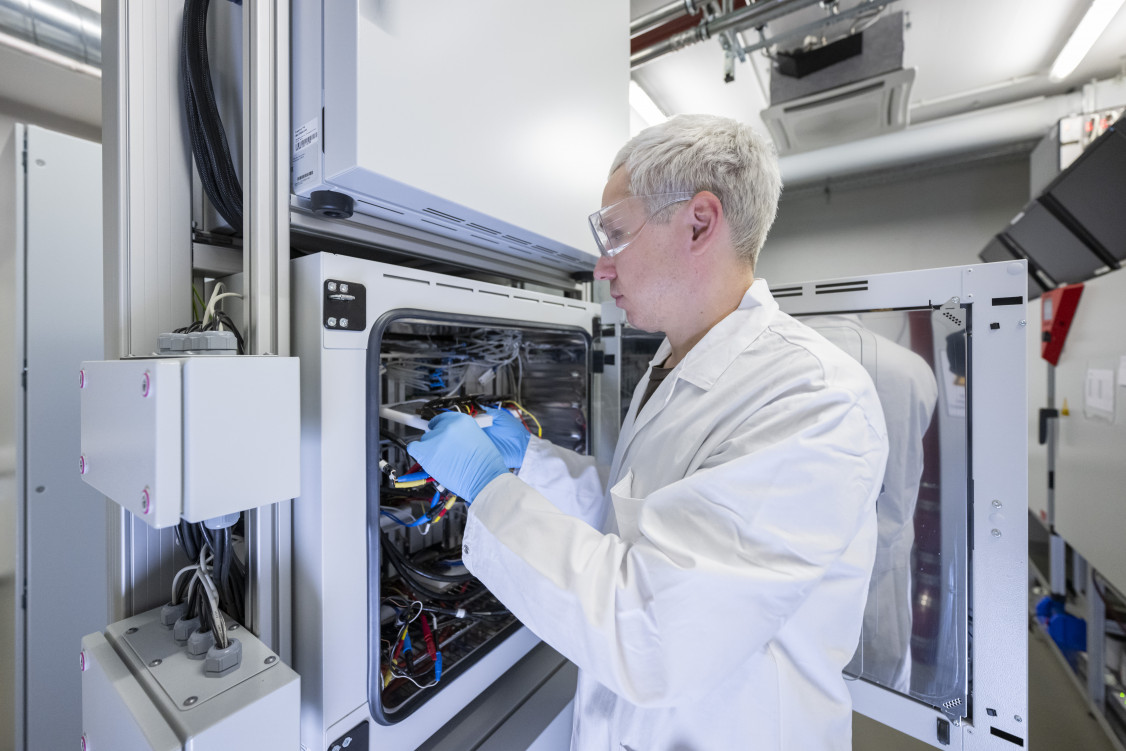
The AnSiLiS project focuses on developing a sulfur-carbon composite cathode. This will be examined in combination with a thin lithium-metal anode and a hybrid electrolyte system in minimal quantity. TU Dresden and the University of Jena explore the electrochemical interactions between the electrolyte and active materials. Helmholtz-Zentrum Berlin contributes expertise in operando analytics and 3D tomography. Molecular dynamics simulations support the cell development process, enabling precise evaluations of component stability and compatibility on different scales.
Scaling and industrial validation
The EU project Talissman adds industrial scaling and application validation to the research. Coordinated by the Basque institute Cidetec, nine partners from Spain, France, Italy and Germany are developing two cell generations for electric mobility applications. Their targets include energy densities of up to 550 watt-hours per kilogram, the integration of non-flammable quasi-solid electrolytes and production costs of under 75 euros per kilowatt-hour. The cell design will remain compatible with existing lithium-ion battery production lines.
Integrating new materials and processes into prototype battery cells
In both AnSiLiS and Talissman, Fraunhofer IWS serves as the systems-integrating development partner. Basic chemical understanding, material expertise, process know-how and near-industrial pilot-scale manufacturing go hand in hand.
Research begins with the tailored formulation of powders, slurries and dry mixtures for different electrode manufacturing techniques. The proprietary DRYtraec technology by Fraunhofer IWS plays a central role. This solvent-free dry coating method presses materials into stable films without a drying step. It cuts energy use by up to 30 %, significantly reduces CO2 emissions and scales to industrial widths via roll-to-roll processing. DRYtraec provides a viable route to bring innovative materials into mass production.
All production steps take place at the institute’s Advanced Battery Technology Center (ABTC) in Dresden. This facility features a flexible line for electrode manufacturing, utilizing classic slurry coating or DRYtraec, as well as laser cutting in dry air, multilayer stacking, thermal sealing and formation, with the option for cyclic aging. Combined with analytics and process simulation, this setup enables end-to-end cell development from a single source of origin. Fraunhofer IWS delivers more than lab-scale results – it provides near-application demonstrators. All cells undergo comprehensive electrochemical characterization. Industry partners from aerospace, drone technology and electromobility benefit from reduced development risk, accelerated technology transfer and economically viable battery production. Energy densities above 600 watt-hours per kilogram and specific costs below 75 euros per kilowatt-hour are within reach.
Target applications
Aviation, unmanned aerial systems and portable energy storage systems demand excellent energy-to-weight ratios. The cell concepts under development in AnSiLiS and Talissman directly address these requirements. The combination of optimized materials, in-depth analysis and process-driven development will pave the way for lithium-sulfur batteries in applications where conventional technologies reach their limits. Functional prototypes are expected to validate the projected performance in the coming years.
(Source: Fraunhofer IWS)
Schlagworte
AerospaceBatteriesDrone TechnologyE-VehiclesEnergyEVLife Cycle