
29.04.2026
International
Military conflicts, new threat scenarios and political upheavals are prompting more and more countries around the world to enhance their deterrent and defensive capabilities. In Europe, the growing perception of threats has led to a change in mindset in security policy: Germany and its partners now see defense as an essential part of their national existence. The global rearmament trend has created a surge in demand for tanks, conventional weapon systems, ammunition and new technologies, posing significant challenges for the defense industry.
To meet these challenges, German and international defense manufacturers rely on the preliminary materials and components supplied by the three companies of the SHS Group (SHS – Stahl-Holding-Saar): Dillinger Hüttenwerke, Saarstahl and Saarschmiede Freiformschmiede. The unique combination of steel production, heavy plate rolling mill, rolling mill for long products e.g. bar steel, wire rod, blooms and forging under one roof has made this trio established suppliers for numerous products in the defense industry.
Dillinger has been supplying Difender brand armored steels, certified by the German armed forces under TL 2350-000, to leading manufacturers of wheeled and tracked vehicles for many years. In addition to meeting German armed forces standards for domestic manufacturers, these high-alloyed quenched and tempered steels also comply with the relevant national and international standards of alliance and NATO partners. Moreover, Dillinger has obtained numerous customer, project and governmental approvals for these armored steels. Today, the company headquartered in Dillingen, Saarland, sells over ten different grades of Difender steel, in thicknesses ranging from 6 to 150 mm and with finely graduated hardness levels from 270 to 600 HBW. Nine of these grades are certified under TL 2350-000 by the German armed forces, enabling entire vehicles to be constructed using these grades and meeting virtually all requirements. The armored steels are used equally in military and civilian applications.
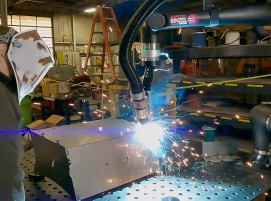
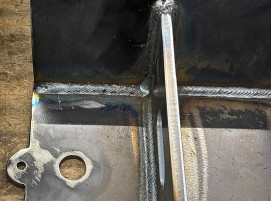
Difender protection steels rank among the safest on the market under ballistic and explosive impacts, offering maximum protection. Difender 500 exemplifies this as a widely used and tested protection steel, with a thickness of up to 150 mm. For the same hardness and ballistic requirements, it can usually be processed thinner without compromising effectiveness. This reduced minimum thickness enables weight-optimized designs for fully armored vehicles in both military and civilian sectors. In addition to military standard dimensions, these steels can be produced larger widths (over 3 m) and lengths (more than 20 m), ensuring cost-optimised production with minimal waste while meeting customer-specific requirements. These tailored armored steel formats in thickness, width and length make crucial contributions to safety such as floor and roof plates for military wheeled and tracked vehicles or high-level building armor. At the same time, the largest possible plate dimensions, combined with meeting the strictest flatness requirements, provide designers valuable optimization potential for system components. Test series conducted by renowned independent companies confirm excellent values in cutting, bending, welding and mechanical processing.
Coordination for customer-specific optimization
Dillinger is also providing expert support regarding material selection, processing and implementation of construction designs. The technical customer support provide competent assistance to designers. In close collaboration with the development departments of all vehicle manufacturers for military operations, Dillinger conducts targeted development work to meet rising demands with new material grades not yet available on the market. An exemplary case of this collaboration with the defense industry is the customer-specific development of Difender 270 for military vehicles of foreign buyers. The alloyed, high-strength quenched and tempered steel Difender 600PH is suitable for hot forming processes to produce highly complex components. As Europe's leading heavy plate manufacturer, Dillinger offers this material in up to 25 mm thickness. Upon customer request, even greater thicknesses can be realized.
Key components for NATO naval sector
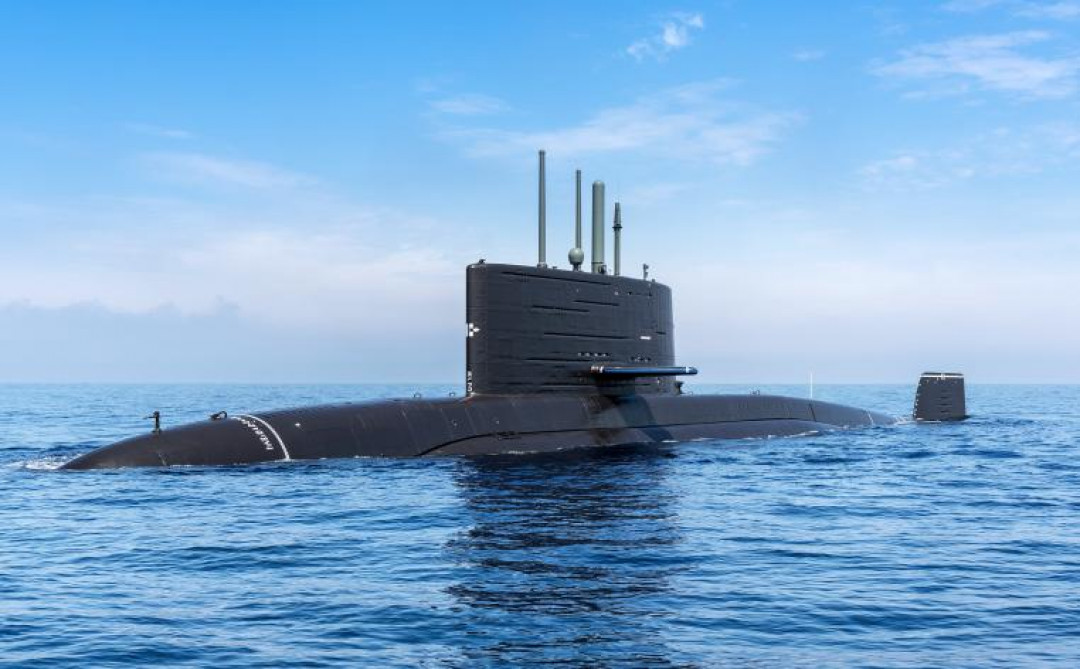
Saarschmiede, another company of the SHS Group, is a recognised supplier for submarine and defense manufacturers as well as a global provider of special materials, superalloys, large power plant components and open-die forge. Technical advice as well as further developments or modifications in collaboration with the defense industry designers complement the portfolio. An exemplary case of this is the stainless steel grade 1.3964. This non-magnetic stainless steel protects the hull of submarines from magnetic mines and sonar system detection. Furthermore, it is indispensable for many components inside submarines. Saarschmiede’s certification according to DNV standards confirms the standardized production of this stainless steel for submarines. Upon request, Saarschmiede also accepts contract forging work with this material.
As an approved supplier for nickel-chromium superalloys Inconel 600 and Inconel 625 from a single source, Saarschmiede provides non-German NATO companies with large components. From Inconel 600, Saarschmiede manufactures large-format pressure vessels that enclose the nuclear drives of warships. While the hulls of nuclear drives were previously rolled from nickel sheets and welded shut, Saarschmiede now forges the massive pressure vessels as seamless components. From the corrosion-resistant nickel-based alloy Inconel 625, non-German NATO companies manufacture the piping and stabilizers for submarine reactors.
Pre-material for large caliber and artillery ammunition
The pre-material is manufactured by the French subsidiary Saarstahl Ascoval, based in Saint-Saulve, using 100 % recycled steel through the electric arc furnace (EAF) process. Compared to conventional steel produced from raw materials such as iron ore and coal via a blast furnace route with an oxygen converter, this production method reduces CO2 emissions by up to 70 %. The demand for decarbonized steel for ammunition within the defense industry is high. The "green" steel cast into billets is rolled and further processed at the Saarstahl plants in Völklingen and Nauweiler. Pre-products for defense manufacturers are customized either via forging, mechanical pressing or milling from long products. Shell casings for NATO's 155 mm large-caliber projectiles are mechanically pressed from bar steel of grade 42CrMo4. Other applications for Saarstahl's specially developed bar steel grades for the defense industry include pre-products for rifle barrels and bolts for tank and armored vehicle track systems.
(Source: SHS - Stahl-Holding-Saar GmbH & Co. KGaA)
Schlagworte
Armored SteelBendingCuttingDefense IndustryElectric Arc FurnaceForgingSteelWelding