
05.12.2025
International
Anzeige
Flexibility for complex processes
High production demands coupled with a shortage of skilled workers call literally for automation. What should such a solution look like that can be easily integrated into existing workflows and still leaves enough room for individual precision work? Schuster Bestuhlungen from Kaiserslautern, Germany, was at exactly this point – and found a solution that is accepted by all employees.
The family-run company has been manufacturing lecture hall and auditorium seating for public institutions and educational establishments throughout Germany for over 30 years. Its strength lies in its ability to carry out complete projects. These range from planning to individual precision work in wood and metal and upholstery to on-site assembly. This requires flexibility, but also makes the processes very complex. If there is a problem at one point, it affects the entire workflow.
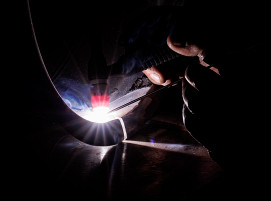
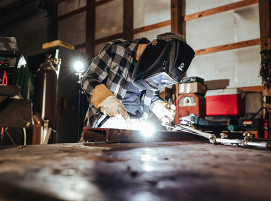
The construction of lecture hall stands and stage substructures requires several welding steps. Up to three welding specialists previously worked on each component. In addition, individual components required different templates and tools, which often had to be changed over. The manpower required was immense. So was the risk, as the welded components showed slight deviations. Rework was necessary even during assembly. Long welding sessions in forced positions and exposure to welding fumes made it difficult to find young welding specialists who were willing to accept such conditions.
Green light for load reduction and process reliability
Schuster Bestuhlungen realized more than 10 years ago just how much automation could simplify processes. At that time, the company invested in a CNC woodworking center, which simplified processes and increased efficiency. This positive experience should now also be applied to welding work, relieving the strain on welding specialists and boosting productivity.
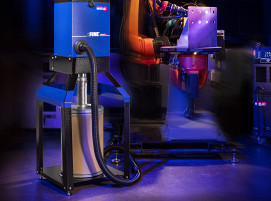
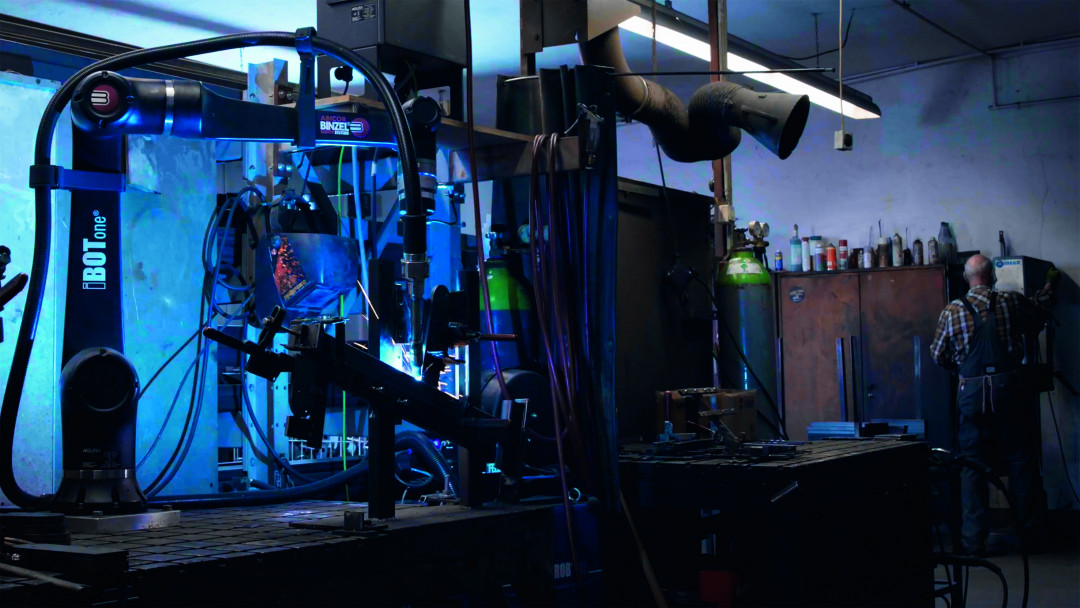
Various automation options were considered. However, the company's main requirement was to retain the flexibility needed for customized projects and to be able to cover a wide range of applications. It was also important that non-specialists be able to operate the automation solution. The team opted for the iBOTone welding cobot from Abicor Binzel and had the opportunity to test it for two months.
Immediately improved processes and results
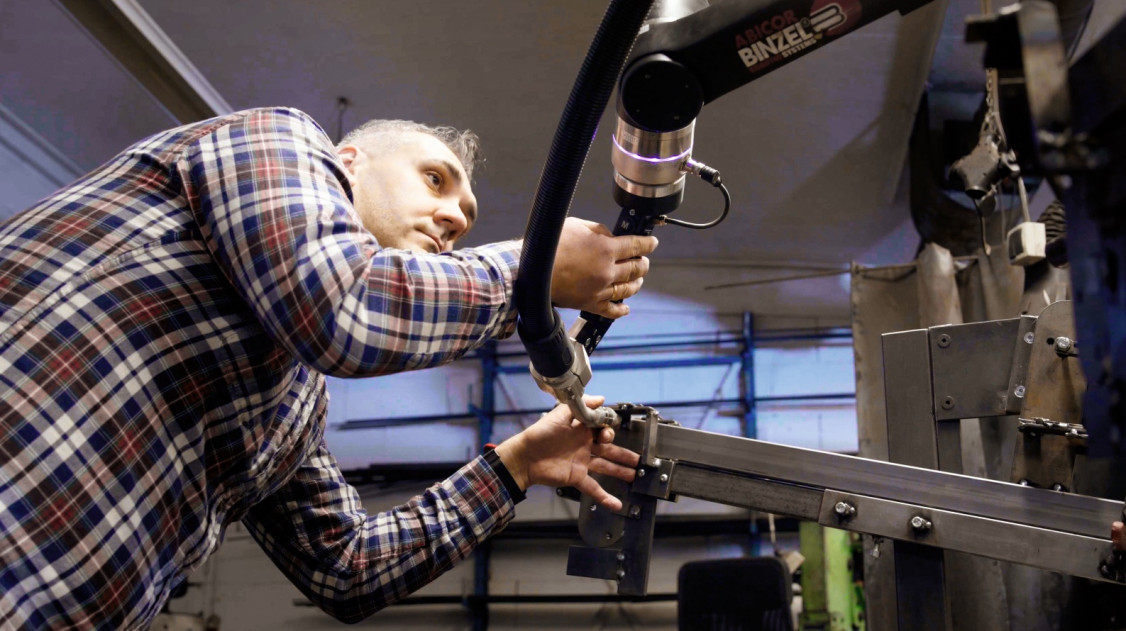
As soon as it was placed in the production hall, the iBOTone was put through its paces. The results were as hoped: throughput time per part was increased without the need for retooling or additional manual work. One employee operates the welding cobot and performs other tasks at the same time. The welded components no longer need to be reworked and fit perfectly during assembly. Employees are satisfied because their physical workload has been reduced. They see the iBOTone as a colleague that takes over monotonous tasks while they can perform more demanding activities. Teams are now strategically better organized. Expertise and problem-solving skills can be used in a more targeted manner.
Ronald Schunn, Operations Manager at Schuster Bestuhlungen: "The iBOTone offers us the same flexibility and efficiency in welding that our CNC machine gave us years ago in woodworking. But now anyone can weld. That's a real breakthrough for us. Given the shortage of skilled workers and the desire for modern, flexible workplaces, we see this as an opportunity to future-proof our company."
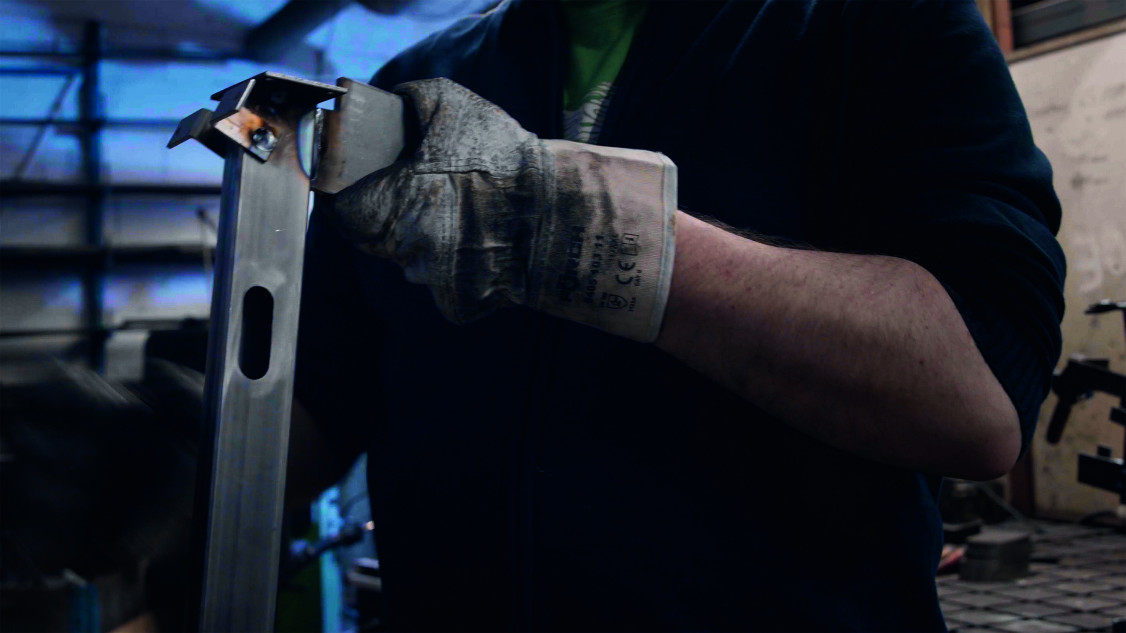
The transformation at Schuster Bestuhlungen shows that targeted automation complements rather than replaces craftsmanship. Employees are supported, not displaced. Workplaces become more attractive and draw in young talent, while the experience of long-standing team members can be valued and put to good use.
Ronald Schunn describes it as follows: “The cobot relieves our employees of monotonous, physically demanding tasks so that they can concentrate on activities that require real expertise. Everyone benefits from this.”
More about the the welding cobot iBOTone
(Source: Alexander Binzel Schweisstechnik GmbH & Co. KG)
Schlagworte
AutomationCNCCobotProcess ReliabilitySkilled WorkersWelderWeldingWelding FumesWelding Specialist