
24.11.2026
Companies
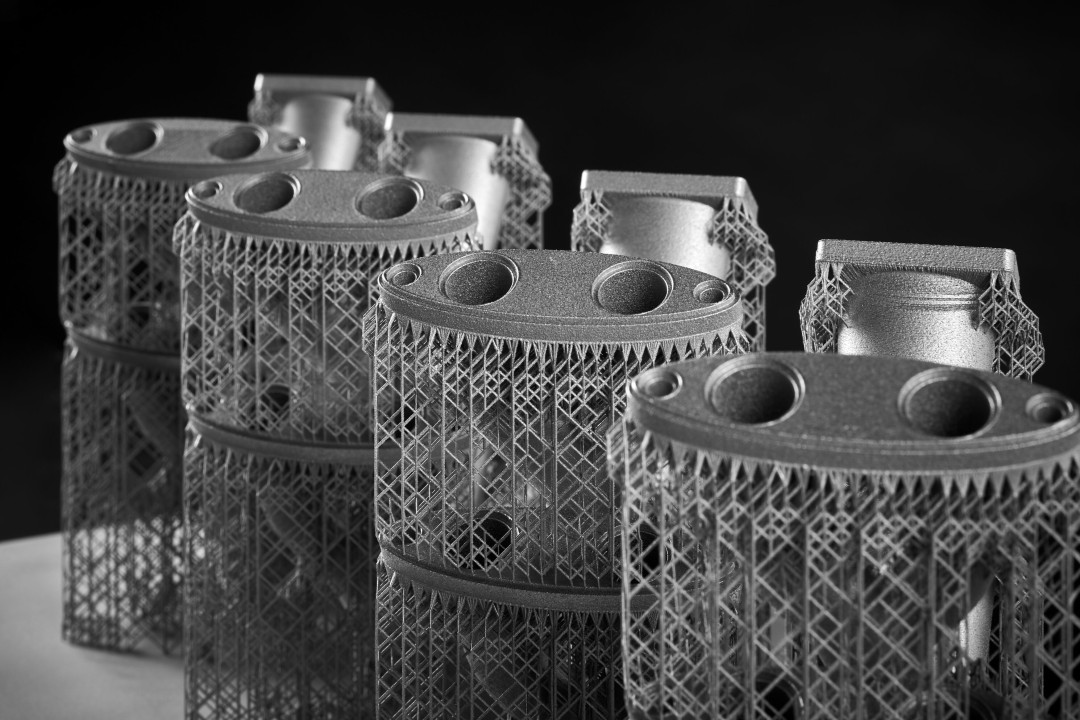
Materialise, a 3D technology company, is calling on defence manufacturers and policymakers to take coordinated action to mobilise Europe's existing additive manufacturing (AM) capabilities to strengthen defence production. The company argues that Europe already possesses significant AM expertise, technology and industrial production capacity but lacks the coordination needed to mobilise these resources as a strategic defence manufacturing capability.
As Europe seeks to strengthen its defence industrial base, the challenge extends beyond increasing production volumes. Conventional manufacturing is often constrained by long lead times, dedicated tooling and limited flexibility, while defence technologies and operational requirements are evolving rapidly. Additive manufacturing can help address both challenges by providing flexible on-demand production capacity that can adapt to changing designs and respond to emerging needs faster.
"Europe already has the expertise, technology and production capacity to strengthen its defence manufacturing capabilities. The challenge is to connect these resources and make them available as a coordinated industrial network. This requires action from both industry and policymakers to build a manufacturing capability that can respond not only to today's production needs, but also to the speed at which defence technology continues to evolve," said Bart Van der Schueren, CTO at Materialise.
Drone technology illustrates why this matters. As drones and counter-drone systems evolve rapidly, large inventories of fixed designs risk becoming outdated before they are deployed. Additive manufacturing offers the flexibility to incorporate design changes and move updated components into production quickly, making adaptability as important as production volume.
A call to action for industry and policymakers
To unlock this potential, Materialise is calling for action on two fronts.
- First, European defence manufacturers must integrate additive manufacturing into their industrial production strategies. Rather than treating AM primarily as a solution for isolated spare parts or emergency supply-chain needs, manufacturers should recognide its potential as flexible, scalable and rapidly adaptable production capacity.
- Second, European governments and institutions must establish a common framework that enables AM capacity to operate across companies and national borders. Shared approaches to standards, qualification, security and digital production processes, together with greater harmonisation of export control regulations, are essential to connecting individual production resources into a reliable, distributed manufacturing network.
Digital infrastructure as an enabler of distributed manufacturing
Connecting Europe's AM capacity requires more than access to machines and production facilities. A distributed manufacturing network also needs digital infrastructure capable of managing production workflows, maintaining traceability, protecting sensitive design information and ensuring that parts are manufactured according to the required specifications.
Its CO-AM software ecosystem supports the management and integration of additive manufacturing workflows, helping manufacturers coordinate production processes and maintain visibility and traceability across operations. Materialise’s Identify3D technology adds capabilities for securing digital manufacturing data and controlling how manufacturing instructions can be used, providing an additional layer of protection and control in distributed production environments. Together, these capabilities illustrate how software can help connect individual manufacturing resources and support the secure, controlled production processes needed for a wider European manufacturing network.
(Source: Materialise)
Schlagworte
Additive ManufacturingAIAMDataDefenceDefenseEuropeExpertiseITManufacturingSecuritySoftware