
International
© ESAB
11.01.2026

Expanded Vacuum Packaging for Electrodes

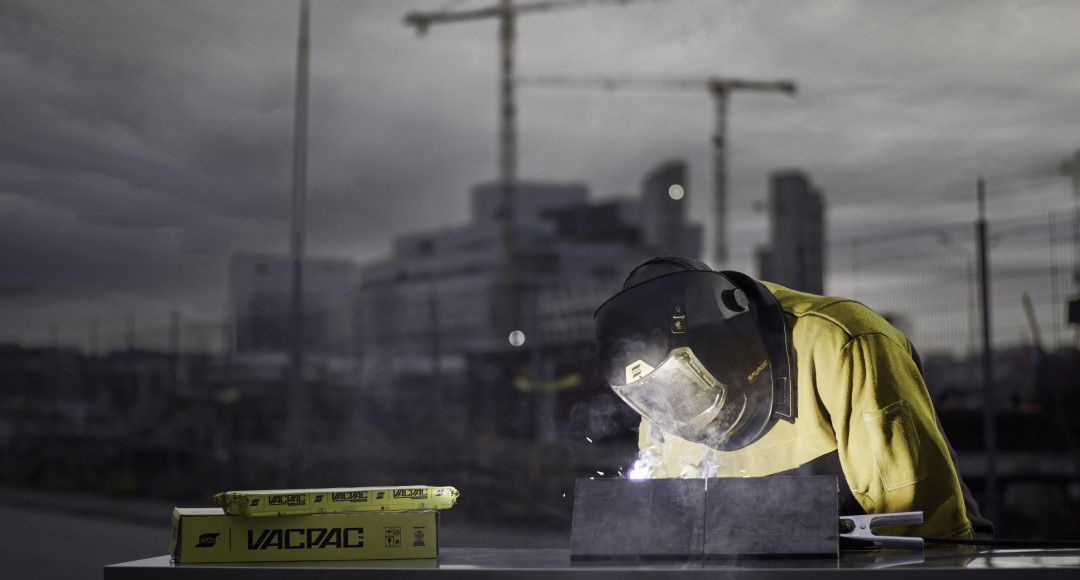
ESAB, the originator of VacPac vacuum-sealed electrode packaging, originally intended to protect low-hydrogen electrodes from moisture, is advancing its solution with a redesign featuring materials made with a minimum recycled content of 30 %, new graphics and a simplified packaging system that brings multiple ESAB electrode brands together. ESAB has now extended VacPac to other premium electrodes where preserving integrity and mechanical properties is essential for welding performance.

VacPac features a laminated, multi-layer aluminium foil that is hermetically sealed around a strong, protective plastic inner box surrounding the electrodes. It does not require special warehouse conditions, provided they are handled with care and the foil is not damaged. Upon opening, fresh and dry electrodes are guaranteed when the vacuum is confirmed.

The updated design also includes modern carton graphics and a QR code that links to more information on ESAB welding power sources. “VacPac offers the same trusted performance but now features a bold, modern and more sustainable design,” says Jean-Philippe Ernoult, Director, Global Product Management, Filler Metals, ESAB. “Whether welders have used VacPac for years or are discovering it for the first time, VacPac delivers confidence with every weld by keeping electrodes fresh, job-ready and compliant with industry codes where moisture cannot be tolerated.”

Packaged for productivity

VacPac fits the needs of fabricators working in harsh environments and working in remote locations, including power generation, structural steel, offshore, pressure vessel fabrication, petrochemical, food processing, maintenance and repair, construction, shipbuilding, pipeline and workshops.

“A standard VacPac contains 2 kg (4.4 lbs.) of electrodes because the average welder in an industrial operation consumes 1.5 – 2.5 kg (3.3-5.5 lbs.) of electrodes per shift,” says Ernoult. “VacPac makes it convenient for welders to take just what they need to the jobsite instead of carrying heavier tubes or cans. VacPac may also reduce or eliminate the need to scrap unused electrodes at the end of the day or re-bake them in a rod oven.”

(Source: ESAB)

Schlagworte

ElectrodesHydrogenOffshorePipelineShipbuildingSteelStructural SteelWeldingWelding Performance

Verwandte Artikel

24.03.2026

Industrial Spring 2026

From 24 to 27 March 2026, Targi Kielce will again become an important meeting place for the industrial sector in our part of Europe. Industrial Spring will bring together...

3D 3D Printing AI AM Automation Blech CNC Construction Cutting DIN EU Exhibition International IoT KI Laser Machine Tools Plasma PU Robotics Robots Welding
Read more
23.03.2026

Spotlight on the Next Generation of Welders: Claas Jeworowski

In continuing the interview series with young welders, Claas Jeworowski explains which factors he considers crucial for professional success and why he has developed a pa...

DVS DVS e. V. German Welding Association International Welding Competition Interview SCHWEISSEN & SCHNEIDEN Skilled Workers Welding Young Talents Young Welders
Read more
21.03.2026

The Winners of the GI Awards 2026

For four days, Global Industrie transforms into the largest factory in France. The exhibition brings together the innovations shaping the future of industry in a context...

Application Automation Award Awards DED Digital Simulation DIN Efficiency Exhibit Exhibition Industrie Industry Infrastructure KI Machines Machining Manufacture OT PET PU Robot Robotic Robotics Simulation Simulator Sustainability Technologies Weld Welding
Read more
21.03.2026

Edelstahl für die Wasserstoffwirtschaft

Wasserstoff ist ein zentraler Baustein zukünftiger klimaneutraler Energiesysteme. Doch die sichere Speicherung und der Transport von Wasserstoff stellen weiterhin eine gr...

AM Chemieindustrie DIN Entwicklung EU Forschung Hochleistungswerkstoffe Industrie Infrastruktur International KI Klima Klimaneutrale Energie Korrosion Korrosionsschutz Legierungen Materials Materialwissenschaft Metal Metall Mikrostruktur Nachhaltigkeit Pipeline Stahl Stickstoff TIG TWI Wasserstoff Wasserstoffwirtschaft Werkstoff Wissenschaft
Mehr erfahren
Tony Kraus, Dan Kearney, Mike Troughton, Scott Andrews (TWI) joined by Liam Flynn and Mark Barnes (Barnes Plastic Welding), and Dirk Klauser and Philipp Hehl (Munsch)
14.03.2026

TWI Acquires New Plastic Welder Training Equipment

TWI received a range of new plastic welding equipment donated by Munsch and Forsthoff in collaboration with equipment distributors Barnes Plastic Welding for use in their...

Courses Equipment Joining Plastics Plastics Training TWI Welding Welding Training
Read more