
16.06.2026
International
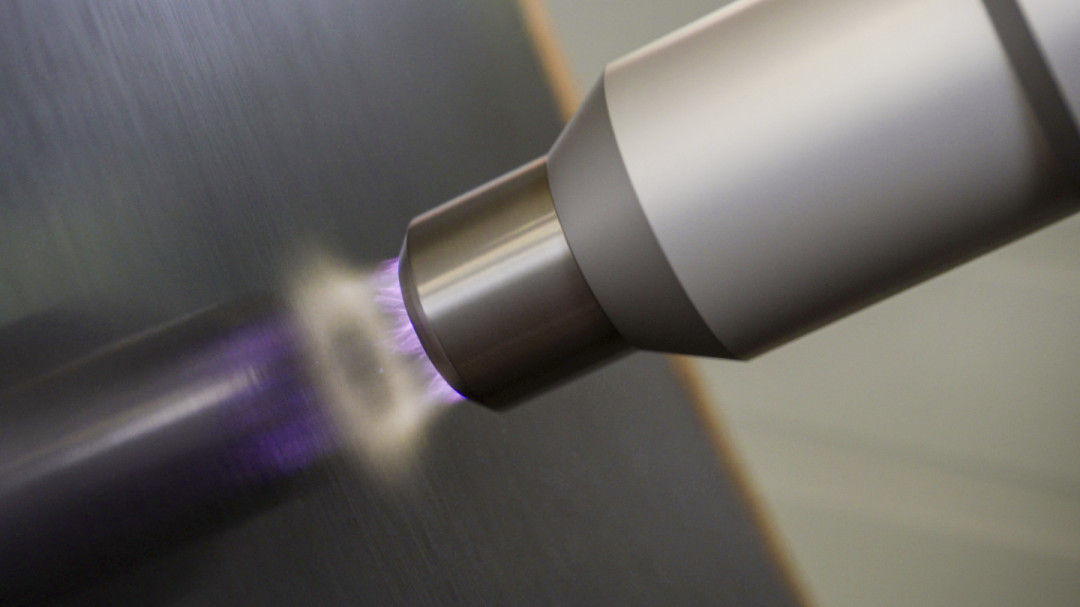
Fraunhofer IFAM is developing resource-efficient manufacturing and joining technologies for large-scale, double-walled hydrogen tanks made of carbon fiber reinforced plastic (CFRP) as part of the “HYTANK” research project. The goal is to enable lightweight, leak-tight and cryogenically stable LH₂ tanks for the future of emission-free aviation.
The developed technologies range from advanced surface pretreatment and functional barrier coatings to automated machining and assembly processes at industrial scale. The project creates essential foundations for sustainable hydrogen technologies in aviation, maritime applications and hydrogen infrastructure.
CFRP Hydrogen Tanks as a Key Technology for Zero-Emission Flight
Liquid hydrogen (LH₂) is considered one of the most promising technologies for future climate-neutral aircraft propulsion systems. However, cryogenic hydrogen tanks must withstand extremely demanding operating conditions, including:
- Temperatures down to -253 °C
- High pressure and thermal loads
- Maximum leak tightness
- Minimum structural weight
- Long-term mechanical stability
CFRP hydrogen tanks offer significant advantages for lightweight construction and energy efficiency. At the same time, they require highly sophisticated design, manufacturing, surface treatment and joining technologies. This is precisely where the HYTANK project contributes innovative solutions.
Surface Pretreatment for CFRP Hydrogen Tanks
Improved Adhesion Through Plasma and Laser Technologies
A major focus of the HYTANK project was the development of efficient surface pretreatment technologies for CFRP structures. The objective is to ensure reliable adhesion of barrier coatings to the CFRP substrate.
The project investigated several advanced pretreatment methods, including:
- Atmospheric-pressure plasma treatment
- Vacuum UV irradiation (VUV)
- Laser treatment
- Vacuum suction blasting
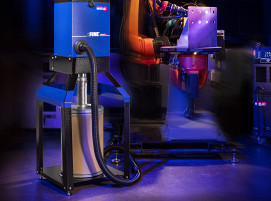
Dry and contactless processes demonstrated particularly strong potential. Atmospheric-pressure plasma treatment, for example, improves surface wettability and adhesion without causing significant thermal or mechanical stress to the material. Laser-based processes additionally enable highly precise cleaning and activation of CFRP surfaces.
These technologies are considered crucial for the industrial-scale production of lightweight hydrogen tanks.
Barrier Coatings for Cryogenic Hydrogen Tanks
Enhanced Leak Tightness and Stable Vacuum Insulation
Another major research area focused on innovative barrier coating systems for lightweight hydrogen tanks.
The barrier coatings developed by Fraunhofer IFAM:
- reduce gas permeability
- minimize hydrogen losses
- prevent the ingress of moisture and oxygen
- stabilize the insulating vacuum in double-walled tank systems
The coating systems are based on polymer binders containing integrated barrier pigments. This tailored layer structure extends the diffusion path for gas molecules and significantly reduces permeation rates.
A key advantage is the compatibility of these coatings with established industrial painting and coating processes, even for complex tank geometries. This supports future scalability for industrial hydrogen tank production in the aerospace sector.
Automated Manufacturing and Assembly of CFRP LH₂ Tanks
Scalable Production Processes at Full Scale
For the industrial production of large CFRP hydrogen tanks, Fraunhofer IFAM developed automated machining and assembly technologies.
The innovations include:
- automated adhesive application
- robot-assisted joining technologies
- precise positioning of large CFRP components
- machining of functional surfaces
- modular assembly systems on linear axes
One major challenge involved handling flexible CFRP cylindrical structures while maintaining extremely tight tolerances. A specially developed robot-guided end effector ensures a constant nozzle distance on curved joining surfaces, enabling highly reproducible adhesive application.
The project results demonstrate that automated manufacturing, positioning and bonding processes for large-scale CFRP LH₂ tank structures are technically feasible and scalable for future industrial implementation.
Project Partners and Funding
The “HYTANK” research project (“Development of Coating, Joining and Assembly Processes for the Production of a CFRP LH₂ Tank for Emission-Free Flight”) was funded by the German Federal Ministry for Economic Affairs and Energy as part of the LuFo VI-3 aviation research program.
Project partners include:
- Airbus Operations GmbH
- German Aerospace Center
- TU Dresden
- Broetje-Automation GmbH
- Fraunhofer-Gesellschaft
Conclusion: Hydrogen Tank Technologies for Sustainable Mobility
With the HYTANK project, Fraunhofer IFAM is developing key technologies for the future industrial production of lightweight, leak-tight and cryogenically stable CFRP hydrogen tanks. The combination of advanced surface pretreatment, high-performance barrier coatings and automated assembly technologies opens new opportunities for zero-emission aviation and sustainable mobility solutions.
The project highlights the growing importance of hydrogen technologies and CFRP lightweight structures for future climate-friendly transportation and energy systems.
(Source: Fraunhofer IFAM)
Schlagworte
AutomationBondingCoatingCoatingsJoiningLaserLightweight ConstructionPlasmaPolymerPretreatmentRobotSurface Treatment